Some of these need only a mailbox and an afternoon; others need a full weekend and a truck of mulch, so the deciding factor is how much of your yard you actually want to change.
A narrow balcony only needs pots at staggered heights; a corner stolen from the lawn asks for one tall anchor and a hose laid out to curve the edge.
The gravel yard entry calls for landscape fabric cut with holes, not bare soil.
1. Mailbox Flower Garden
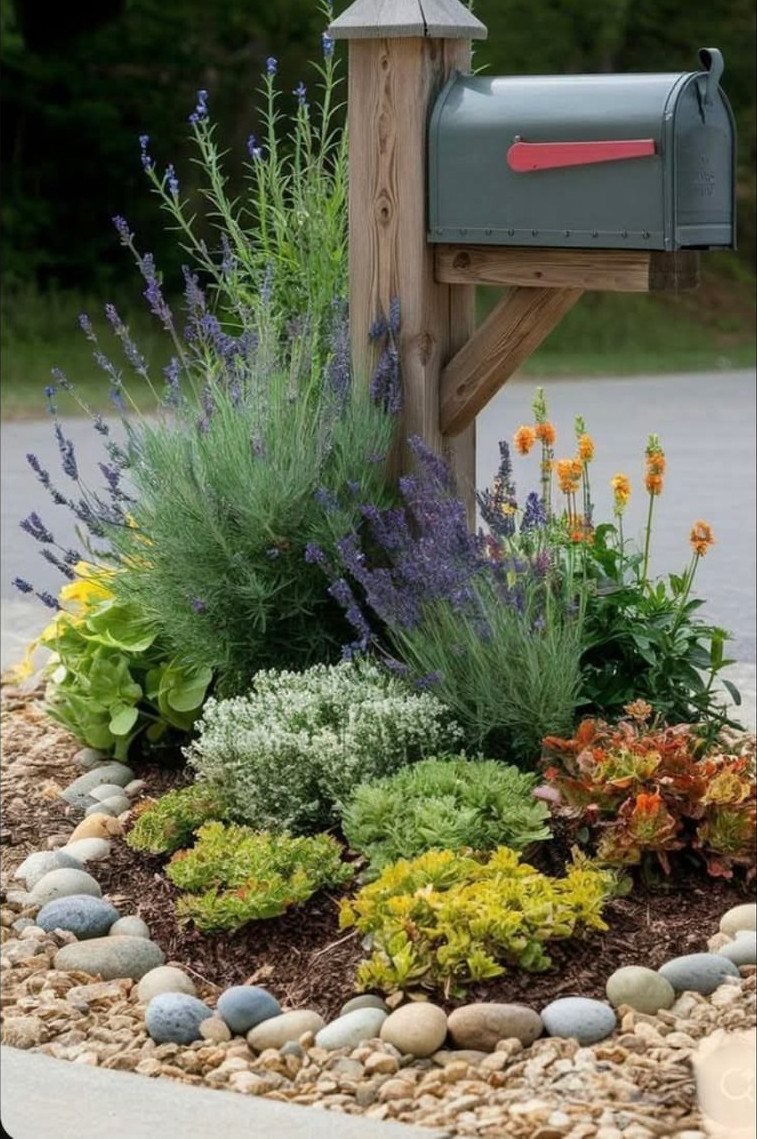
A mailbox bed turns the most mundane post on your property into something that signals you actually live there.
The space is tiny, the cost stays low, and the mail carrier notices, neighbors notice, you notice every time you pull in.
Keep the planting low enough that the box stays reachable and your house number stays visible from the street. Upright blooms like salvia or black-eyed Susans sit well behind the post; something cascading, sweet alyssum or portulaca, softens the base.
A ring of mulch or river stones finishes the edge and keeps weeds from colonizing the gap.
Annuals give season-long color without the long-term commitment. Water deep and infrequent to force roots downward; shallow watering just breeds shallow plants that flop by August.
Best for: curbside spots that get full sun, tight budgets, and anyone who wants curb appeal without a full-yard overhaul.
2. Pollinator Flower Bed

The first summer I planted for pollinators, the difference was audible: my backyard had a hum by late June that I’d never heard before.
A pollinator bed is less about you looking at flowers and more about the yard feeling alive with motion.
Cluster single species together in a solid block of the same flower, so bees and butterflies can spot the target from overhead.
Spread your bloom times across the season; early asters, midseason bee balm, late goldenrod, so the buffet stays open. Native plants handle your weather without the coddling that makes gardening feel like a second job.
Check your state’s native plant society for what actually belongs in your zip code before you buy seed mixes labeled "wildflower" that turn out to be European field weeds.
Best for: sunny spots, gardeners who tolerate some chaos, and anyone who’d rather watch a hummingbird than a screen.
3. Cut Flower Garden
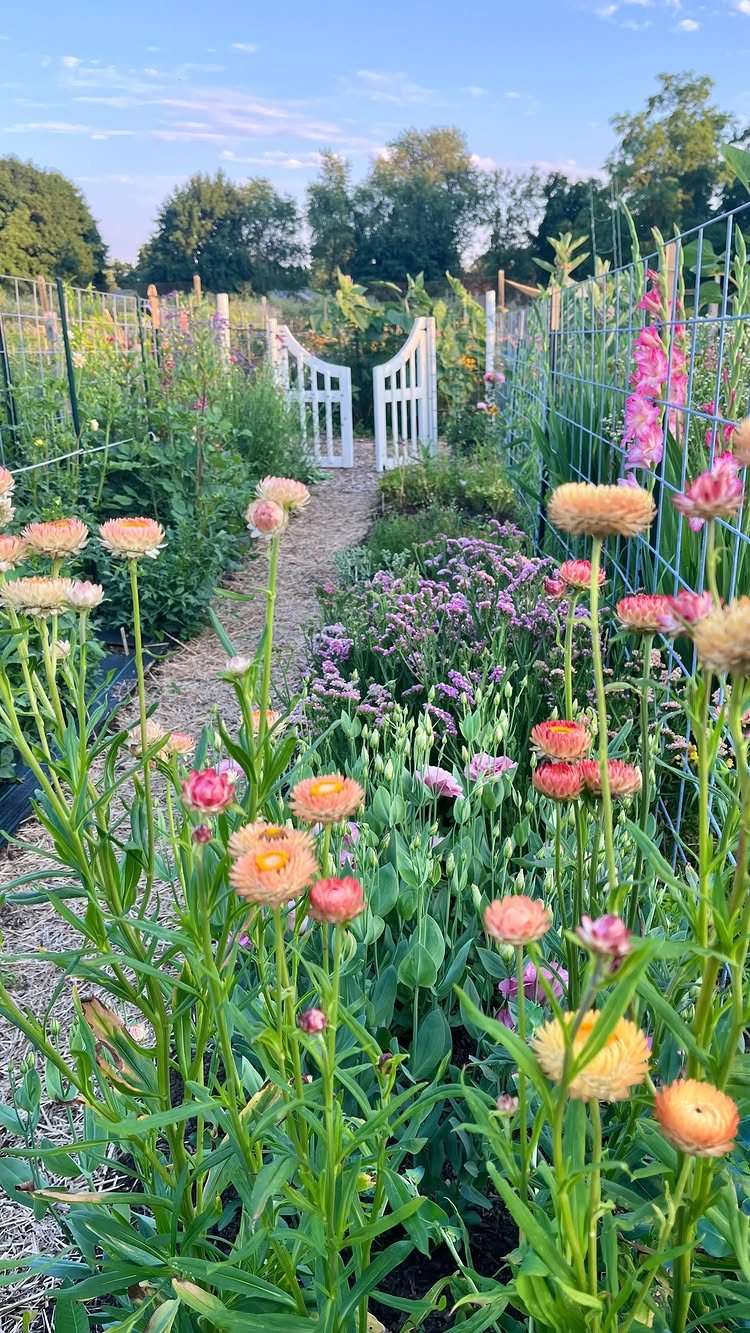
A cut flower garden is the rare bed that earns its keep indoors.
I plant mine in rows inside a raised bed because harvesting is the point, and reaching through a tangle of informal planting means broken stems and wasted blooms.
Zinnias and cosmos give you the longest season for the least skill; add dahlias if you’ve got the patience to dig and store tubers come fall. Strawflower and statice dry well and keep their color through winter arrangements.
Basil tucked between rows fills vases where baby’s breath would go and doubles as dinner.
The layout matters more than the flowers: narrow beds you can reach across from both sides, straw or gravel paths that stay mud-free after rain, and a sharp pair of shears you actually clean between cuts.
Best for: sunny backyards, anyone who brings hostess gifts, and gardeners who measure success in bouquets on the table.
In addition to their ornamental value, flower gardens can help improve the pollination of fruit and vegetable crops.
4. Wildflower Garden

Wildflower gardening is an exercise in delayed gratification. The first season often looks like failure: green, weedy, nothing like the meadow on the seed packet.
Year two is when the perennials you’ve sown, black-eyed Susans, coneflowers, native grasses, settle in and start self-seeding toward that loose, drifting look.
Prep matters more than with traditional beds. Clear the soil thoroughly; existing grass and weeds will outcompete your seedlings every time.
Choose regional mixes, not generic "wildflower" bags, and expect to overseed thin spots the following spring.
Once established, the labor drops off sharply. No fertilizer, minimal water, and the only cutting is a single mow in late fall to knock down stalks and spread seed.
Best for: large sunny areas, gardeners who can tolerate untidiness, and anyone converting lawn they don’t use into something that feeds butterflies instead of a mower.
5. Side-Yard Flower Garden
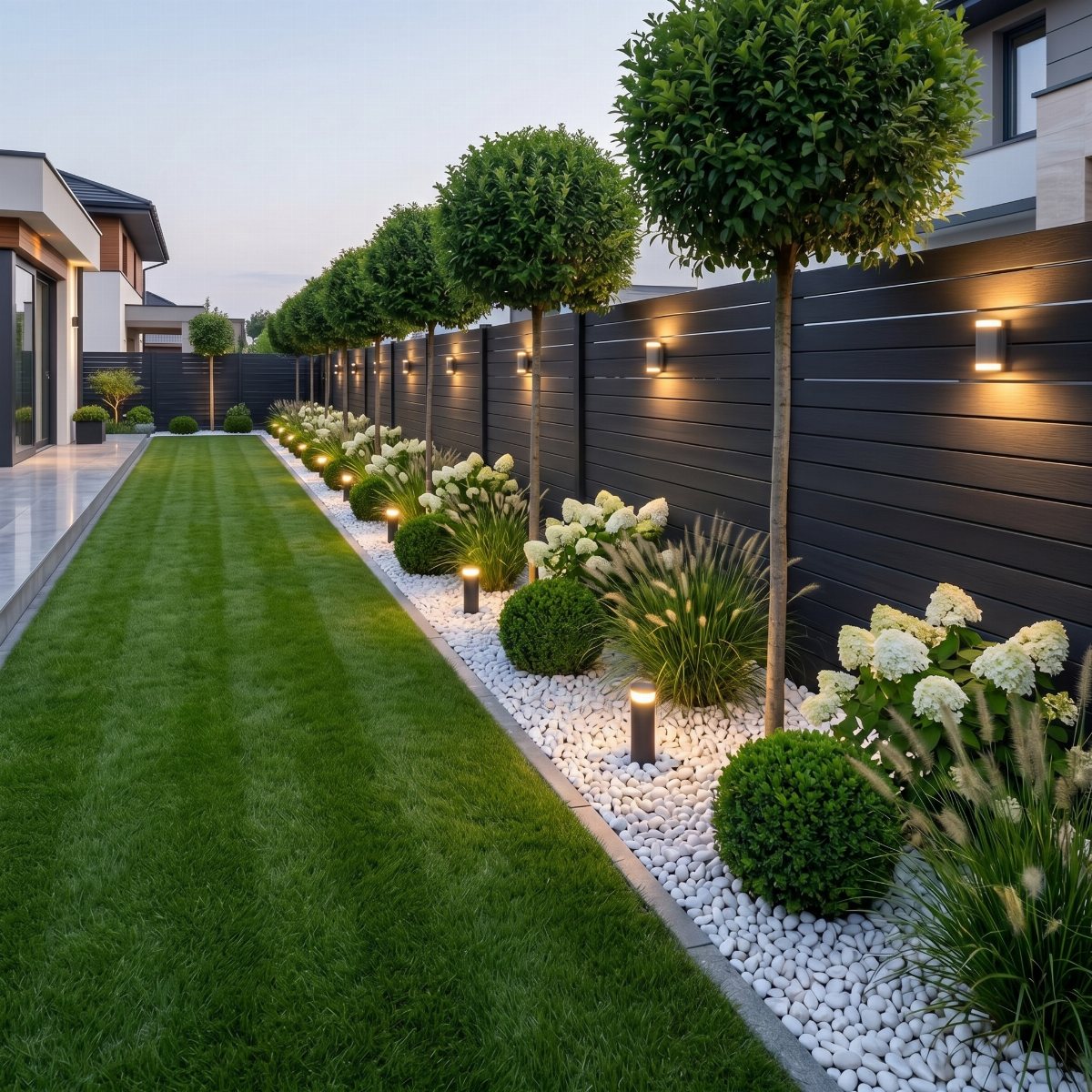
Side yards get treated as utility corridors: trash cans, HVAC units, the path to the backyard nobody lingers on.
A flower strip here reclaims that linear footage as actual garden, and the narrowness works in your favor because the scale stays manageable.
Light determines everything. A side yard pressed between two houses or fences is often shaded; hostas, ferns, astilbe, and heuchera handle what sun forgets.
If you’ve got open sky, compact salvia, dianthus, and creeping phlox stay low enough that you don’t brush against wet foliage every trip to the gate.
Stepping stones or pavers through the bed let you walk without compacting soil, and a simple dark fence or trellis backdrop makes the planting read as intentional, not afterthought.
Best for: narrow forgotten strips, transitions between front and back, and gardeners working with more shade than their open yard suggests.
6. Walkway Flower Garden

A walkway border frames the approach to your door the way a frame shapes a picture: it tells visitors where to look and how to move. The key restraint is height.
Anything that flops onto the path after rain becomes a nuisance, not a welcome.
I repeat the same low plant, lavender or catmint or dwarf marigolds, on both sides for the length of the walk. The repetition reads as design; a jumble of different heights reads as accident.
Fragrant varieties give you the extra hit of scent when you brush past with groceries.
The bed width depends on your path. A narrow sidewalk might only allow a slim strip; a generous curved walk can handle more depth on either side.
Match the scale, and the corridor holds together.
Best for: front entries, garden paths, and anyone whose walkway currently looks like an afterthought between driveway and door.
7. Cottage Garden

A cottage garden looks thrown together, but the best ones are planned to look that way. I plant in threes and fives: odd clusters keep the eye moving so nothing reads as a lineup.
Tall hollyhocks and foxgloves go in back, mid-height roses and lavender fill the middle, and lower phlox or catmint spill forward to soften the edge.
This style suits older homes especially well, though any yard can take the informality if you repeat colors and plants enough to hold it together. Resist the urge to plant one of everything.
Pick a handful of favorites and repeat them through the bed.
Best for: front yards, porch beds, fence lines, anyone who wants flowers that look like they seeded themselves.
8. Container Gardening

Pots are the whole garden when ground space does not exist.
I treat each container as a mini bed: something upright in the center or back, a fuller plant to fill the middle, and a trailer like calibrachoa or sweet alyssum to spill over the rim.
Three pots at different heights read fuller than one small pot standing alone.
Drainage matters more than pot size; a holeless planter rots roots faster than drought kills them. Check that saucers do not trap standing water, and remember that smaller pots dry out fastest in July heat.
Best for: balconies, rental spaces, steps, entryways, anyone who moves often or wants color without digging.
9. Vertical Flower Garden
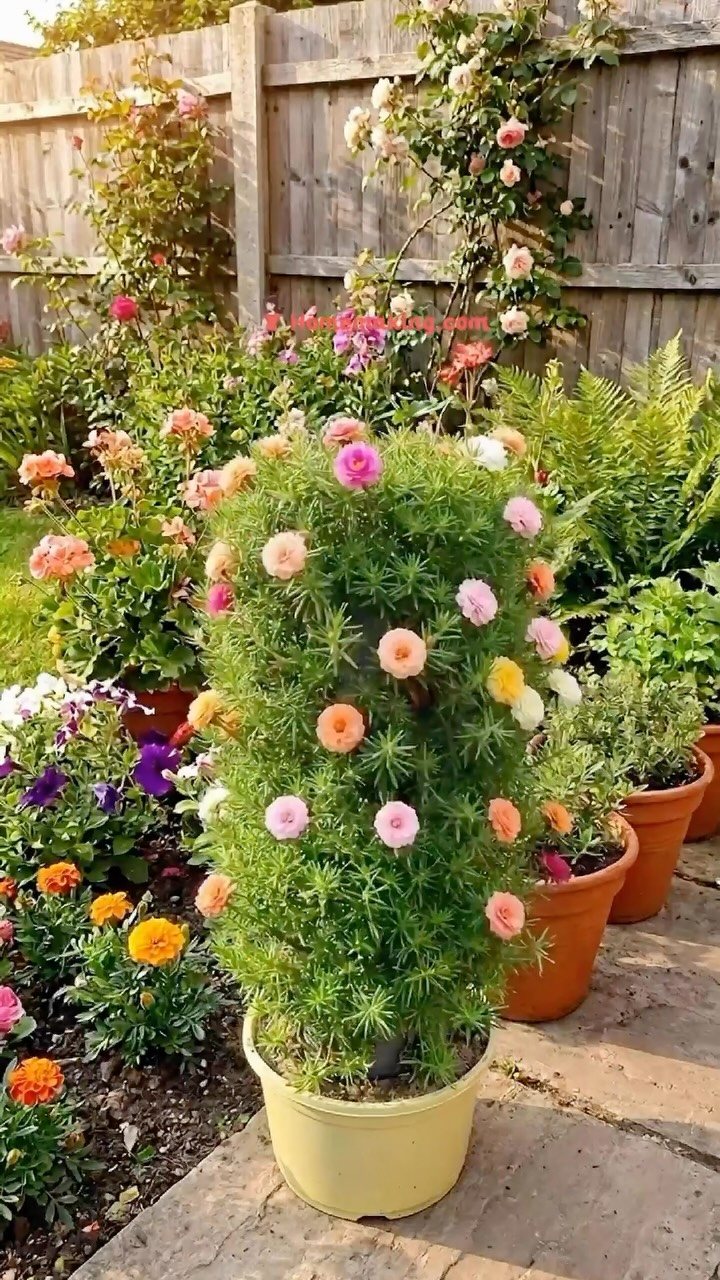
Going up buys back the floor. Wall planters, railing boxes, and hanging pots all add blooms without eating the walking space, which matters on a balcony where two chairs and a table already fill most of it.
I look for lightweight containers; wet soil in a heavy pot is a strain on brackets and landlords both.
Stacked towers or pocket planters work, though the top dries faster than the bottom. Water more often up there, or choose plants like moss rose that forgive a missed day.
Best for: tiny yards, porch walls, fence lines, anywhere the ground is concrete, taken, or nonexistent.
10. Under-Tree Ring Flower Bed
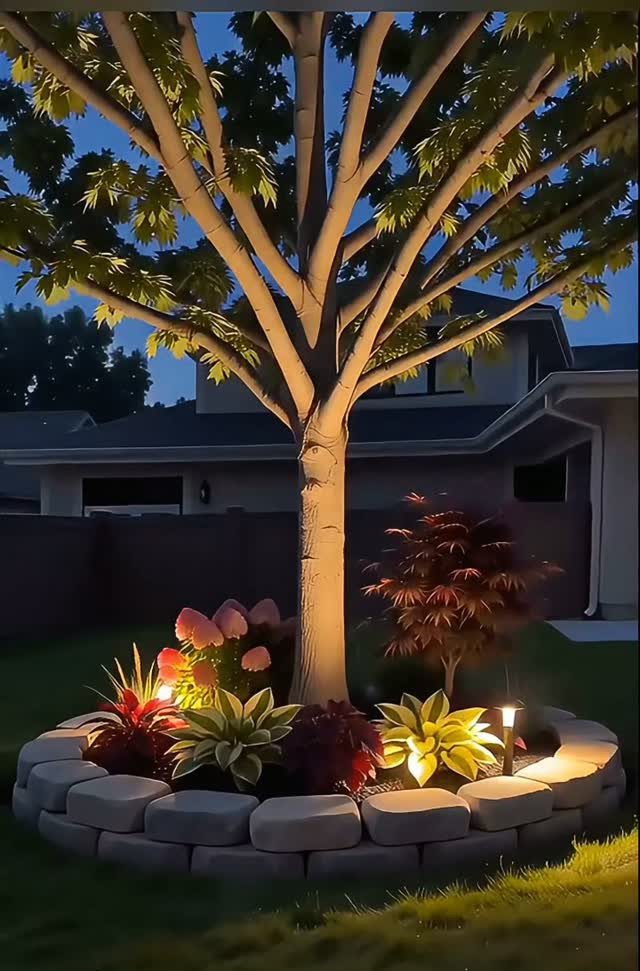
Grass dies under mature trees for a reason: shade, root competition, and dry soil where rain does not reach. A ring of hostas, impatiens, astilbe, or bleeding heart turns that dead zone into the yard’s best feature.
I keep the soil level even with the root flare; mounding mulch or dirt against the trunk traps moisture and rots bark.
Stone edging contains the bed and keeps string trimmers away from the trunk.
Best for: front yard shade trees, mature maples or oaks, anywhere lawn has given up.
11. // Line a Fence

A fence is already a backdrop; the job is filling the middle and foreground without blocking what the fence borders.
I put taller ornamental grasses or hollyhocks against the wood, then layer down through salvia, catmint, and creeping phlox at the edge.
Climbing roses or clematis can go up the fence itself if the wood is sturdy enough to hold weight.
Repetition keeps a long border from looking busy. I pick two or three plants and run them the length rather than swapping varieties every few feet.
Best for: privacy fences, side yards, long blank edges that read as leftover space.
12. // Go Natural

Native plants know your weather already, which cuts the work of keeping them alive.
I choose what is local to my region, then mix bloom times so something is flowering from May through September: early coneflowers, mid black-eyed Susans, late asters and goldenrod.
Heights vary too; a flat bed of all one level looks like a planting plan, not a meadow.
Stone paths or mulch between groups keep the intended look from drifting into plain neglect. Controlled wildness works better than a full restoration project.
Best for: lower-care beds, pollinator gardens, anyone tired of replacing plants that cannot handle the local summer.
13. Corner Flower Garden

Corners are where fences meet and nothing happens, which makes them the easiest place to steal space from your lawn.
A single tall anchor, something like an ornamental grass or a shrub rose, gives the eye somewhere to land without crowding the rest of the yard.
I lay out the bed edge with a garden hose first, curving it until the shape looks natural against the straight lines of whatever borders it. Sharp angles read as leftover space; a soft curve reads as intentional.
This suits anyone with one dead corner and no patience for a full yard redesign. An anchor plant has to carry the whole scene, so either budget for something mature or wait two seasons for bulk.
14. Modern Minimalist Flower Bed

One flowering plant, one foliage plant, and a strict two-tone palette. That is the whole recipe, and it is harder than it sounds because every choice shows.
Dark mulch and metal edging do the visual work that variety would do in a busier bed.
I have seen Karl Foerster grass carry a whole front yard this way, paired with nothing but white hydrangeas and the clean line of the steel.
The gallery effect depends on repetition and spacing; one stray volunteer or self-seeder breaks the spell.
This is for the reader who wants the garden to look finished without looking fussed-over. It costs more in discipline than in dollars, and it asks for a modern house or at least a straight path to justify the restraint.
15. Formal Flower Garden
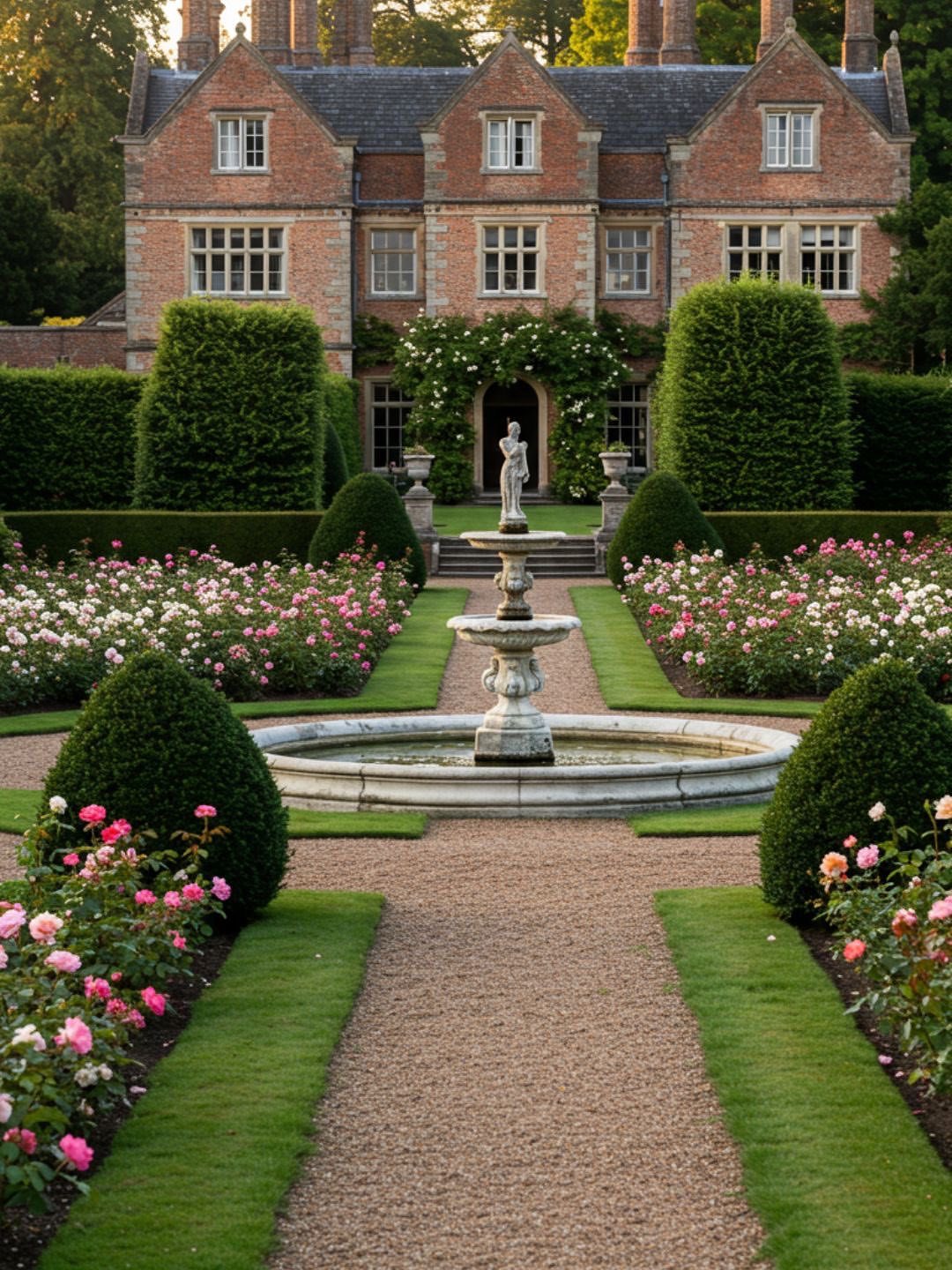
String lines and stakes are not optional here. The formal bed lives or dies on whether the rows are straight, the mirrored halves actually mirror, and the boxwood or yew hedge clips to a crisp, continuous line.
I would not attempt this on a slope or anywhere the ground fights the geometry. Hybrid tea roses, tulips, dahlias, whatever fills the center, need that framed structure to read as elegant rather than sparse.
The maintenance is real: shearing, replanting, adjusting for the one plant that dies and throws off the symmetry.
This suits a front entry where first impressions matter and the homeowner has time or money for upkeep. This garden gives up freedom; impulse additions and happy accidents do not fit here.
16. Front Yard Flower Bed
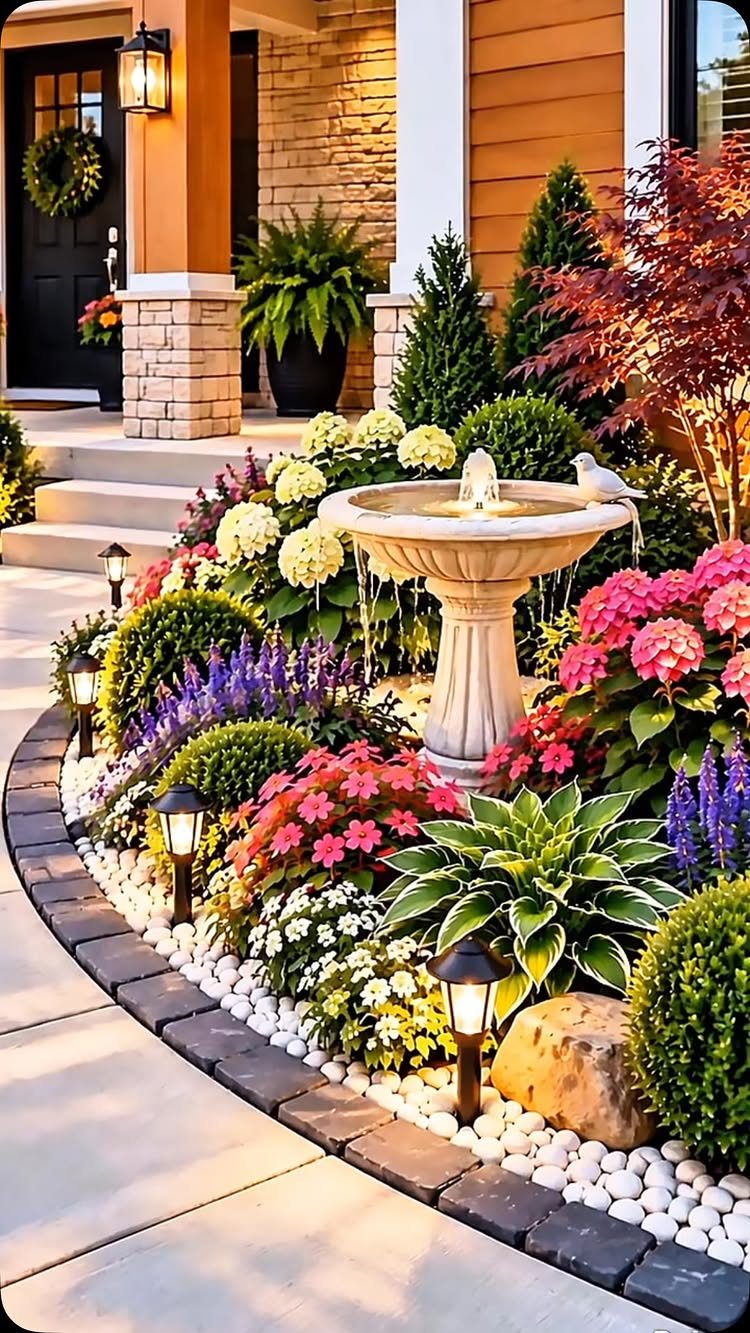
A front bed is the only garden most people will ever see of yours, so the mix of flowers and shrubs needs to work from the sidewalk and from your own doorway.
I think of it as designing for two distances.
Landscape lighting extends the useful hours, which matters more than most first-timers expect; a bed you cannot see after dinner is half wasted.
This is the default right choice for anyone with a house entrance and a weekend to plant. It needs more ongoing weeding than setup cost, and the curb appeal shows immediately if the colors hold together.
17. Layered Flower Bed

The rule is simple; the execution is about choosing plants that peak at the same time or at least do not leave gaps.
The visible bed uses a stone retaining wall to exaggerate the layering, with peonies, alliums, and catmint each holding their own band of height.
Without a wall, you can still get the effect by berming soil or just accepting a gentler slope of sight. Contrasting colors read as bold; a single color in graduated shades reads as calm.
This suits the reader with a fence line to hide or a long border to fill. Density takes a lot of plants, which drives the cost; choose right and the bed looks full from June through August.
18. Shade Lovers Flower Bed

Shade is not a problem to solve but a condition to plant for. Caladiums, impatiens, begonias, and the various leafy shrubs that tolerate low light give color without the sun that most flowering plants demand.
The visible bed runs along a front lawn beneath mature trees, which is the classic scenario: grass has already surrendered, and the soil is probably root-competitive and dry.
I add water more often than I expect in shade, because tree roots drink first.
This is for the reader with a north-facing wall, a tree canopy, or a side yard that never quite brightens. The plant list runs shorter, but maintenance drops and summer scorch is almost not a worry.
19. Foundation Flower Bed

A foundation bed runs along the base of your house and softens the hard line where siding meets lawn.
I like to layer tall shrubs or hydrangeas near the wall, medium perennials in the middle, and low groundcovers at the front edge.
Keep plants at least 18 inches from the foundation itself so air can move and siding stays dry. Pick varieties that won’t outgrow their spot and block windows; the house should still read as the main event.
This is the first change I suggest to anyone who wants visible curb appeal from a single weekend of work with plants and mulch. It frames the architecture instead of hiding it.
20. Gravel Yard Flower Bed

Gravel under and around plantings gives a flower bed a cleaner, drier look than mulch alone, and it lasts years without refreshing.
Lay landscape fabric first, then a solid layer of gravel, cutting holes only where you sink plants. Weeds will still find a way through eventually, but far fewer than you’d fight in bare soil.
This suits hot, dry yards or anyone tired of replacing decomposed mulch each spring. The tradeoff: gravel reflects heat, so the same plants that thrive in it may wilt in a standard bed their first season until roots establish.
Tips for Successful Flower Beds
Turn the soil over before you plant anything. Work fertilizer in while you are at it; the nutrients need to be in the soil from day one, not added later as an afterthought.
Know your light before you buy. A plant that needs direct sun will sulk in shade, and shade-lovers scorch in afternoon glare.
Check what is native to your zip code, and plan for bloom times across the season so something is flowering in May, July, and September both.
The full look comes from that depth, not from cramming more plants in at one level.
Choosing the Right Flowers
Start with the light your space actually gets. Full sun, part sun, and shade each pull toward different plants, and a tag that says partial shade will crisp up fast in blazing afternoon sun.
Match the plant to the spot, not the spot to the plant you already bought.
Size matters in a small yard. A sprawling perennial will swallow a bed meant for compact plants before the season ends.
Stick to small and medium varieties, and avoid anything labeled aggressive or fast-spreading unless you have acreage.
Perennials come back yearly but need dividing eventually. For a front bed or container, I would mix: annuals for guaranteed bloom this year, perennials for structure next.
Maintaining Flower Gardens
Weeding, watering, and mulch. That is the repeating work, and skipping any one of them shows by August.
I lay mulch after planting, deep enough to matter but pulled back from stems so bark does not stay wet and rot.
It holds moisture in July, slows the weeds that compete for water, and makes the bed look finished while plants are still small.
Perennials cut the yearly replanting but not the care. Daylilies, catmint, salvia, coneflowers, black-eyed Susans, sedum, hardy geraniums, yarrow, coreopsis, and ornamental grasses all give long bloom with less fuss.
Group the same plant in threes or fives; the repetition reads as intention, not accident.
Water deep and less often. Shallow spraying breeds shallow roots that need you every dry afternoon.
Designing with Color and Texture
Mix textures so the eye keeps moving. Ornamental grasses like miscanthus against broad leaves and fine foliage give contrast even when nothing is in bloom.
A bed of all one texture flattens out by midsummer.
Color needs planning across the season, not just the day you buy. Spring bulbs, early summer perennials, late asters and goldenrod, plus evergreen structure for January: that is how I avoid the June glory followed by months of green mush.
I would pick a palette and repeat it. Two or three colors held through several plants ties the bed together better than one of everything.
Frequently Asked Questions
How do I layout my flower garden?
I set tall plants against the fence and step down from there, since anything behind a three-foot dahlia disappears until fall.
In a cottage-style bed, I plant in odd clusters of three or five, with tall hollyhocks behind mid-height roses and lower phlox spilling forward.
For a cut flower garden, narrow raised beds with straw paths between rows keep stems reachable from both sides without trampling.
What is the rule of 3 in landscaping?
The rule means grouping plants in odd numbers, usually threes or fives, so the eye keeps moving instead of locking onto pairs.
I use this in cottage gardens where even clusters read as stiff and planned, while odd groups look like they seeded themselves. The same principle works for repeating a single plant down a walkway border; rhythm matters more than variety.
What are some simple ideas for a flower garden?
A mailbox bed costs little and takes almost no space, with annuals like portulaca at the base and salvia behind the post.
Container gardening on a balcony uses three pots at different heights, each with an upright plant, a filler, and a trailer like calibrachoa.
A pollinator bed is simple too: pick native plants that handle your weather without coddling, and cluster single species in solid blocks so bees can spot them.