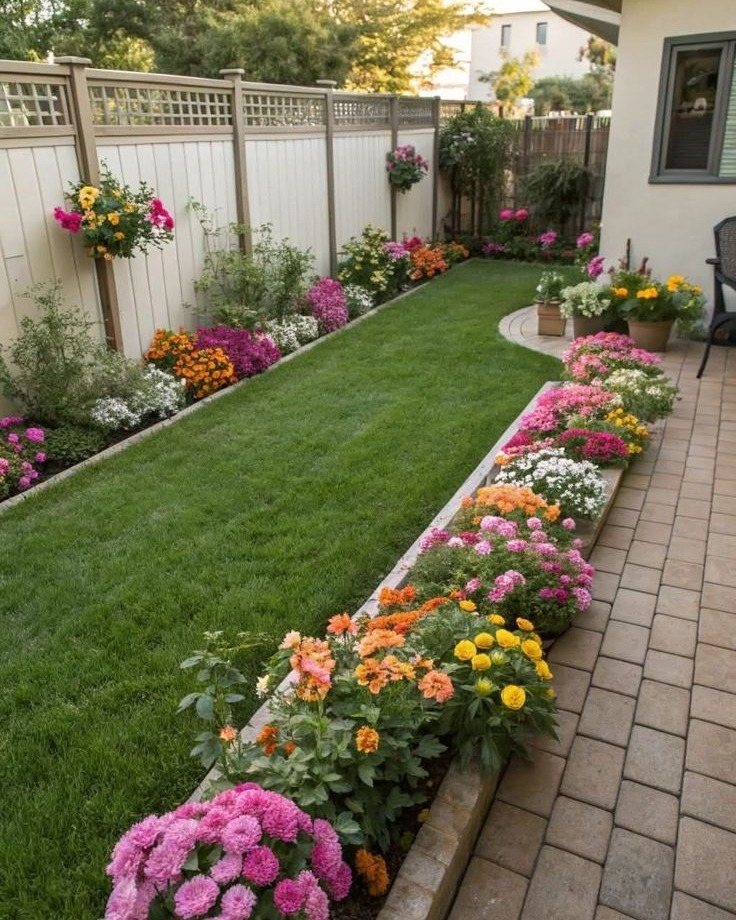
These flower bed ideas run from gathering fieldstone from your own yard to lumber for a raised build, and from beds you plant once and let reseed to structures that need replanting every spring.
What separates one idea from another is your ground itself: sun hours, drainage patterns, and whether you are working soil or a narrow balcony railing.
The mailbox bed alone demands short varieties for driver sight lines, while a rain garden turns the low spot that kills lawn into working ground with iris and milkweed handling wet feet.
1. Tree Base Flower Bed
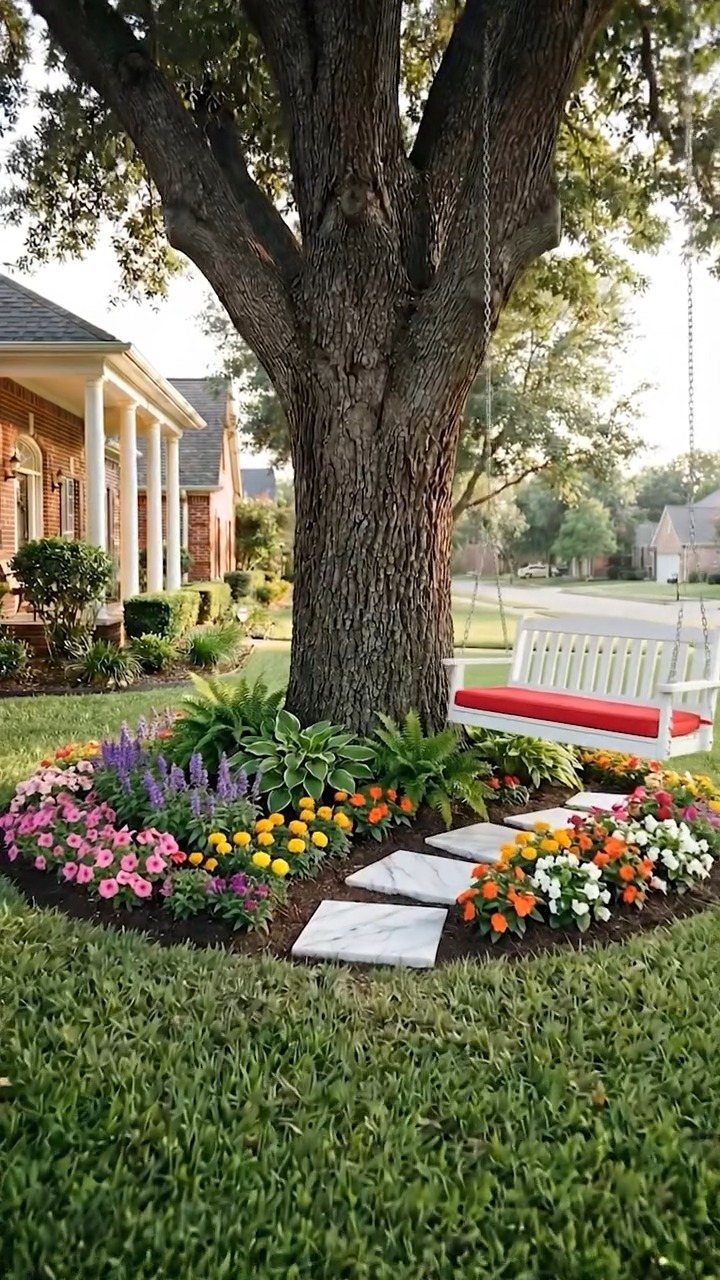
A ring of flowers around a tree trunk turns a bare base into the yard’s focal point. I start with early spring bulbs like daffodils and crocus, since they bloom before the canopy leafs out and shade everything.
Hostas fill the gaps later, and the tree’s own mulch keeps weeds down while it feeds both plants.
The hard part is roots. Mature trees have dense surface roots that make digging impossible, and black walnut puts out juglone that kills most plants.
In that case I set pots directly on the soil, clustering odd sizes for a planted look without the shovel work. A hollow log or even a stump can become the container instead.
I’d skip this for a young tree; the scale looks forced until the trunk has some presence. For anything larger, you get year-round structure with an afternoon of initial setup.
2. Pollinator Flower Bed
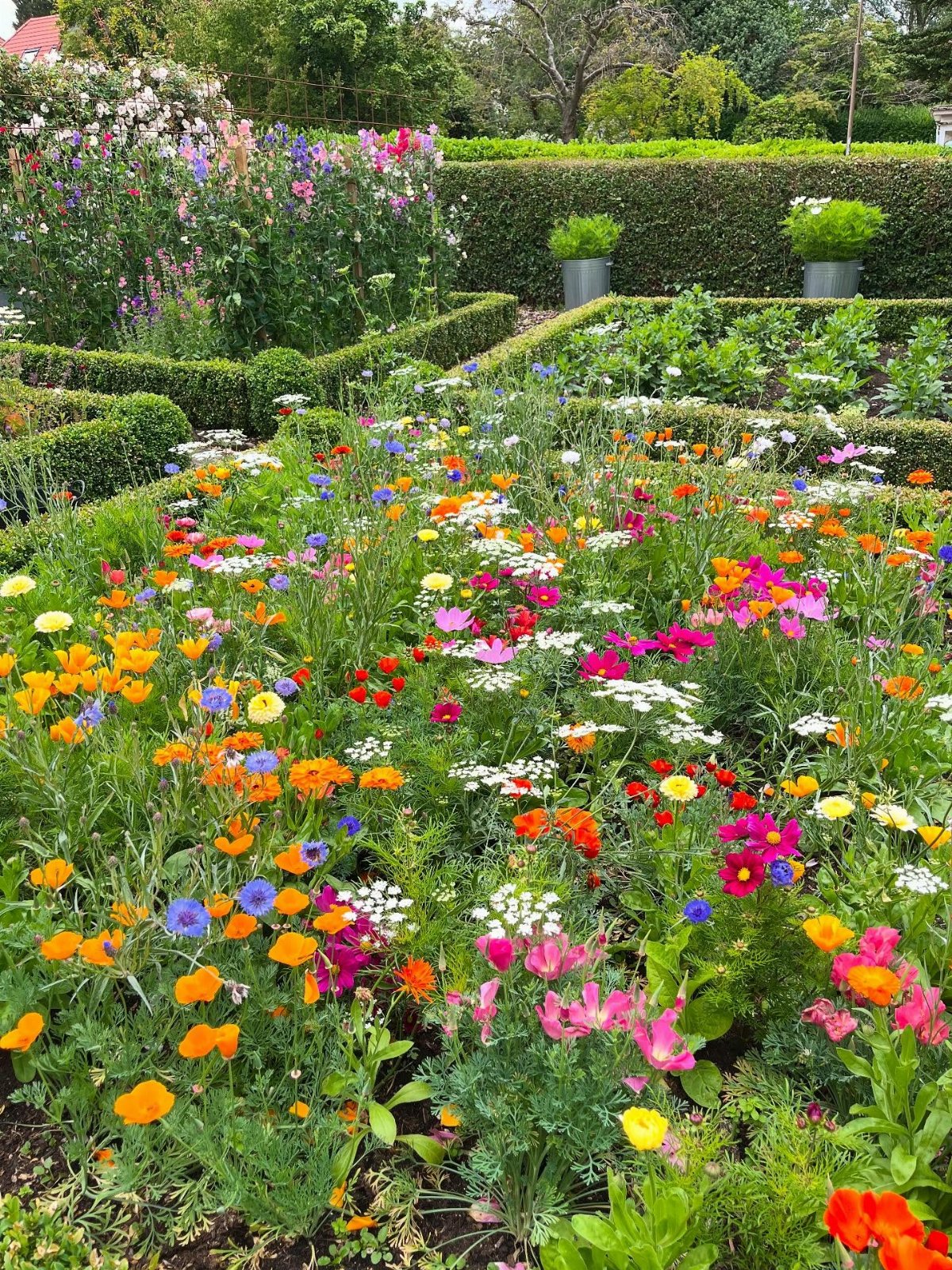
A pollinator bed is where the flowers earn their keep beyond looks. I pick my target first: bees, butterflies, hummingbirds, or the whole crowd, since each wants different plants.
Cornflower and milkweed for butterflies, salvia for hummingbirds, bee balm and coneflower for the generalists.
Succession is what makes it work. One flush in June leaves pollinators hungry by August, so I aim for something blooming from April to frost.
That means checking bloom times at the nursery, not just buying what looks good that weekend.
This suits anyone who gardens for motion and sound as much as color. Some mess comes with the territory: spent flowers stay on the plant longer, and the tidy deadheading habit has to relax.
A boxwood border, like the one framing this bed, keeps the wild middle from reading as neglect.
3. Raised Beds
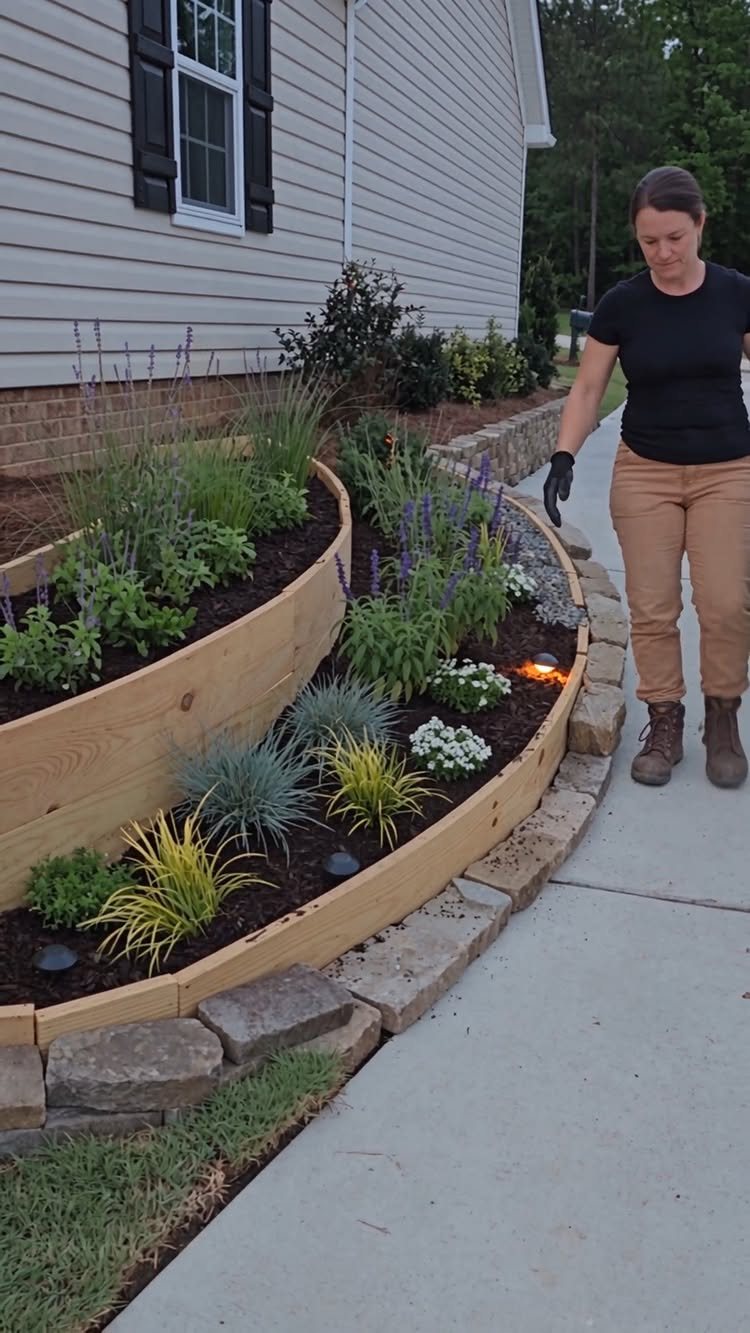
Raised beds solve ground that won’t grow, not just ground you don’t own. I’ve built them over concrete, contaminated soil, and compacted construction fill where nothing would root.
Wood is fastest to work with, but cinder blocks cost less and last longer than you’d think; paint them to match the house trim and plant succulents in the top holes.
Width matters more than height. At 4 feet across, I can reach the middle from either side without stepping in.
Any wider and the center becomes a weed zone I can’t tend.
For a rental or a balcony, this is often the only flower bed option. The lumber runs about this much for a bed this size, against much more for a kit.
I’d build in winter so the soil’s ready by April.
4. Vertical Garden
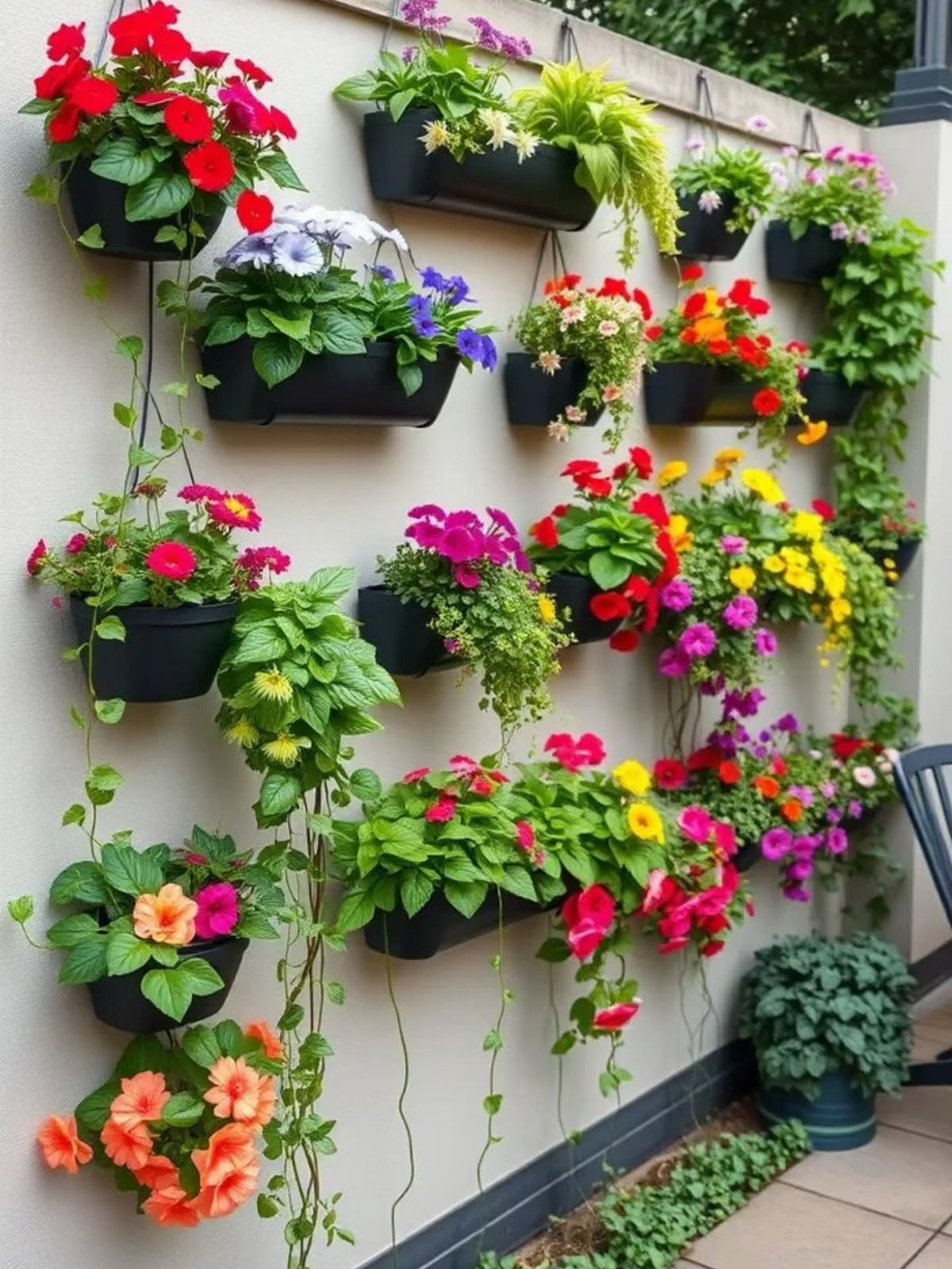
Vertical planting is how I garden when the footprint is a balcony or a narrow side yard.
Climbers need support matched to their weight: lightweight annual vines on twine, heavy clematis on wood or metal.
I check the mature height before I buy; a hop vine that wants to run on a short wall is a pruning job I didn’t sign up for.
Watering takes more attention when the roots aren’t in the ground. Elevated soil dries faster, and the top rows in a stack like this need checking daily in July heat.
I’d reserve this for gardeners who pass the wall morning and evening, or who’ll run drip lines. For a single accent, one tall trellis at the back of a border gives the height without the maintenance ladder.
5. Foundation Flower Bed
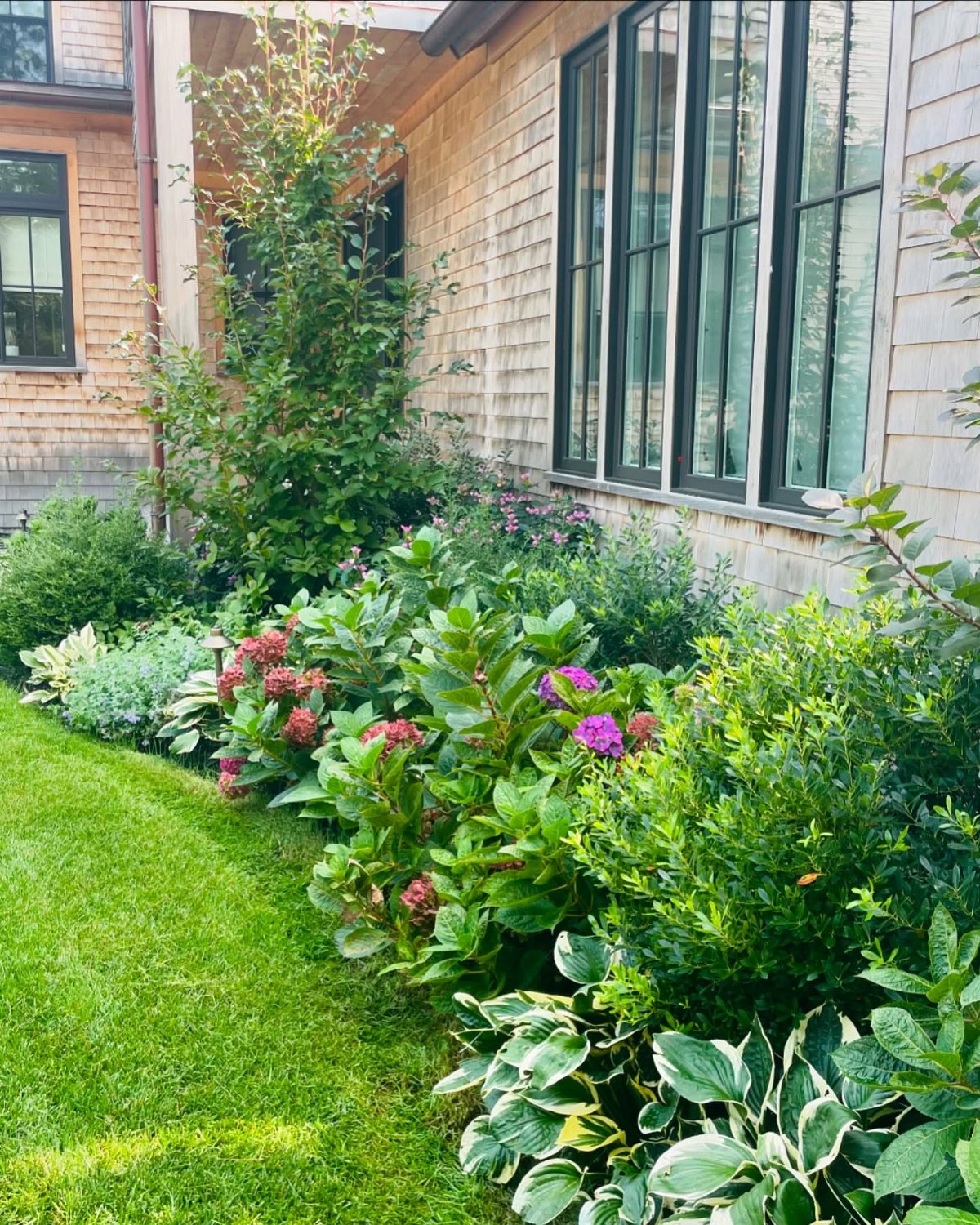
Foundation planting is the buffer between siding and lawn, and done right it makes a house look settled into its lot.
The rule is three tiers: backbone shrubs near the wall, mid-height perennials in the middle, groundcovers at the front edge.
Prep is where this fails. I clear sod and weeds, then lay a hose to mark the bed line and walk to the curb to check the curve.
Soil gets loosened 8 to 12 inches down with compost worked in. Skipped prep means stunted plants in year three, and by then I’ve forgotten the cause.
This suits any house with visible foundation walls. The cost is time more than money: a weekend of digging, then patience while it fills in.
6. Cottage Garden
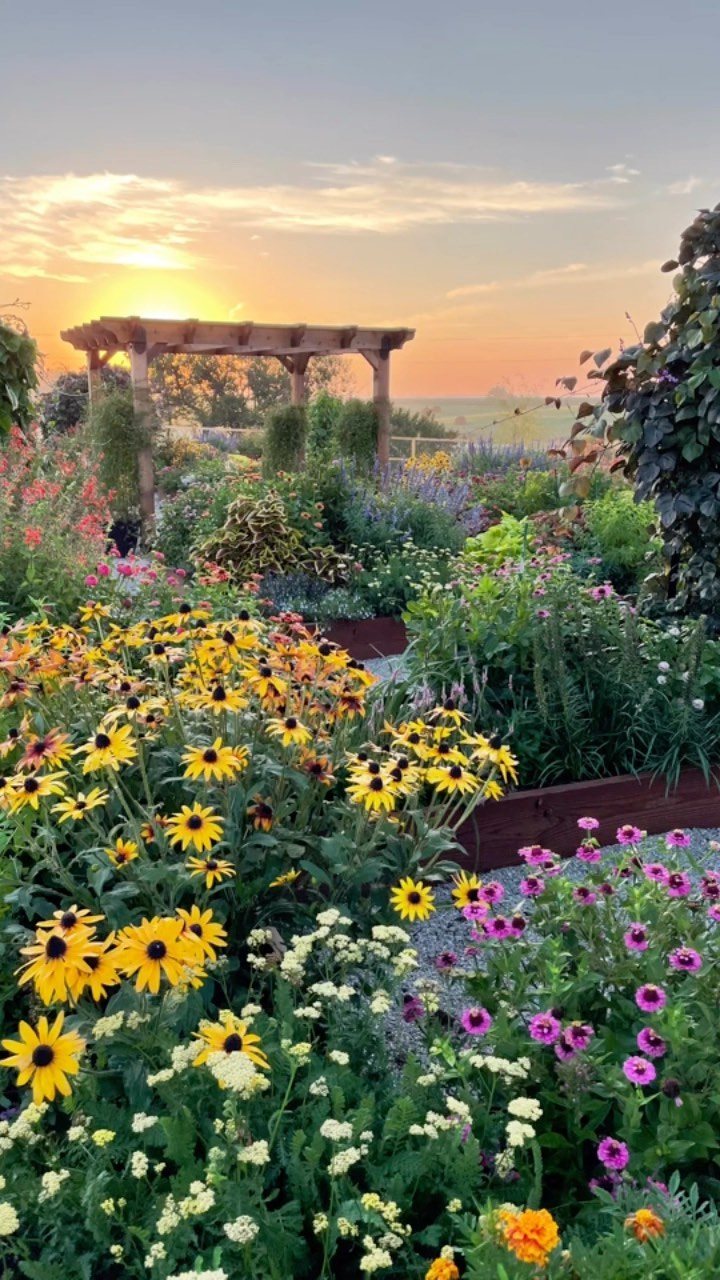
A cottage garden looks thrown together and is not. Each plant is placed in clusters of three or five, never singles, so the eye reads it as natural drift rather than grocery-store spacing.
I plant for the full sequence, not the June peak. Something has to look good in May, August, and the brown November tail.
Older homes and patient gardeners suit this style best. The first couple seasons take editing: pulling what overtakes, filling gaps where something died, learning the choreography.
I’d avoid it for a front yard that needs to look finished immediately, or for anyone who prefers edges sharp and beds weeded weekly.
7. Impact with Annuals
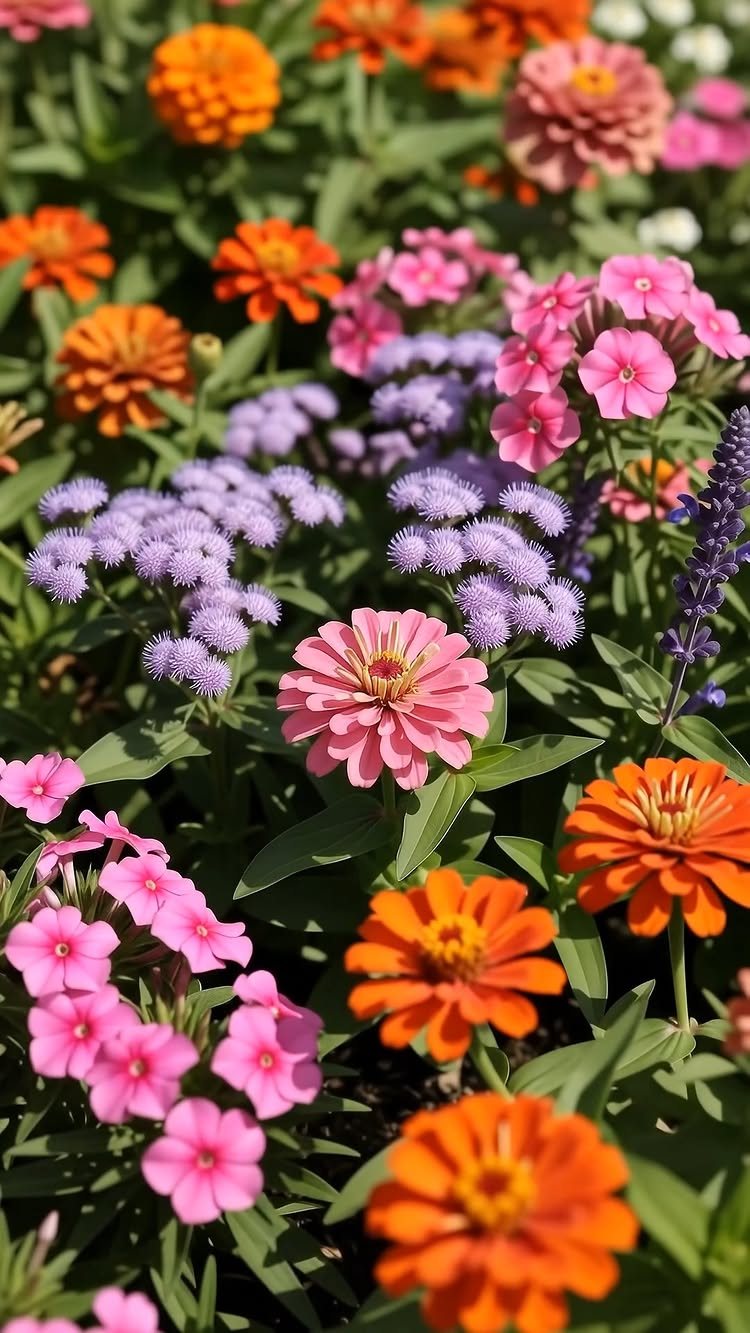
Annuals burn bright and then go out, which is exactly their point. I replant mine each spring for color that carries from late May straight through to the first hard frost.
For a bed that reads as intentional rather than scattered, I pick a palette and stay in it. Zinnias and angelonia hold up in full sun; begonias and coleus carry the same idea into shade.
The trade is the yearly cost and labor, so I reserve this approach for spots where I actually sit or pass daily.
Entry beds, patio borders, and the view from the kitchen window repay the effort; the far corner of the yard does not.
8. Wildflower Meadow Bed
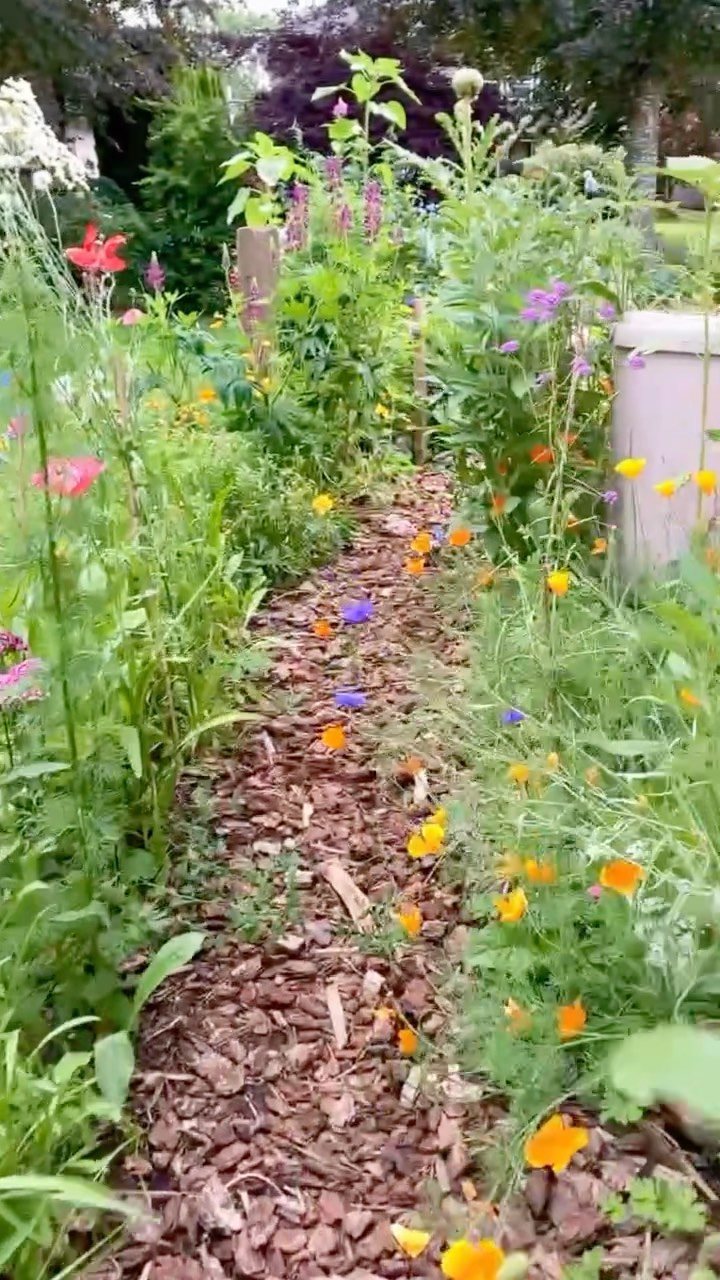
A wildflower bed loosens the whole yard. Mine started with a seed mix tossed onto soil I had scraped bare, and it filled in thicker each year as some plants reseeded themselves.
The look is informal by design, not neglect. Native mixes draw bees and butterflies without supplemental water once they are established, though the first season takes patience and some weeding while roots set.
A narrow wood-chip path through the middle lets you tend the bed without trampling the flowers. A small sign marking it as pollinator habitat has slowed my neighbor’s impulse to tidy the edges.
9. Cut Flower Garden Bed
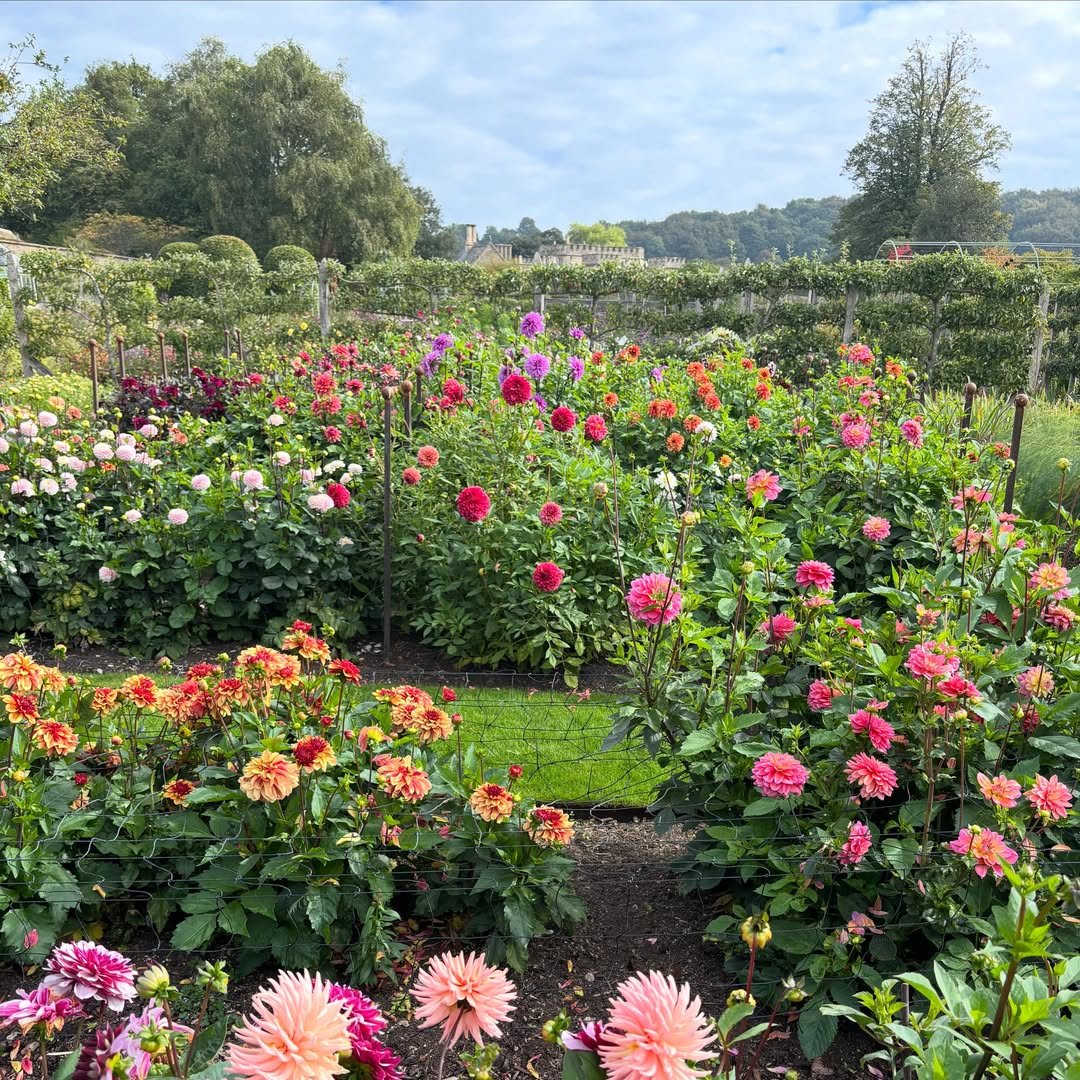
Cutting gardens spoil you for grocery-store bouquets. I grow dahlias and zinnias for stems that last a week in water, netting the plants to keep them upright under the weight.
The bed wants full sun and sturdy stakes. Early-season gaps I fill with daffodils and lilac from elsewhere in the yard, so something is always ready for the vase.
Cosmos and Shasta daisy extend the season without much fuss. The cost stays modest if you start from seed; the real investment is the space you surrender to flowers you will not leave in place.
10. Shade Lovers Flower Bed
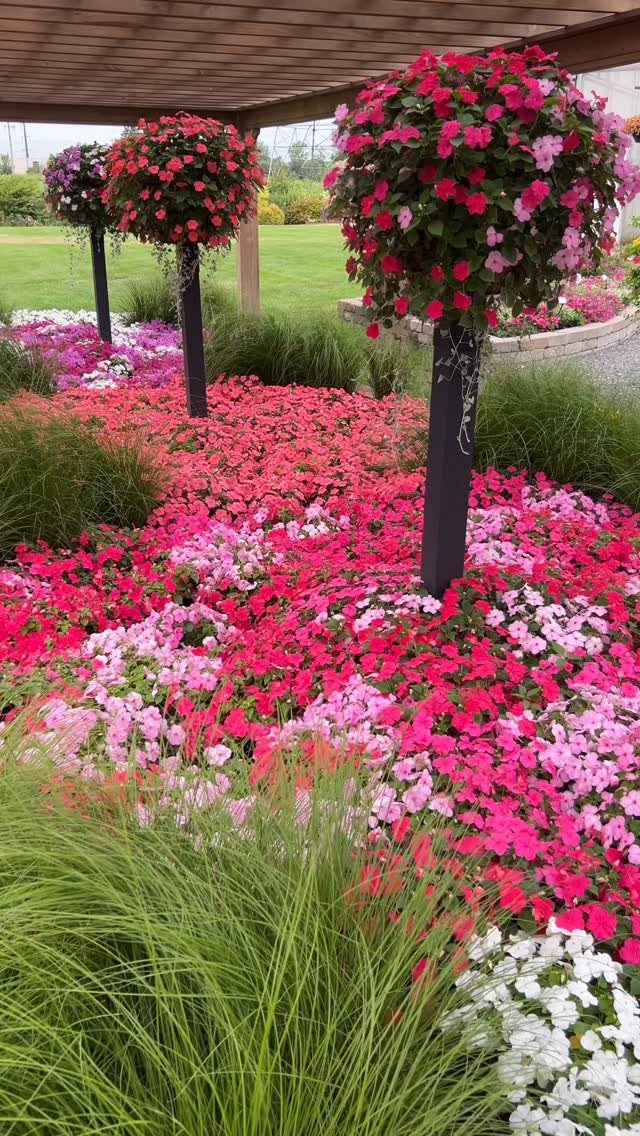
Shade is not a problem to solve but a condition to plant into. Impatiens and begonias carry color where sun lovers fry by July, and hostas give structure when flowers fade.
I measure my shade before I shop. Morning light with afternoon cover suits different plants than deep canopy all day, and "shade-tolerant" on a tag rarely means "shade-happy."
The bed under my pergola gets enough bright indirect light to keep the impatiens blooming rather than merely surviving. Expect less flower density than full-sun beds, and design for foliage texture instead.
11. Tropical Garden

Hot colors read as energy, which is why I cluster red, orange, and yellow where people gather.
Bird-of-paradise and canna lily carry the tropical look even where winters drop below freezing; I treat them as annuals or lift the rhizomes to store dry.
Dark foliage, like some coleus varieties, keeps the palette from tipping into circus. Orange and purple blooms against broad green leaves read as tropical even in a small space; a brick path curving through gives the eye somewhere to travel.
This is not a quiet bed, and it asks for space to breathe. Tight corners turn loud into chaotic fast.
12. Create a Rain Garden
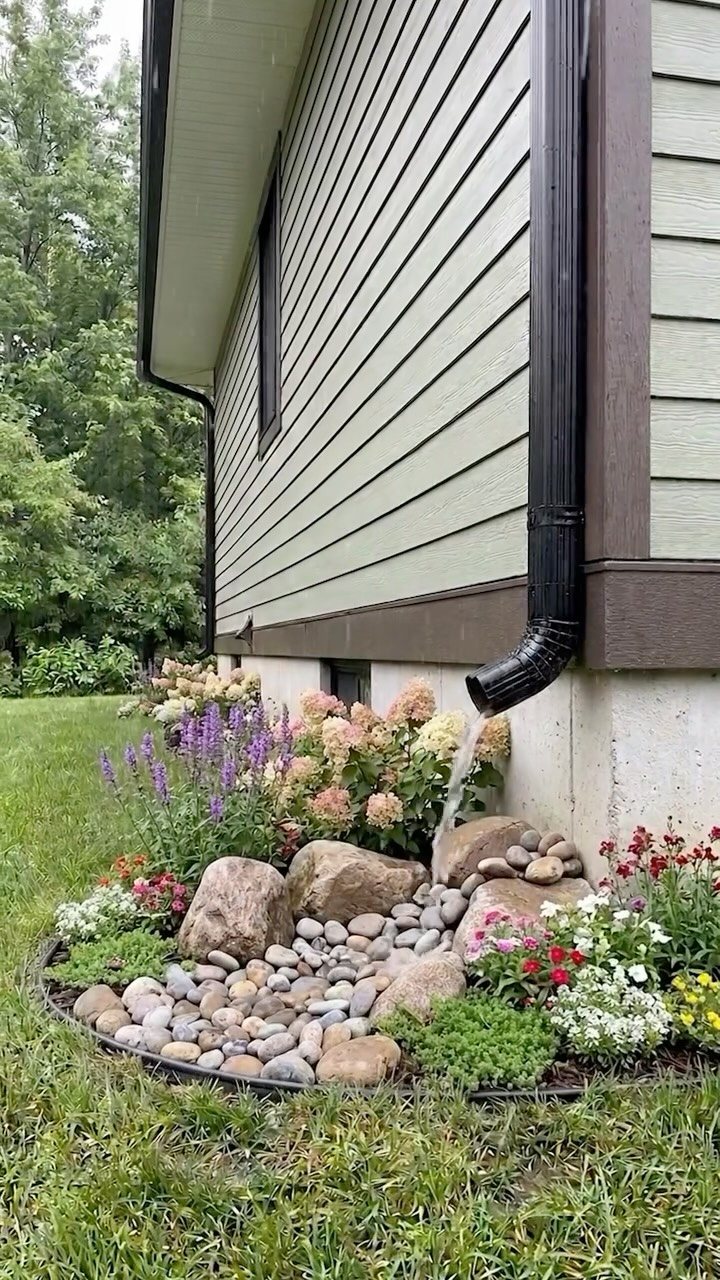
Every yard has a low spot where water sits after rain. I turned mine into a working bed instead of a lawn-killing puddle, channeling the downspout directly onto river rock that slows the flow.
Iris and milkweed handle the wet feet; rose mallow and Joe Pye weed fill taller layers. Around the edges where drainage improves, I drop in plants that prefer drier soil, so the bed grades from swamp to standard.
The rocks matter as much as the plants, giving the eye a path to follow and preventing erosion the first year while roots establish. Check your municipality’s guidelines; some offer cost-sharing for runoff-reducing plantings.
13. Line a Walkway
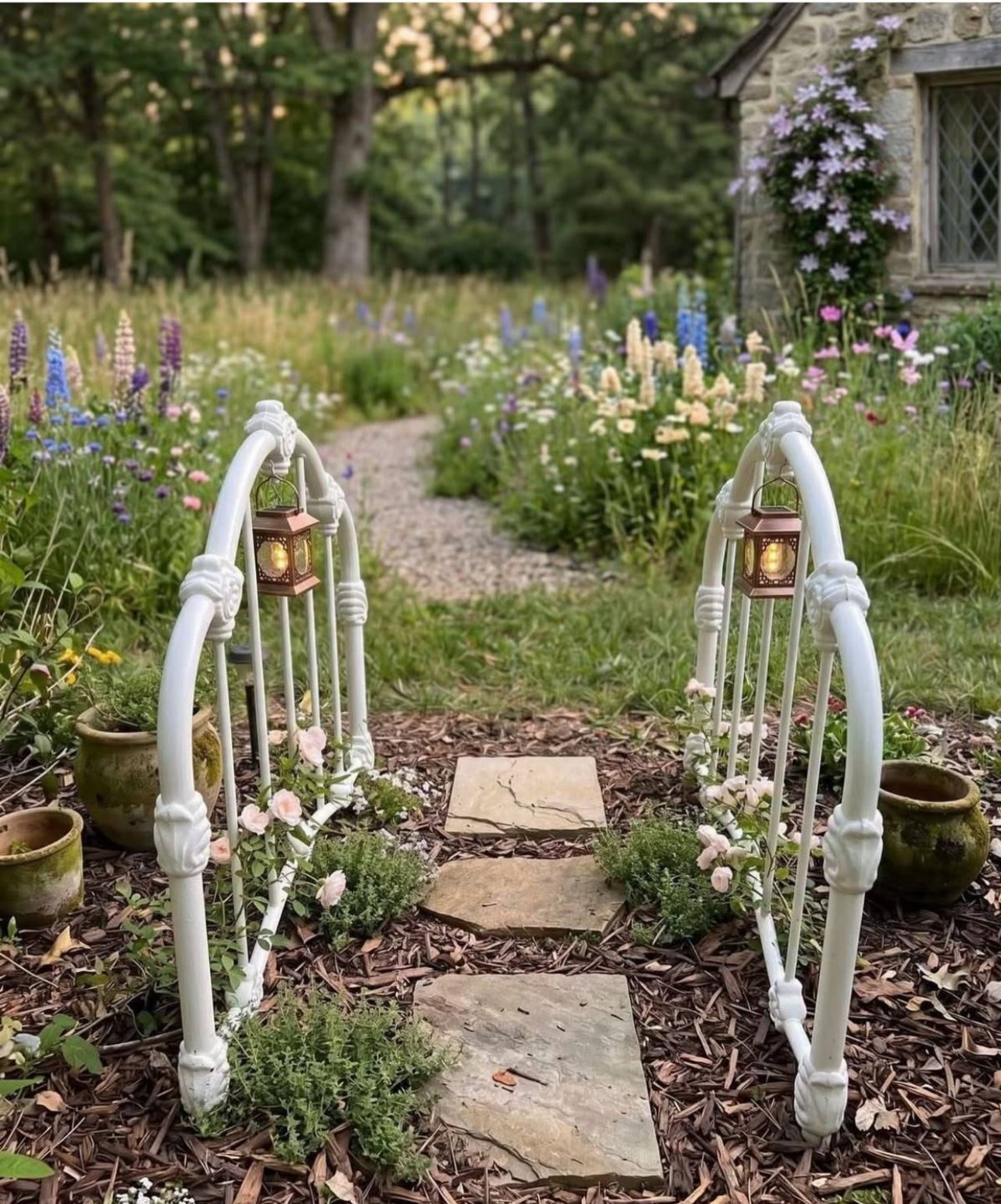
A walkway lined on both sides with the same low plant turns an ordinary path into something that pulls people forward.
Lavender, catmint, or dwarf marigolds sit tight to the ground and stay off the stones, so no one steps on stems or brushes pollen onto pant legs.
Repeating one variety on each side gives the cleanest look; mixing heights breaks the corridor effect unless you keep taller blooms well back from the edge.
Fragrant choices pay off here more than anywhere else in the yard. Guests smell lavender or salvia before they reach the door, and that first impression costs less than a hardware-store welcome mat.
Sun determines what thrives, so check your hours before buying.
14. Mail Box Flower Bed
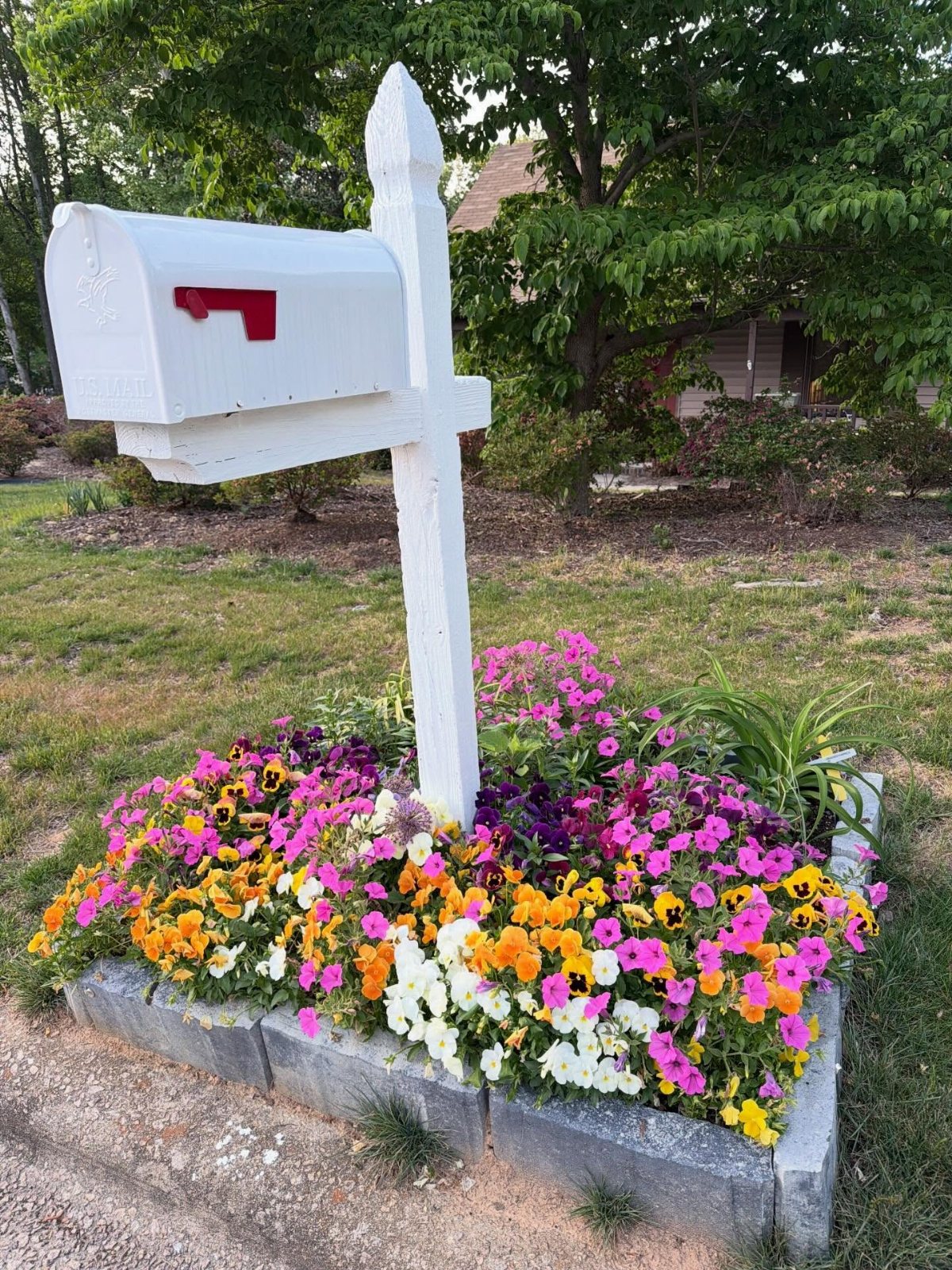
A mailbox at street level greets visitors before they reach the front door, so the bed around it sets the tone for the whole yard.
A small bed around the post frames it with upright blooms behind and cascading stems at the base. Black-eyed Susans give height at the back; sweet alyssum or portulaca spill over the stone edge to soften it.
Annuals work best for season-long color in this spot, since perennials finish and leave gaps. Water deep and rare to push roots down; shallow watering in summer heat only teases them.
Short varieties keep sight lines clear for drivers and mail carriers, which matters more than height here.
15. Edging with Stones
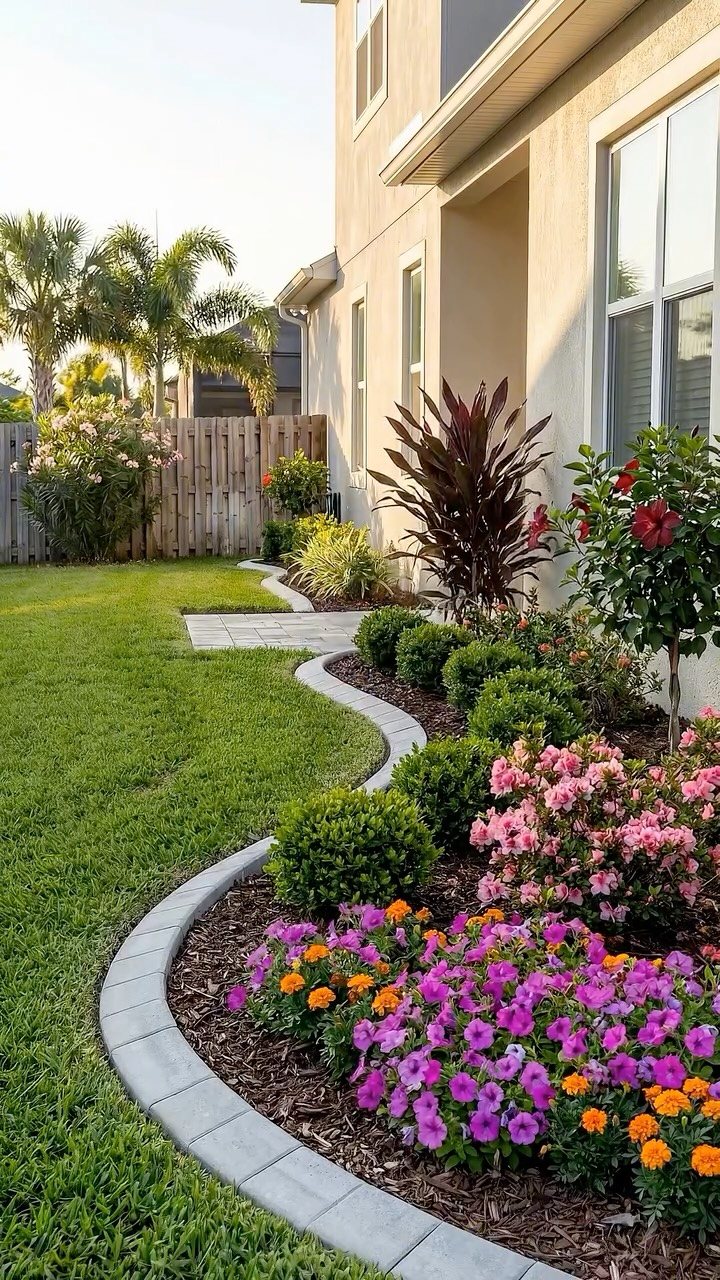
Stone edging does two jobs at once: it holds the bed shape through mowing season, and it stores daytime heat for plants that want warm roots.
Fieldstone looks gathered rather than bought, especially when the sizes and colors vary the way local stone does. That irregularity suits cottage plantings and wildflower mixes better than formal borders do.
Check your own yard first for candidates before you haul anything home. A local look beats catalog uniformity, and free beats the per-pound price at a garden center.
Mortar is optional; dry-stacked stone shifts slightly and still holds the line, and small lizards use the gaps.
16. Bold Borders
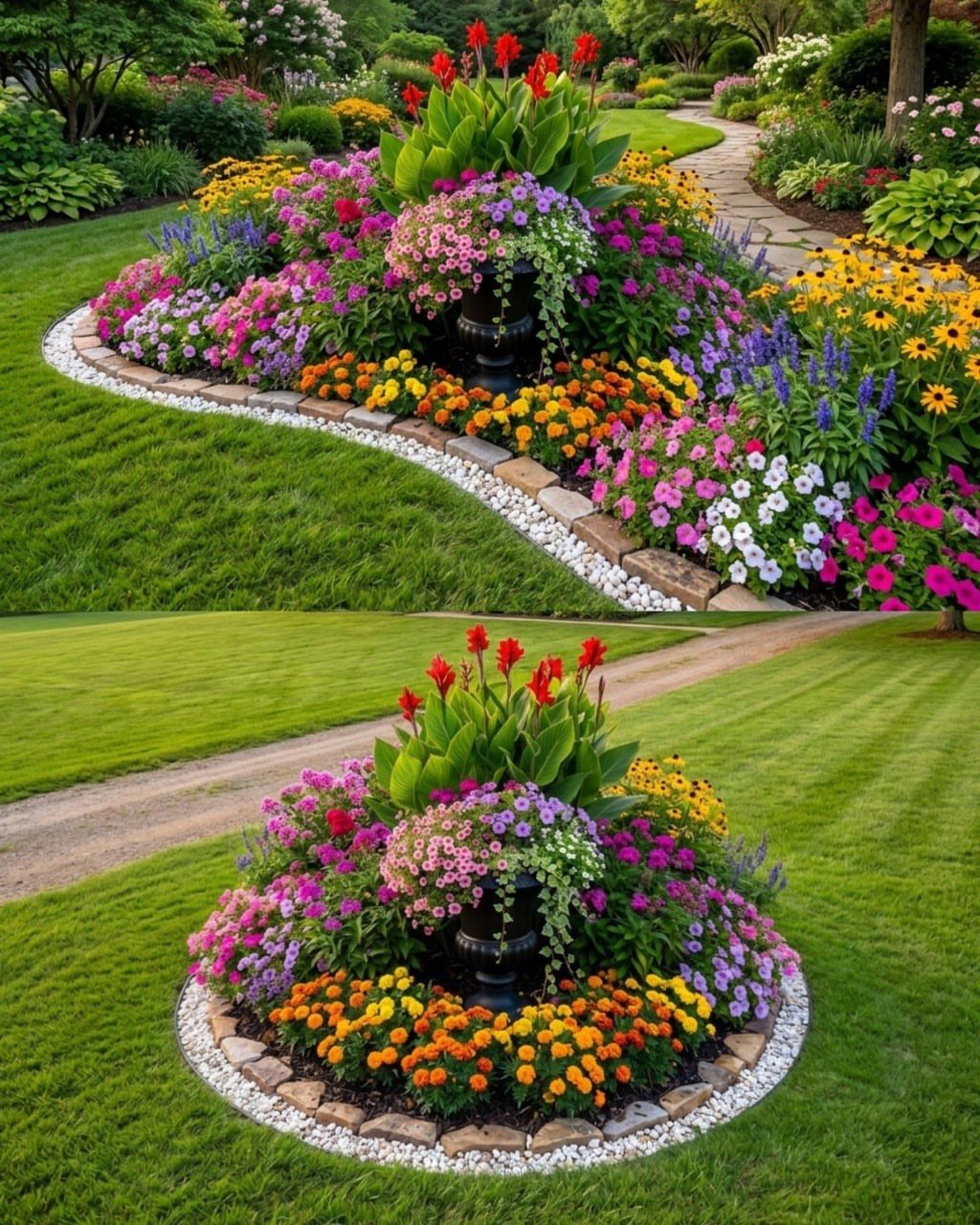
This is the choice for a gardener who wants the yard to stop traffic, not invite quiet admiration. Neon pink petunias against chartreuse foliage, or orange cannas backing dark-leafed dahlias, read as deliberate drama rather than accident.
The risk is garishness; the reward is a bed that earns its place from well across the yard.
Partial shade shifts the palette toward variegated fatsia and giant hostas, while full sun calls for tender cannas and elephant ears that won’t survive winter north of zone 8. Treat them as annuals or dig and store.
The bold look costs more in replacements, but nothing else fills that visual space in July.
17. Herb Garden
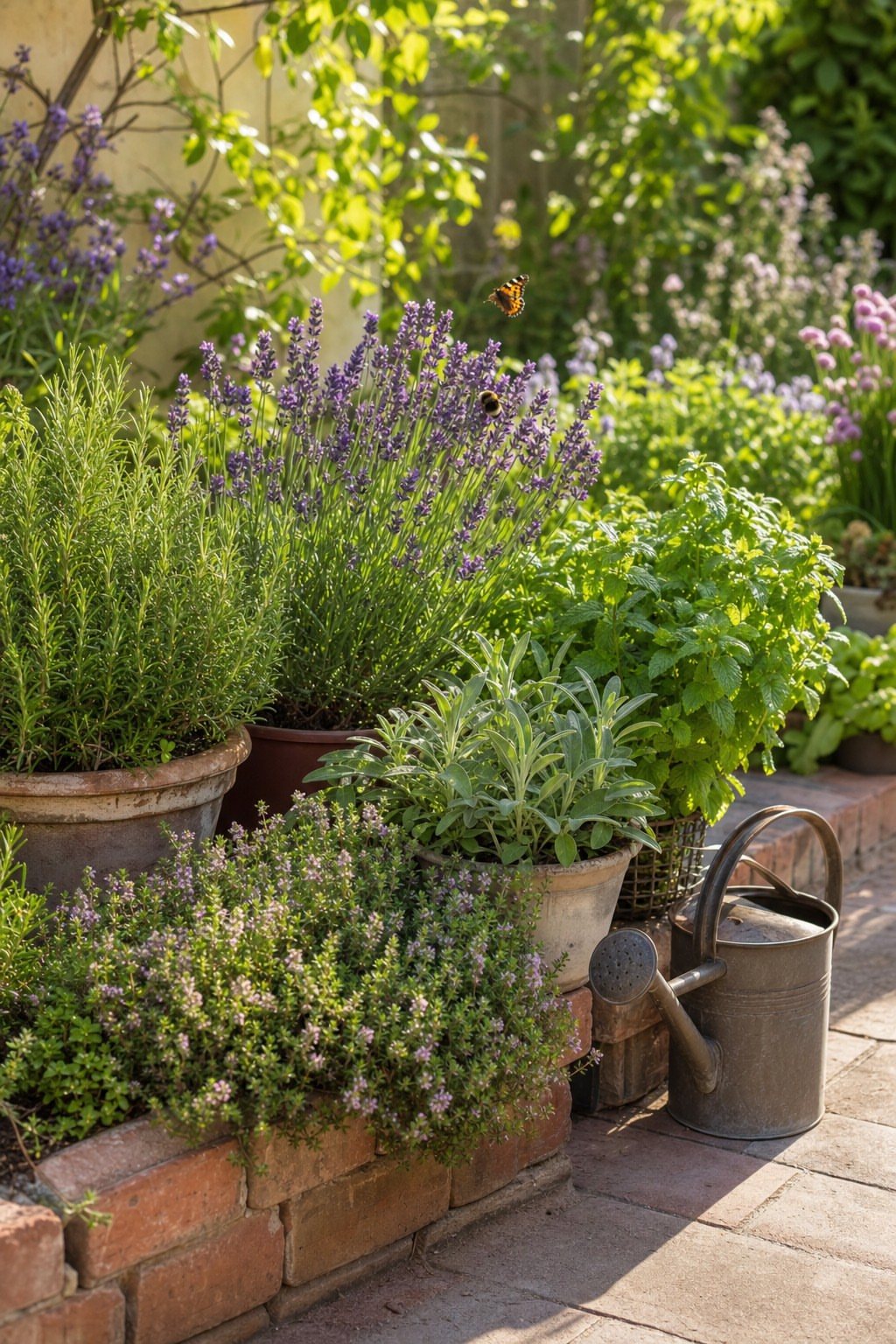
A bed that feeds you while it flowers earns its square footage twice over. Basil, thyme, oregano, and lavender all want sun and tolerate dry spells once established, which matches the conditions that stress pickier ornamentals.
Most flower at some point, and those blooms draw pollinators the vegetable patch needs.
Drought tolerance means less watering once roots are down, and the fragrance rewards anyone who brushes past.
I tuck herbs at the front of a bed where I can snip without stepping in; a low brick edging keeps that zone defined and the soil off the patio. Pots work for mint, which spreads aggressively in open ground.
18. Add Style to Your Steps
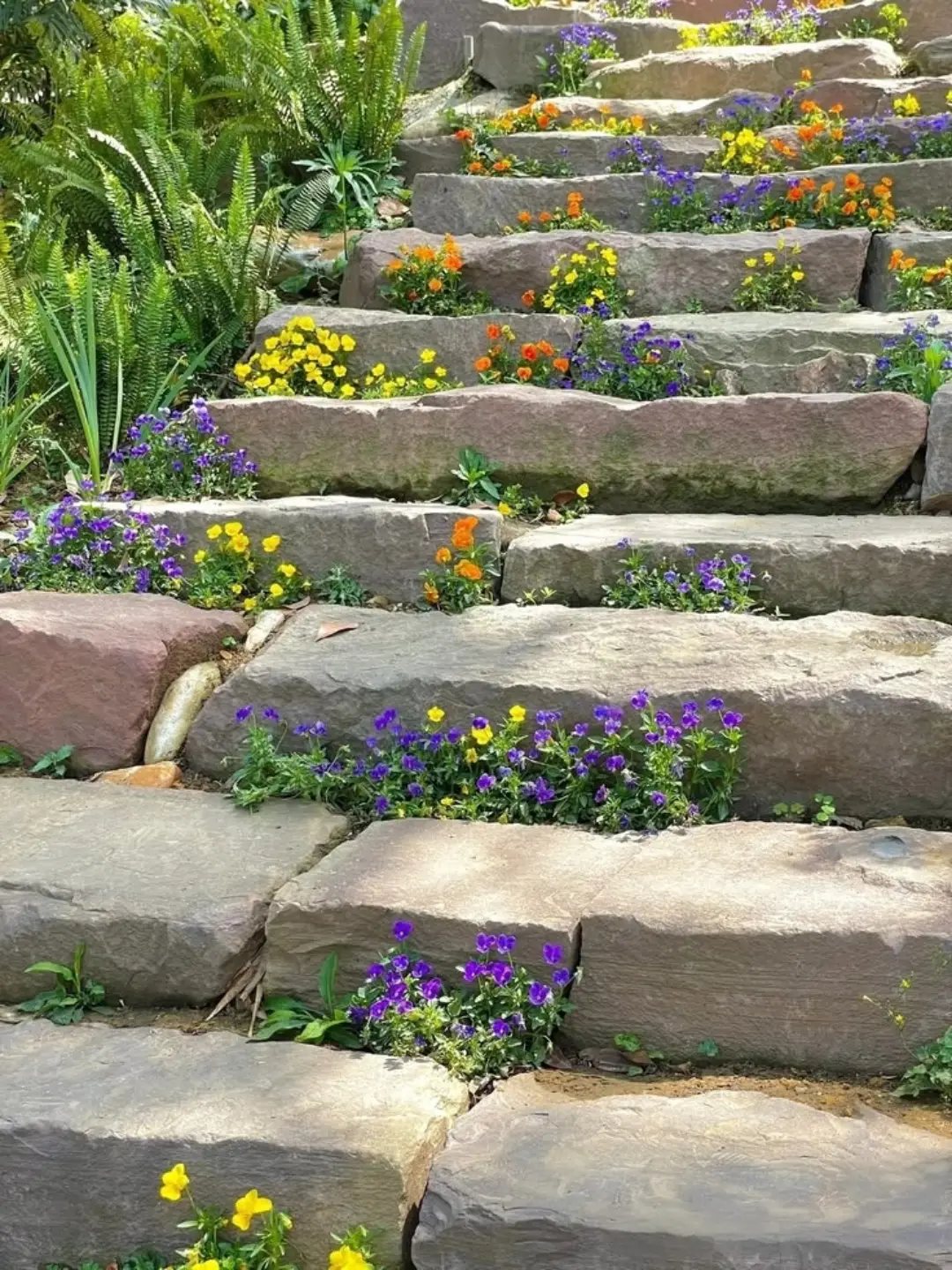
Stone steps with plants in the gaps turn a necessary grade change into the garden’s best moment. Pansies, ferns, or creeping thyme root in the crevices between blocks, softening what would otherwise read as hardscape marching up a slope.
Match the plant to the light each crevice gets: shade-tolerant on the north side of the stair, sun-lovers where afternoon light lingers.
Soil depth determines what survives; a thin skim of dirt dries fast and suits only the toughest creepers. Line the sides of the stair with wider beds if you want taller plants, since the steps themselves limit root space.
The transition between levels becomes a destination rather than a climb.
19. Layered Flower Bed
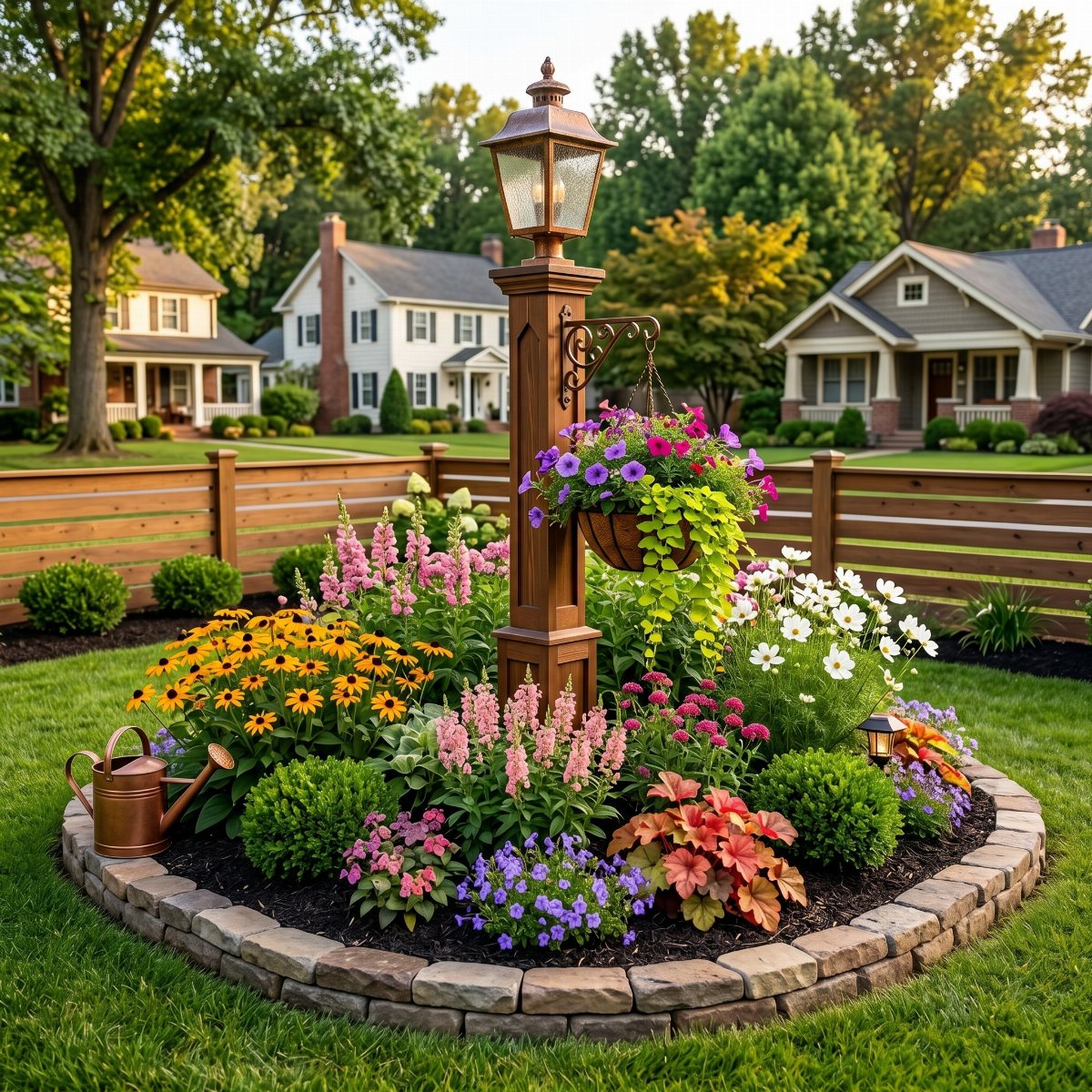
A layered flower bed builds depth by height rather than by color alone. Tall plants go at the back or center of a circular bed, mid-height varieties fill the middle ring, and low ground cover finishes the front edge.
The same logic works around a mailbox, a birdbath, or a straight border against a fence: tall plants at the center or back, mid-height in the middle, and low growers at the front edge.
I use this layout in tight spaces because it gives more visual interest per square foot than a single-height bed. Stone edging keeps the tiers distinct and stops soil from washing forward.
I would skip the ombre color schemes some guides suggest and go for contrast; adjacent colors read as one mass from a distance, and layering only works if the layers read as separate.
Tips for Successful Flower Beds
Turn the soil over before you plant.
I turn over the top few inches with a fork, shake out the clumps, and fork in a slow-release fertilizer; the soil ends up looser, cleaner, and ready to drain, and the roots that follow get a meal already waiting.
After that, I check what actually grows here: native plants, sun versus shade needs, and the color scheme I want to live with.
Mix perennials, annuals, and evergreens so something carries through from early spring to the brown tail of November.
Maintenance Advice
Regular weeding, mulching, and watering keep a bed from sliding backward. Mulch suppresses weeds and holds moisture where roots need it; I refresh it yearly.
Choose plants suited to the light and soil you have, and the maintenance drops fast. Once they have their feet down, drought-hardy plants and the ones that belong here anyway ask for almost nothing: no shearing, no feeding, no fuss.
Match the plant to the spot and the plant does the work.
Choosing Plants
Perennials carry one part of the season, annuals pick up another, and I plan the overlap so something is always open. Biennials split the difference, lasting two seasons though they may not flower both years.
Natives belong in every bed I plan. They handle local conditions without fuss, need less water, and feed the insects the rest of the yard depends on.
I list favorites by texture, shape, and color, then check that bloom times spread across the calendar so something is always coming or going.
Edging and Borders
Stones, wood, or planted rows all define where bed ends and lawn begins. A crisp spade edge with flowers set in a clean line works without buying anything; the visual boundary is the planting itself.
Stone stores daytime warmth for plants that want it, and dry-stacked gaps shelter small lizards. Wood rots faster but suits informal beds where I want the edge to soften over time.
The material sets the tone as much as the flowers inside it; I pick after I know what look the bed is aiming for.
Frequently Asked Questions
What are some low maintenance flower bed ideas?
Native plants and a limited variety of species make the easiest-care beds. Drought-tolerant varieties that need little pruning or fertilizer, plus a thick mulch layer to suppress weeds and hold moisture, cut the work to a few hours per season.
I skip anything that demands weekly deadheading or fussy watering schedules.
How do I layout my flower bed?
I arrange my beds tallest to shortest, working inward from whatever edge faces the house or the path I’ll stand on. This same layering works around mailboxes, birdbaths, or fence lines.
A strip of fieldstone or brick between the rows keeps the soil from sliding and gives the whole thing a finished look.
What is the 70/30 rule in gardening?
I spend about seventy cents of every plant dollar on workhorses I know will carry the bed, green to frost; the rest goes to oddities I might lose and won’t mind.
Landscape designer Piet Oudolf developed this split to keep beds from going stale without risking the whole design on untried varieties.
What is best to put in flower beds?
A mix of perennials, annuals, and native plants gives the longest season of bloom and the most resilience.
Perennials return each year and build structure, annuals fill color gaps from late May to frost, and natives handle local conditions with less intervention. I match the mix to the light I actually have, not the light I wish for.