The ideas below run from a handful of twine and two stakes to a cattle panel arch you can stand inside, and the one that fits you depends on whether you need the whole thing gone by fall or want it to stay put for years.
A cattle panel bent into an arch will outlast several seasons of cucumbers, and a simple string system between posts can be rolled up and stored once the vines finish.
1. A-Frame Cucumber Trellis
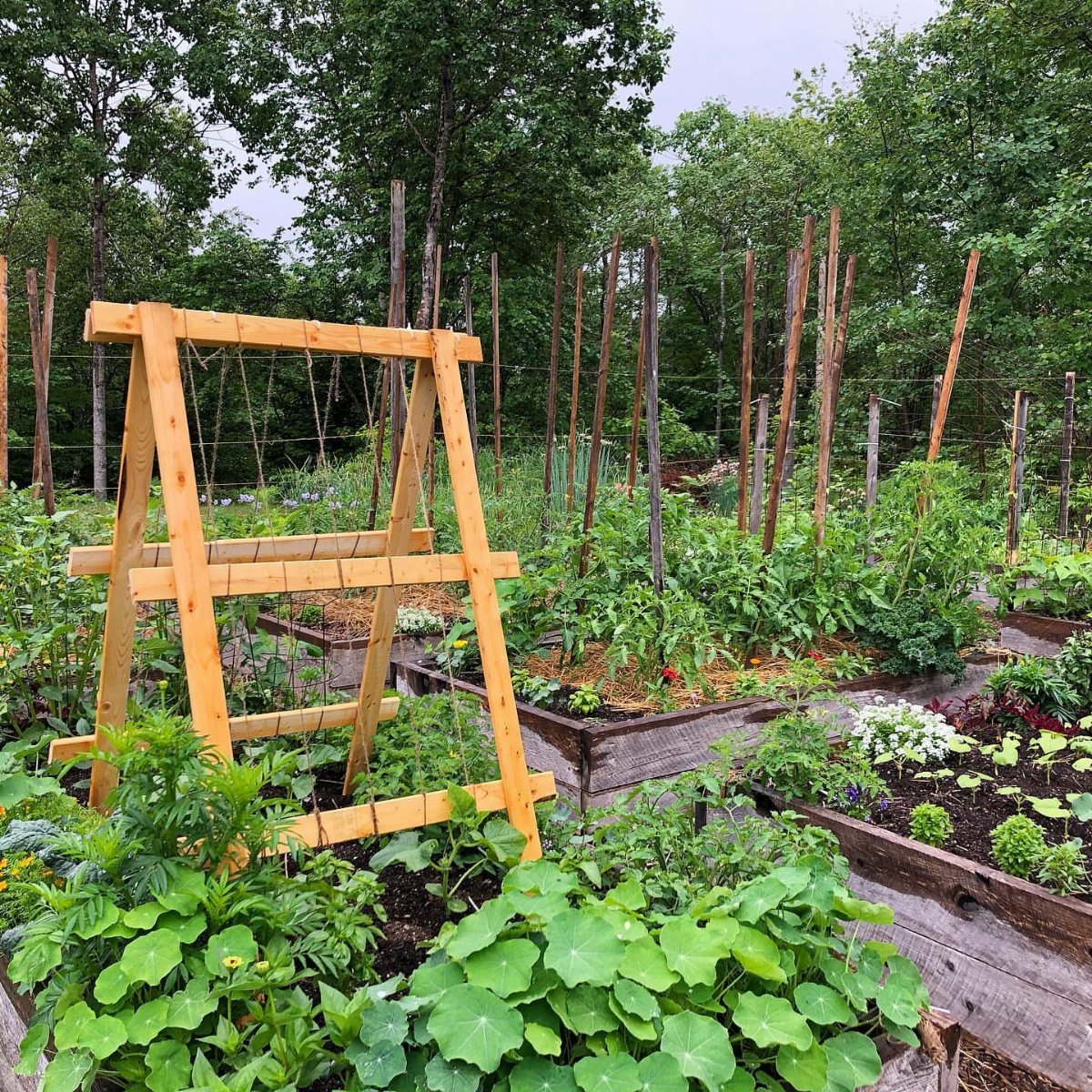
An A-frame puts two slanted faces to work above ground and casts a cool tunnel underneath where lettuce or herbs can wait out hot afternoons.
I would build it five to six feet tall so the vines have room to run, plant cucumbers on each side, and start training the tendrils early before they wander.
The frame can be wood, wire, bamboo, or whatever you have; zip ties or twine at the ridge hold it together, and anchoring the feet keeps the weight from splaying the legs.
This one suits anyone working a raised bed who wants to double their harvest without doubling their footprint.
2. Cattle Panel Trellis
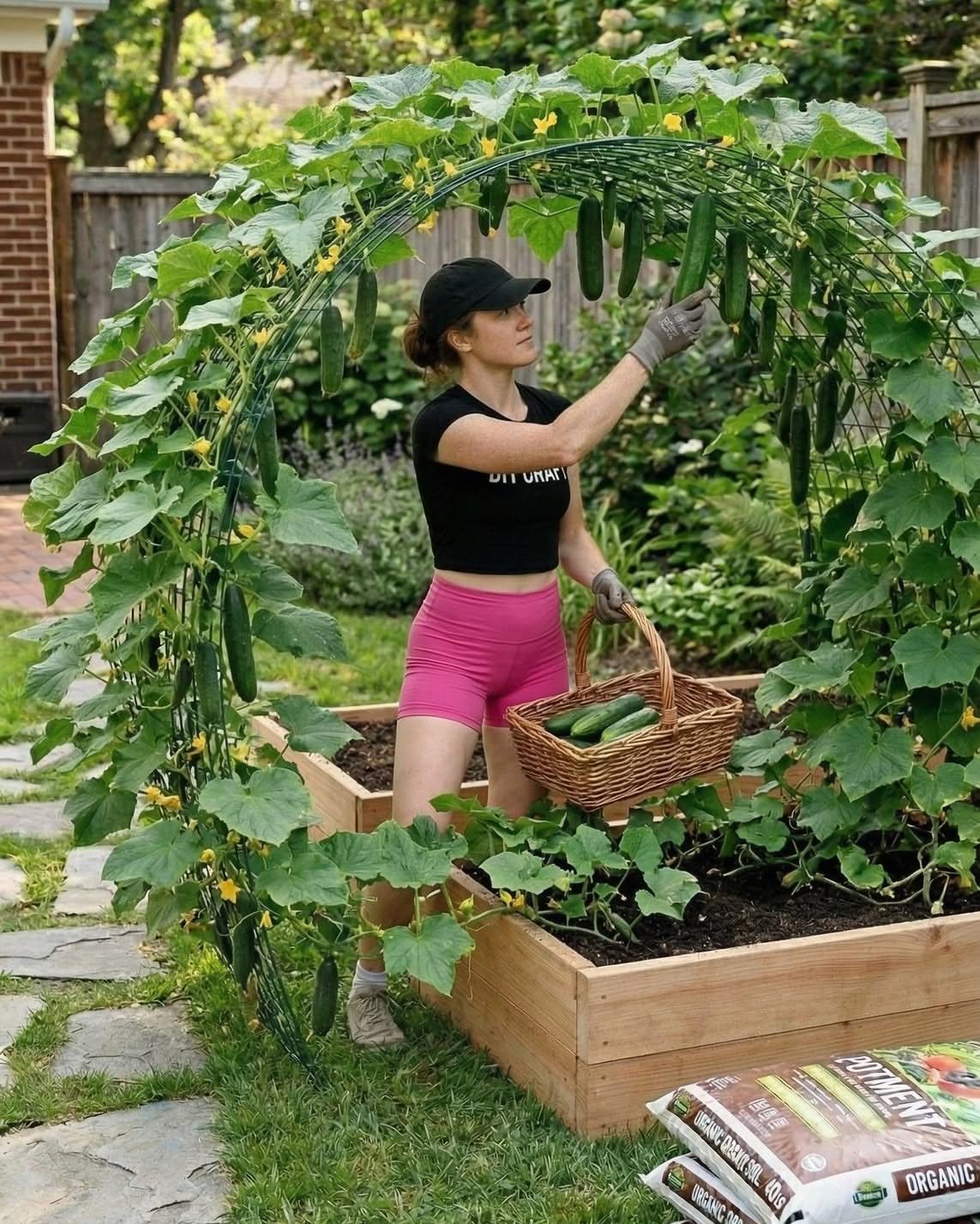
A sixteen-foot cattle panel bent into an arch between two beds turns a three-foot walkway into a harvest tunnel you walk through standing up.
The heavy wire handles full vines without sagging, and the open grid lets air move through to cut down on mildew.
Drive t-posts a foot or two deep at each corner to hold the curve, or anchor the panel between raised bed frames if your setup allows.
One maker I follow spans parallel sixteen-foot beds this way and trains cucumbers up the sides rather than letting them trail across the soil.
Farm supply stores stock these panels, and one will outlast several seasons of squash, tomatoes, or pole beans too.
You can also buy cattle panels which measure four by sixteen feet. These can be supported in the same way, upright on wooden stakes, or they can be bent into a U-shape between beds to make a cucumber tunnel or arched trellis.
3. Netting Trellises
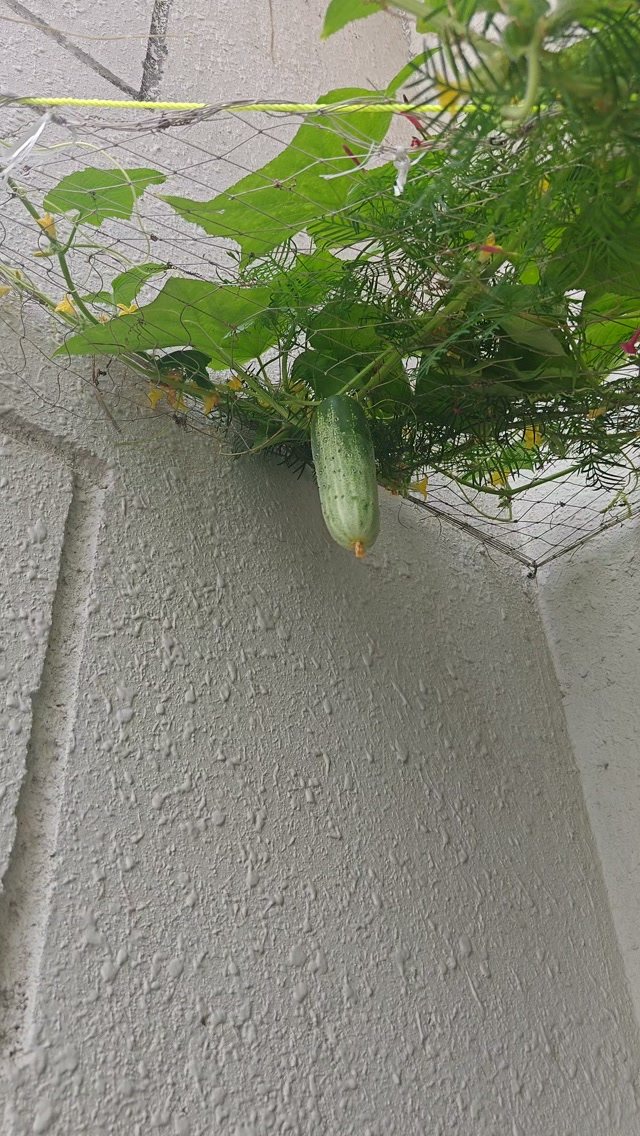
Plastic or nylon mesh hung against a wall or between stakes gives you a vertical plane for cucumbers to climb with almost no building.
Hole size matters: openings wide enough for your hand to pass through, otherwise the fruits wedge in as they swell.
I would secure the top to a rail or eye bolt and anchor the bottom with landscape staples so the mesh stays taut once the vines load up.
Tendrils grab on their own, though you may need to loop the first foot of vine by hand. This suits renters or balcony growers who cannot sink posts deep; it comes down in fall and stores flat.
4. Arch Trellis
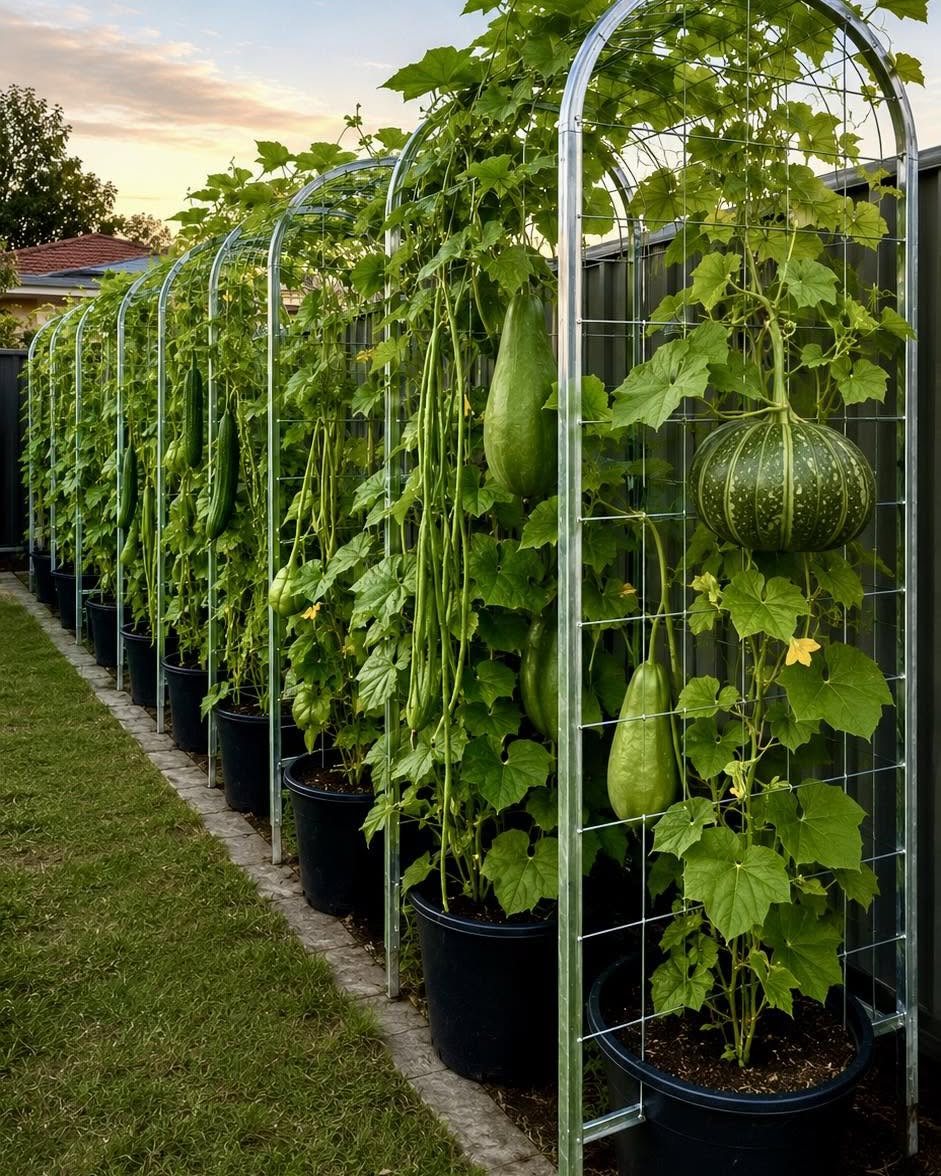
Plant at both feet of an arch and the vines climb up and over, letting the fruit hang down through the center where you spot it from underneath without digging through leaves.
Cattle panel works here too: a sixteen-foot length bent between four t-posts gives you a base about five to six feet wide, or garden centers sell ready-made metal arches if you would rather not wrestle wire.
The vines may not always top the curve depending on variety, but even halfway up you get cleaner fruit and easier picking than ground culture.
I would put this where you walk often; the structure earns its space as much from how it looks as from what it grows.
5. Wood and String Trellis
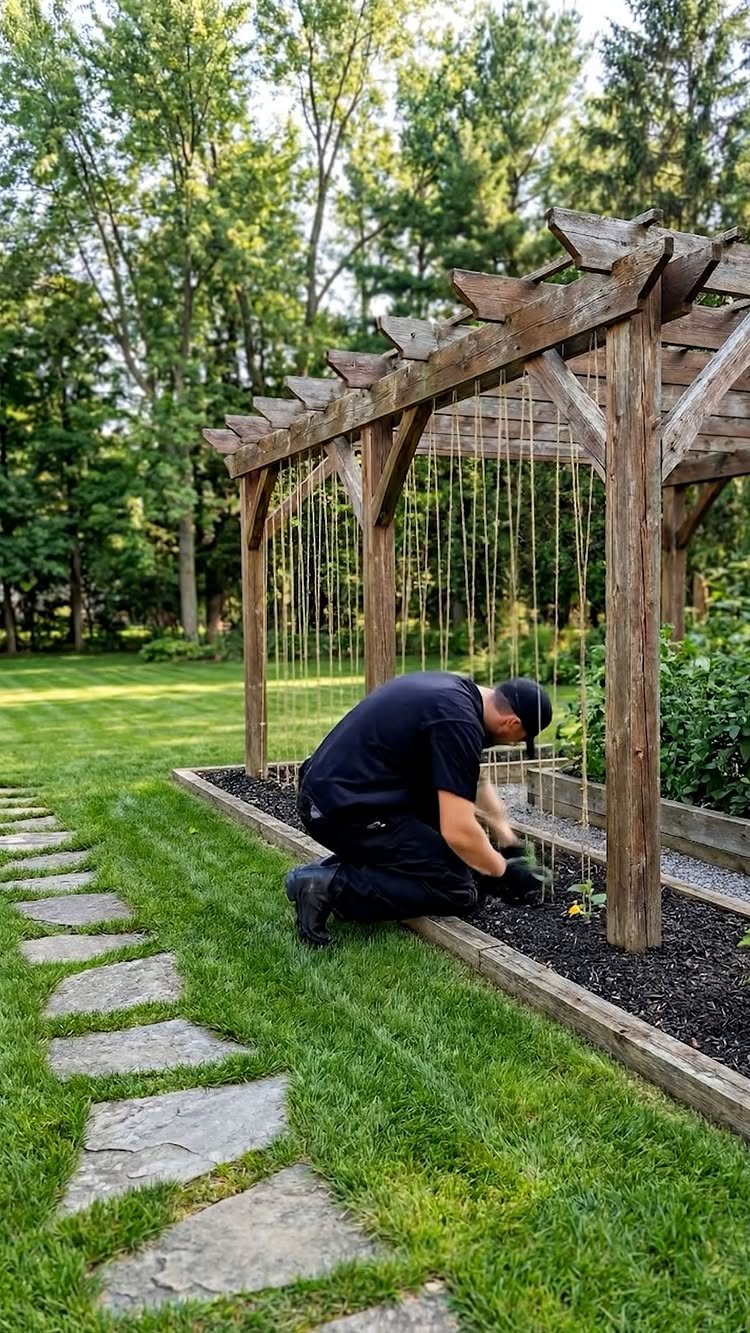
Two posts and a handful of string lines strung between them is the fastest trellis to throw together and costs next to nothing.
Run twine vertically from a top rail down to the soil, spaced close enough for tendrils to find, and wrap an extra line around the posts low to give small vines something rigid to push through before their tendrils start grabbing.
T-posts or 4x4s a foot deep carry the load; deck screws through a top rail hold the frame square.
I have seen old step ladders pressed into service the same way, and a black plastic obelisk from any garden store dresses up a raised bed if you want something prettier.
This is the one to build Sunday morning and plant after lunch.
6. DIY Garden Trellises

Six barrels, a wooden frame, and something for the vines to climb: that is the whole formula, and the rest is whatever you have on hand.
Lattice, pallets, bamboo poles, even PVC pipe will shape into a frame; one grower I follow uses a simple wooden rectangle across blue plastic drums and lets cucumbers hang through.
Getting the fruit off the ground means it grows clean and even, the leaves dry faster after rain, and you can plant closer together for more yield in the same space.
Drive side posts a foot deep, screw on a top rail, and string your pattern. I would add a low horizontal line about a foot up; seedlings that age do not put out climbing tendrils yet and need the help.
7. String or Twine System
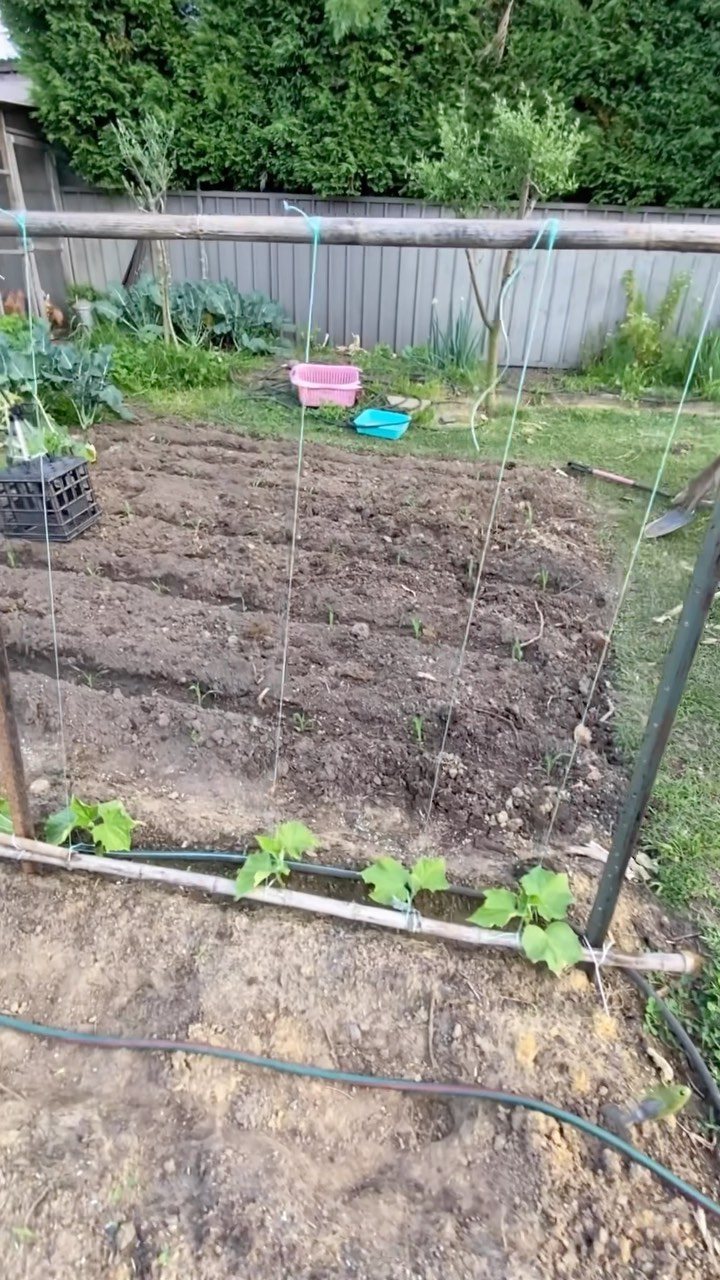
Twine strung between two posts costs less than a tomato cage and stores in a shoebox once the season ends.
A wooden or metal stake at each end of the row, driven a foot into the ground and standing five to six feet tall, anchors the whole setup.
Tie the first horizontal run of twine about 8 inches up, then add another every 8 to 10 inches. A few vertical lines give tendrils more to grab.
I guide the first vines onto the lowest string by hand; after that they find their own way.
This suits renters and anyone whose garden doubles as a walkway between seasons. You will be putting this together again each spring.
A cattle panel, by contrast, stays where you put it for years.
8. Vertical Trellis
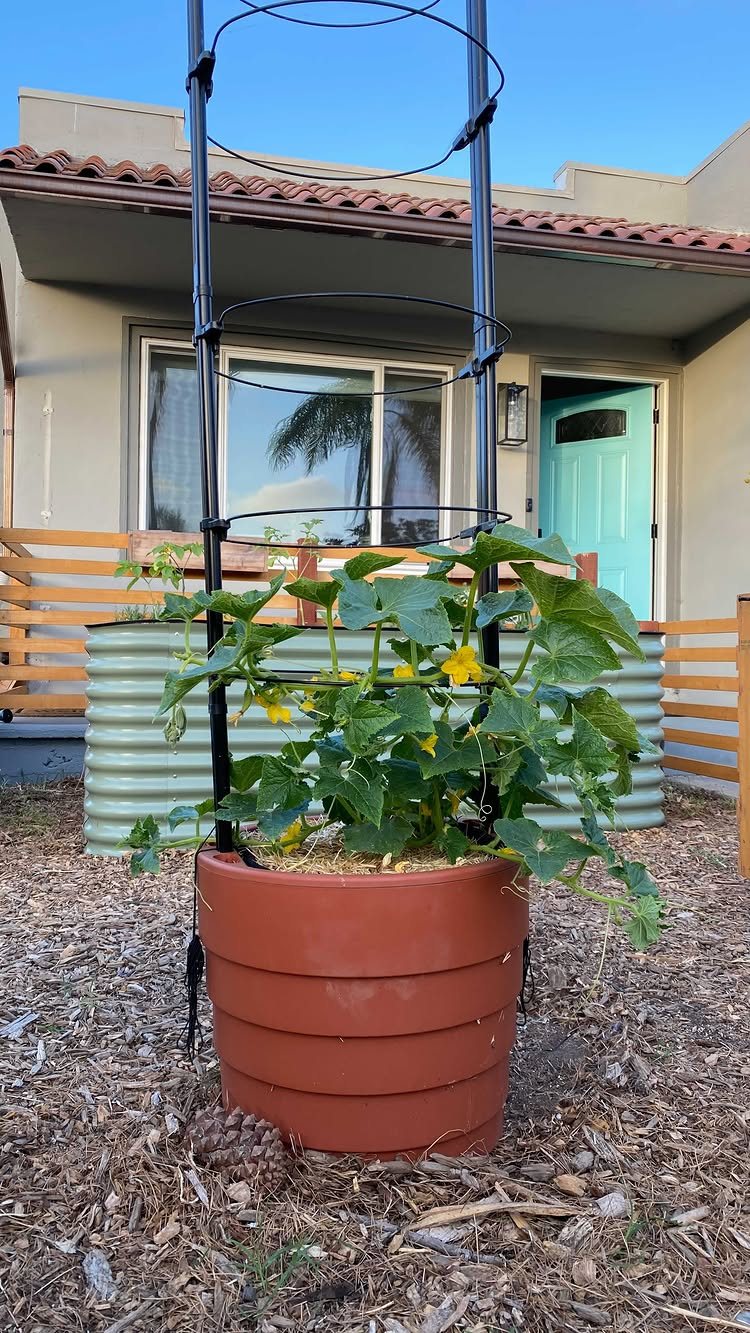
A simple cage or flat panel of wire fencing, stood upright at the bed’s edge, turns almost no space into climbing room.
Black metal in a terracotta pot is one look; the same idea works with a short strip of wire fencing staked along a garden border. Cucumber vines grip and climb without much help.
What changes the answer is your container or bed depth: a pot this size dries fast in July, so I check soil moisture more often than I would for in-ground plantings.
Best for the gardener who wants structure now, not a weekend project. Ready-made vertical trellises tend to run short, which fills fast with an enthusiastic slicer variety.
Cucumber Plant Varieties
Vining cucumbers are the ones to trellis; bush types stay compact and sprawl without help. Most seed packets mark the difference clearly if you read the description before buying.
Vining varieties run four to six feet, sometimes eight, and keep producing longer than bush plants do. I like Telegraph, Tasty Green, and Manny for trellises; all three are thin-skinned burpless types that climb without fuss.
Most slicers you see at the store and the smaller pickling kinds vine the same way.
The tendrils on modern varieties are not as clingy as they once were. You may need to weave the stem through the support or use C-clips to hold it until the vine takes over.
Once the tendrils find the wire they handle the rest, though I still thread the first few inches by hand to point them right.
Cucumber Plant Care
I check seedlings twice a week and loop any wandering stem back toward the trellis before it hardens off in the wrong direction.
Soil should be rich and moisture steady; a vine stressed dry then flooded makes bitter fruit. In containers I water more often than in-ground beds, especially once July heat sets in.
A mulch layer slows evaporation at the roots.
If vines outgrow the trellis top, let them flop. They do not need tying off or pruning back to size.
Trellis Height Recommendations
Five to six feet is the height to build for most varieties. Four feet works for shorter vines, though the extra foot of headroom costs little and saves trouble if your plants run longer than the packet promised.
Width matters too. One foot per plant along the base lets you line several vines up the same frame, spaced about twelve inches apart.
A four-foot-wide trellis holds four plants comfortably.
Openings in the grid or mesh should let your hand through for harvest. Reaching through from one side only makes this more important.
Wire, string, or thin wood all work for tendrils to grip; the material matters less than having something present at the right height when the vine starts looking for it.
Frequently Asked Questions
What kind of trellis works best for cucumbers?
An A-frame or cattle panel arch will hold the weight once the vines fill out and the fruit starts coming on.
What fits depends on whether you are planting in ground, in a raised bed, or in a pot on the patio, and whether you want it there year-round.
An A-frame doubles your planting surface above and below, while a cattle panel bent into an arch lets you walk through standing up.
Can I use a tomato cage as a cucumber trellis?
A tomato cage works for compact or container-grown cucumbers where a larger frame will not fit. A single narrow tomato cage works for one plant; wrap remesh into a wider cylinder and you can fit several at the base.
For enthusiastic slicer varieties that hit six feet, though, a cage runs short fast and the vines topple.