These backyard fountain ideas run from a $160 weekend build with two glazed pots and a pump to rock-and-stream installations that need professional grading and excavation.
A wall fountain fits a narrow patio where floor space is already taken by chairs; a pot fountain sits on the balcony you are working with no more than a few square feet.
1. Wall Fountains

A wall fountain mounts flat against brick, stucco, or fence boards, so it reads as built-in rather than set down.
The stone face you see is actually a façade over ordinary brick; that trick saves the cost of full masonry construction while keeping the look.
I would build the shell at least six feet tall so the water has distance to fall and the sound carries.
LED strips tucked behind the basin rim let you use it after dark without adding a spotlight. This suits narrow side yards where a freestanding piece would block passage, and patios where floor space already goes to seating.
You lose the view from behind, so place it where you approach from one direction only.
2. Pot Fountains

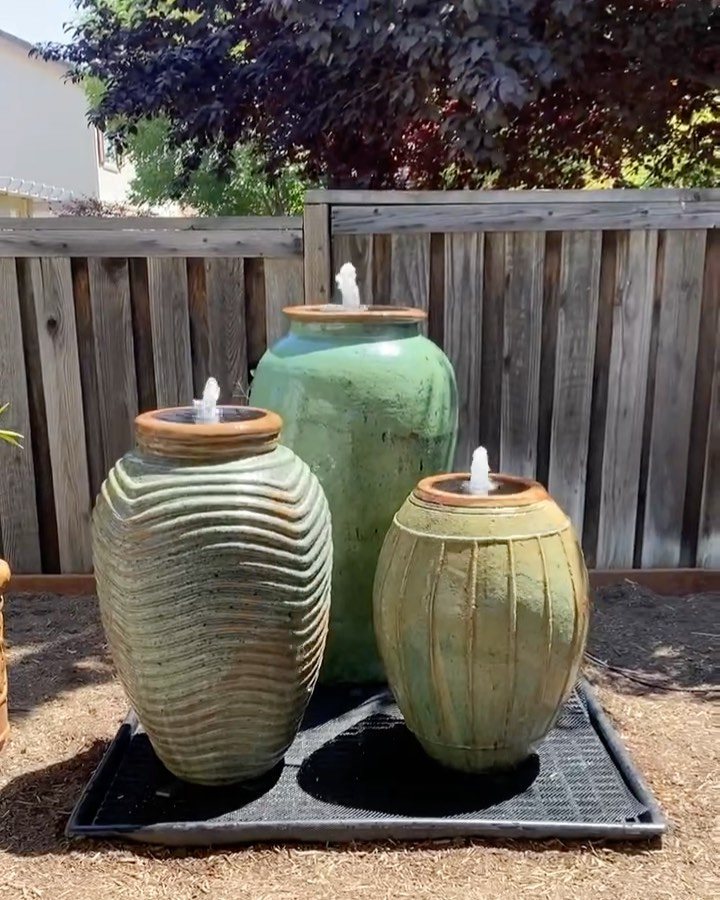
Three urns of different heights bubbling together give you movement without the machinery of a spillover design.
Ceramic holds up fine in freeze-thaw cycles if you empty it before hard frost; I learned that after cracking a single pot I left full through a Colorado January.
The black tray underneath catches what the urns weep and keeps mulch from turning to mud.
Cluster these with drought plants or set one alone on a balcony where a larger fountain would overhang the railing. The glaze color matters more than you think; that deep green reads as shade even in afternoon sun.
Grouped arrangements need an odd number, and three is where most budgets stop.
3. Pillar Fountains

Water sheeting down a black column reads as architecture more than ornament, which is why this shape belongs in gardens with clean lines and not much else competing.
The succulents and river stone at the base are doing real work; they mask the pump housing and let you skip a formal basin edge.
LED lighting from below turns the falling water into a vertical line at night, though I would wire it on its own switch so you are not running it every evening.
Compact yards gain height without losing ground area. The limit is seating placement; you need clearance from the splash zone, so leave enough radius that no one gets sprayed.
4. Bird-Friendly Bubbler Fountain

A bubbler in a birdbath gives you both the fountain sound and the activity of birds, which a tiered piece this size rarely attracts.
Keep the spray low; a jet too high empties the basin in wind and startles birds rather than inviting them.
Frame it with ferns or broad-leafed plants if you want the tropical look, though plain mulch and a few rocks suits most yards without looking themed.
The Oslo model runs around medium pedestal size, so check your scale against the patio furniture nearby. This is the choice if you watch birds already and want to draw them closer to the house.
5. Tiered Fountains

Three tiers of stone with water falling through each level gives you the sound profile people mean when they say "fountain noise," the kind that covers traffic from a street two doors down.
The classic shape needs room to breathe; I would not squeeze one into a space too small for the basin to read as a centerpiece. Lighting from below extends usefulness past dusk without requiring path fixtures that compete for attention.
Cost runs higher than wall or pot styles, and installation usually needs a prepared pad for weight. This is the centerpiece choice, the one you build a seating area around rather than tucking into an existing bed.
6. Nature Fountains

Rock, water, and a dark sphere lit from below reads as found landscape rather than installed feature, which takes more planning than the casual look suggests.
The stream bed is constructed; those stones were placed to direct water over visible surfaces and hide the liner edges and pump vault.
The sphere sits in a pool that returns water underground, so you are not looking at a mechanical housing.
Budget runs toward the high end of fountain projects because of the excavation and stone volume.
I would not attempt this on a slope without professional grading; the water level has to stay true or you get dry spots and overflow in the same week.
A feature built this way looks established the day it is finished.
7. Sphere Fountain
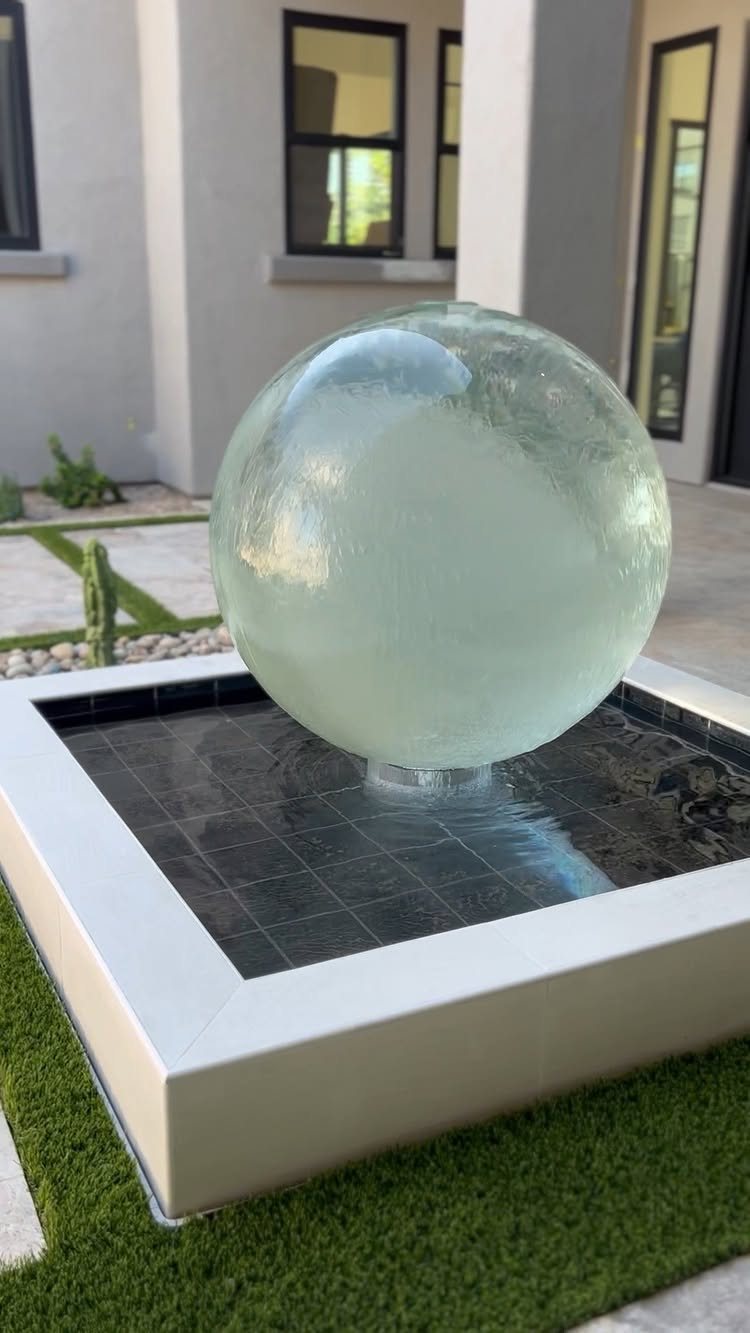
A sphere fountain catches water at its crown and sends it down in a thin, even sheet that looks almost like glass until it breaks at the basin.
A sphere fountain in dark tile against pale walls is a strong choice for a modern courtyard or a corner that needs one bold piece rather than clutter.
Sixteen colors are available, so matching or contrasting with your existing hardscape is straightforward.
I would set it where foliage can soften the base without blocking the sphere itself; the notes suggest positioning it as an accent leading toward water or dense planting, and that reads right for a small yard where every element needs to do double duty.
The flow is quiet enough for reading nearby. Someone wanting drama or splash should look at tiered options instead; this trades noise for composure.
8. Buddha Head Fountain
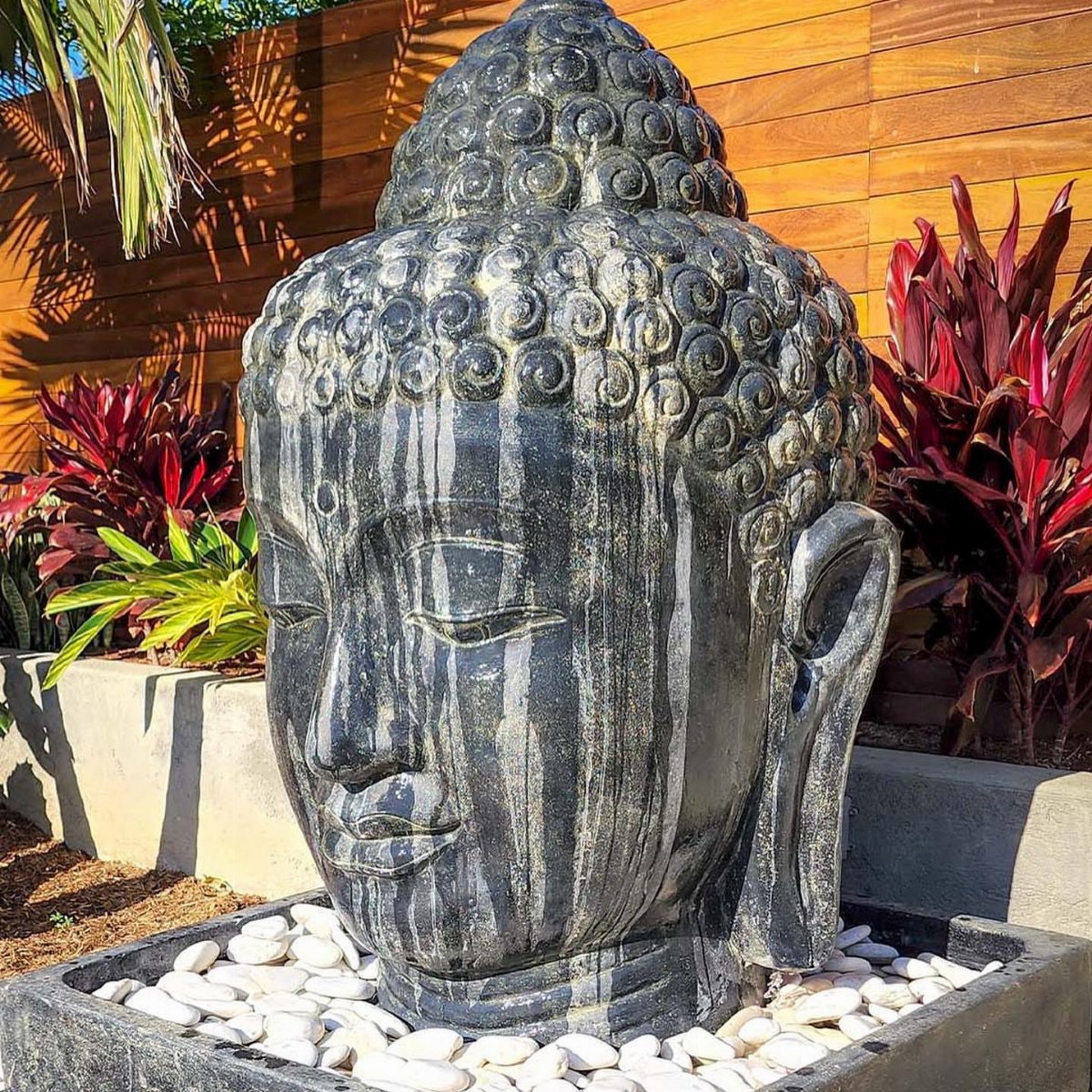
Water leaves a Buddha head fountain from the crown and follows the face down, which gives a small, steady sound and a clear symbolic focus.
Dark stone against white pebbles reads peaceful without trying too hard; I would keep the palette limited like that rather than adding competing colors.
A basin filled with smooth stones is simple to maintain and weighs less than soil, so this works on a deck or any spot where load matters.
Tall bamboo behind and low flowers at the base, azaleas if your light suits them, would frame it with the same vertical rhythm. Spotlights for evening are optional but effective; the stone takes light well.
This suits a meditation corner or anywhere you want stillness as the point. It is not a bird bath and not a social centerpiece; the mood is inward.
9. Calming Wall Fountain
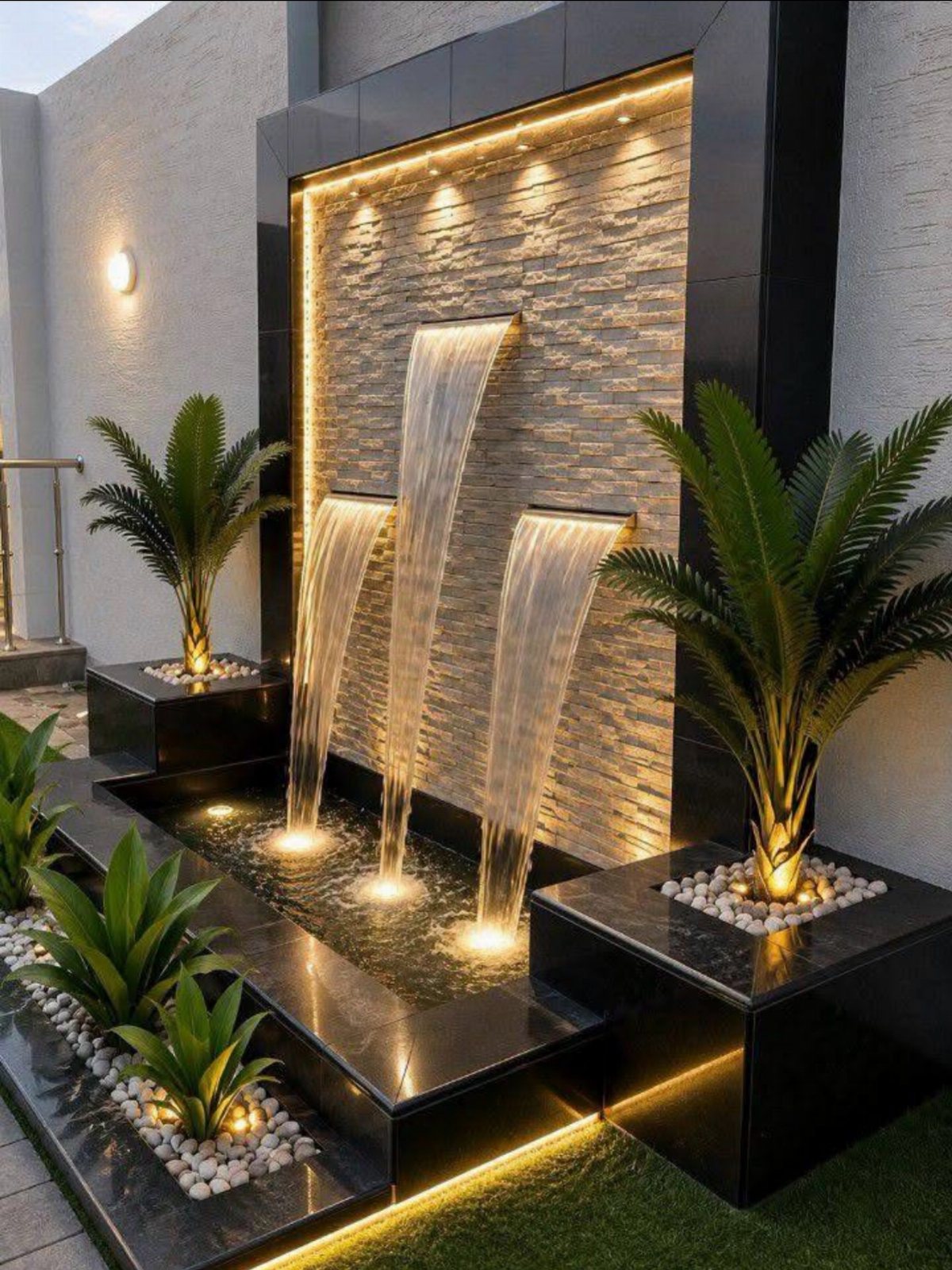
A wall fountain mounts flat and feeds water from a spout or slot into a basin below, which saves the floor space a freestanding piece would need.
Tall horsetail reeds at the sides would repeat that upward rhythm with living material. LED lighting in the water channels extends usefulness into evening without requiring additional fixtures elsewhere.
This is the choice when your backyard is measured in feet, not acres, and when the wall is already there to be used.
Installation needs a water source and power at the wall, so retrofitting costs more than new construction. Renters or anyone planning to move should consider a pot fountain instead.
10. DIY Fountain
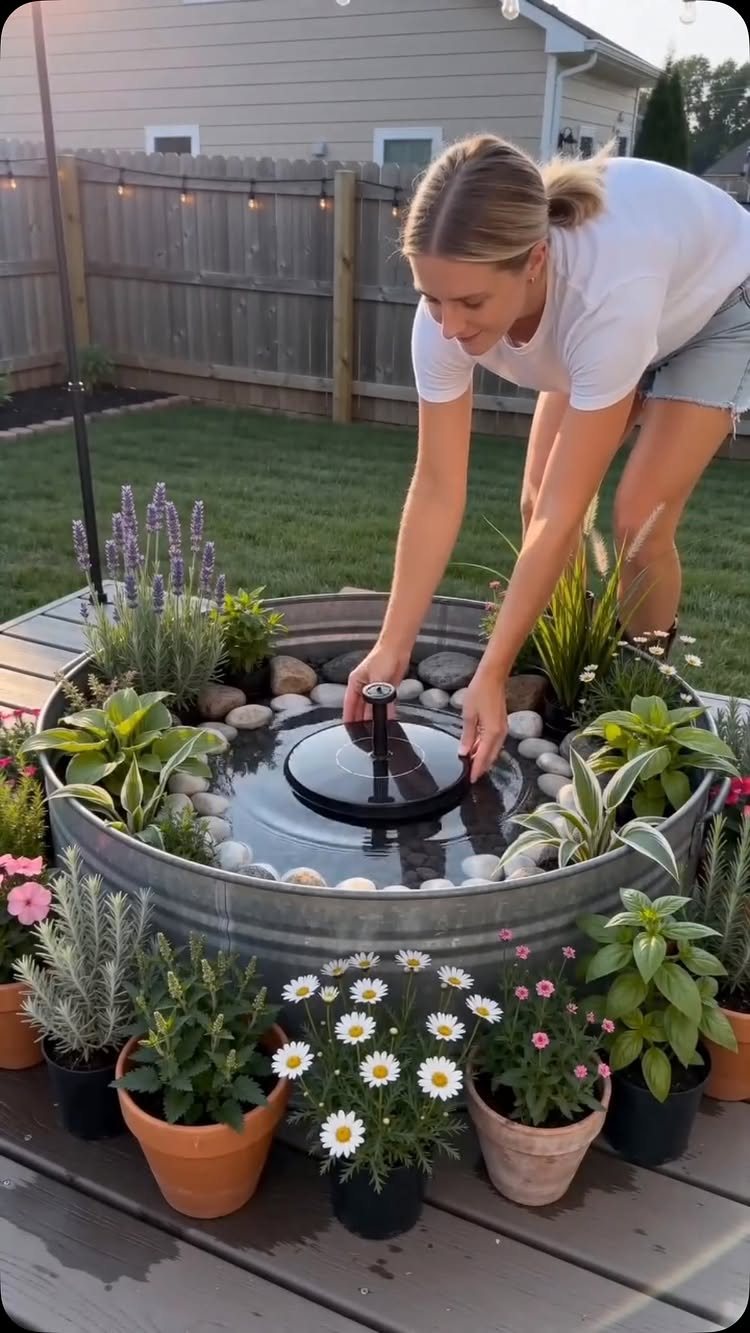
Two glazed pots and a recirculating pump will build a working fountain for about $160, which is less than most prefabricated options and sized to what you choose.
A solar pump in a tub shows the principle: water moves through a small mechanism and returns, so no plumbing connection is needed.
A submerged pump in the lower pot pushes water up through a hole in a second, smaller pot set above it.
Seal the hole with aquarium-safe silicone, weight the upper pot so it does not shift, and mask the pump with stones. A galvanized tub is another valid container if pots feel too expected.
This is weekend work, not a season-long project, and the parts are available at any garden center. A factory piece looks finished in a way homemade rarely does.
I would build this for a first season, to learn what you actually use, and upgrade once you know.
Benefits of Fountains
A fountain does its real work once you stop looking at it directly. The sound becomes the thing you notice first, carrying across the yard to cover a neighbor’s power tools or the hum of a street one block over.
Water in motion also breaks heat; the immediate area around a basin reads cooler on August afternoons, though the actual temperature drop is modest.
Birds find moving water faster than still, so a bubbler draws species that ignore a static bath.
Nature-style construction, with rock and concealed liner, reads as established landscape the day it finishes rather than new installation. That matters in a young yard where every other element still looks placed.
The soft splash of a fountain brings life and motion to the backyard. It attracts more birds than still water alone, and its soothing sound track transforms your space into a peaceful retreat.
Space Considerations
Wall and pot styles earn their keep where floor space is already committed to seating or passage. A wall fountain needs no radius around it for splash; you walk past without negotiating clearance.
Pot clusters fit balcony dimensions that would reject anything with a formal basin edge.
The retrofit penalty is real.
A pot you can move keeps the sound of water close even when the wall outlet does not, which suits renters or anyone still figuring out where they want to sit for the next few seasons.
Seating placement around a pillar or tiered piece needs actual thought.
Leave enough radius that spray does not reach chairs; the specification is not generous, but it is fixed, and a miscalculation means relocating furniture after the concrete pad is set.
Small yards force every element to do more than one job, which is why the sphere and wall styles appeal there; they give vertical emphasis without claiming ground area that already has a purpose.
Frequently Asked Questions
What are some ideas for a back yard fountain?
Wall fountains mount flat against existing surfaces and save floor space, while pot fountains cluster urns of different heights for movement without complex spillover mechanics.
Pillar fountains add vertical architecture without eating ground area, and tiered fountains give you the classic sound that masks street noise.
What are the common problems with outdoor water fountains?
Algae growth, pump clogging, and water loss from wind or splash are the usual headaches. In freeze-thaw zones, ceramic or stone left full through winter will crack; empty it before hard frost hits.
Are backyard fountains worth it?
Still water sits there. Moving water brings sound, motion, and birds, and in a small yard I want every piece of ground to pull its weight.
A fountain also covers traffic noise and extends the usable hours of a patio or deck. The $160 DIY option costs less than most prefabricated pieces, so the entry point is lower than people assume.
Can you leave an outdoor water fountain on all the time?
A recirculating pump can run continuously since it draws from its own basin rather than tapping your plumbing. Accent lighting on a separate switch keeps the pump running without burning LEDs through every evening.
In freeze-prone areas, shut down and drain before hard frost regardless of the pump rating.