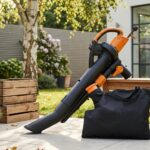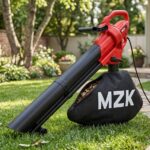
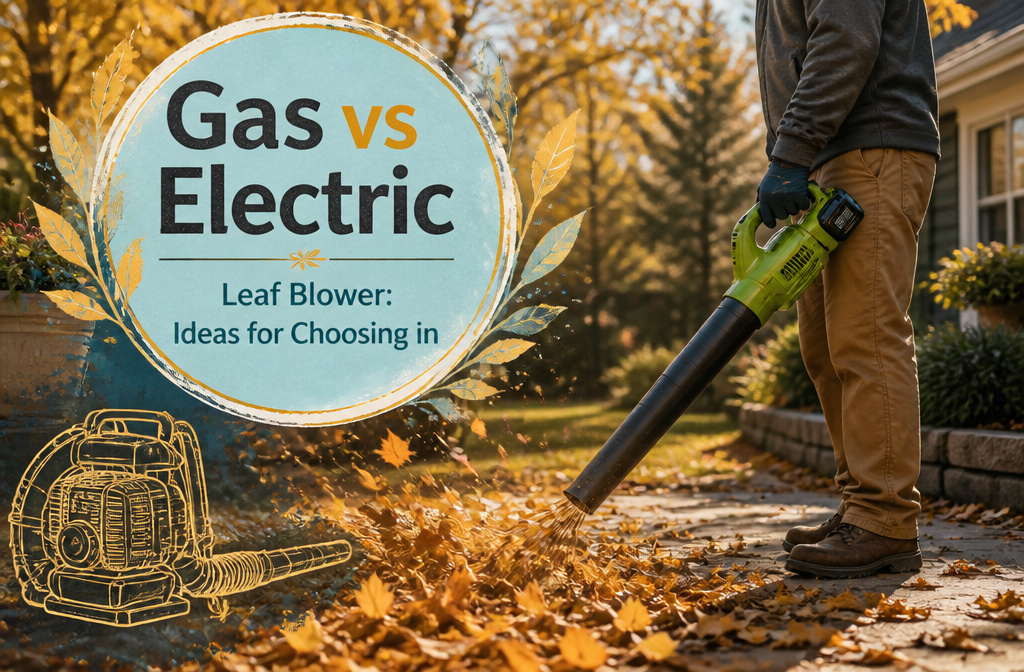
Electric wins for most homeowners clearing dry leaves on a quarter-acre or less, and the gap has closed faster than I expected; cordless models now hit 300 to 650 CFM and start with a trigger pull, no choke or fuel mix. The exception is wet, packed debris over large land, where a 53cc gas backpack still pushes past 850 CFM and runs as long as you have fuel in the tank. Check your local code first: seasonal bans on gas are spreading, and performance numbers mean nothing if the machine sits illegal in your garage from October through November.
1. Power and Airflow

Gas blowers still carry the raw numbers that made them the default for pros. A 53cc backpack model can push past 850 CFM, and even handheld gas units clear 475 CFM without strain. That volume matters when you are moving wet leaves off a long driveway or clearing a property measured in acres rather than square feet. For heavy debris and large land, gas has not been dethroned.
Electric has closed the distance faster than I expected. Cordless models running on 56V or 80V batteries now hit 300 to 650 CFM, overlapping the low end of gas and sometimes exceeding it. Dry leaves, pine needles, even light gravel: a modern battery blower handles these without the two-stroke racket or the fuel mixing. The gap narrows further when you consider that most residential cleanup is dry material on a quarter-acre lot, work that sits comfortably inside what electric already delivers.
Battery technology did the heavy lifting here. Higher voltage packs and better cell density mean the cordless models I would have dismissed five years ago now run long enough to finish the job, swap in a spare, and keep going. For household use, the power question is largely settled. Gas still wins on the extremes: wet, packed, or abundant debris over large areas. For the yard most readers are actually standing in, electric has caught up.
2. Noise Levels
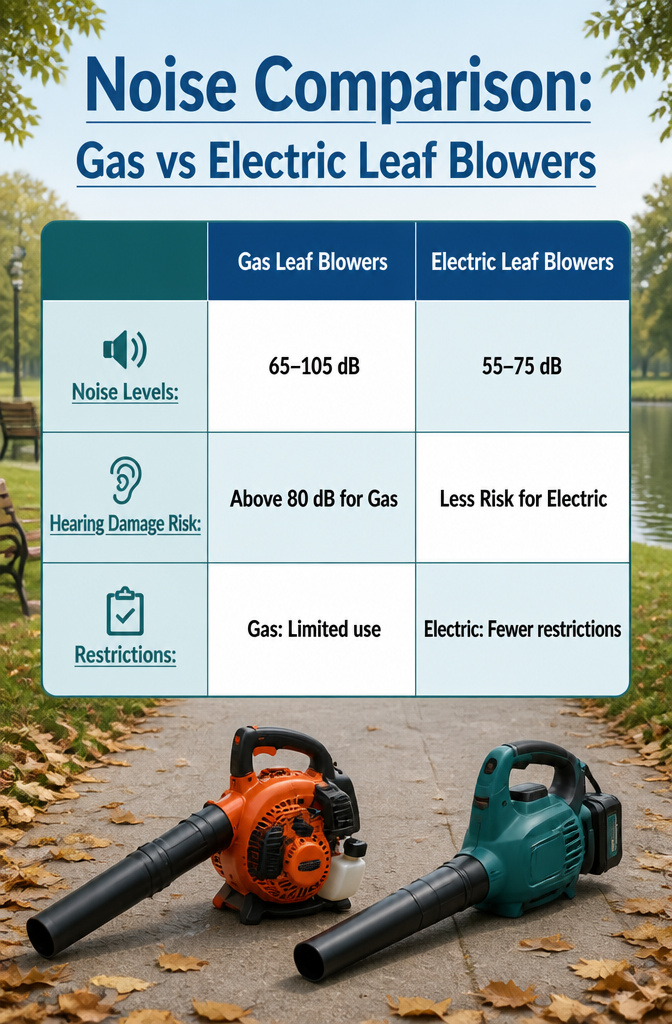
Gas blowers run 65–105 dB, which puts the upper end in the same territory as heavy traffic or a running lawn mower. Electric models sit lower, around 55–75 dB, roughly the gap between a normal conversation and a busy restaurant. That twenty- to thirty-decibel spread matters more than the numbers suggest, because decibels are logarithmic; every ten-point jump roughly doubles perceived loudness.
At the top of the gas range, you are past the threshold where sustained exposure risks hearing damage. Anything above 80 dB starts that clock, so ear protection stops being optional and becomes part of the job. The noise also travels. Early mornings, late evenings, or tight lot lines turn a quick cleanup into a neighborhood event, and not the welcome kind.
Some cities and counties have already restricted gas blowers to certain hours, and a few have banned them outright. Electric blowers face fewer rules so far, which is worth checking before you buy. If your area is tightening noise or emissions standards, an electric model keeps you ahead of the ordinance rather than scrambling after it.
3. Maintenance Needs
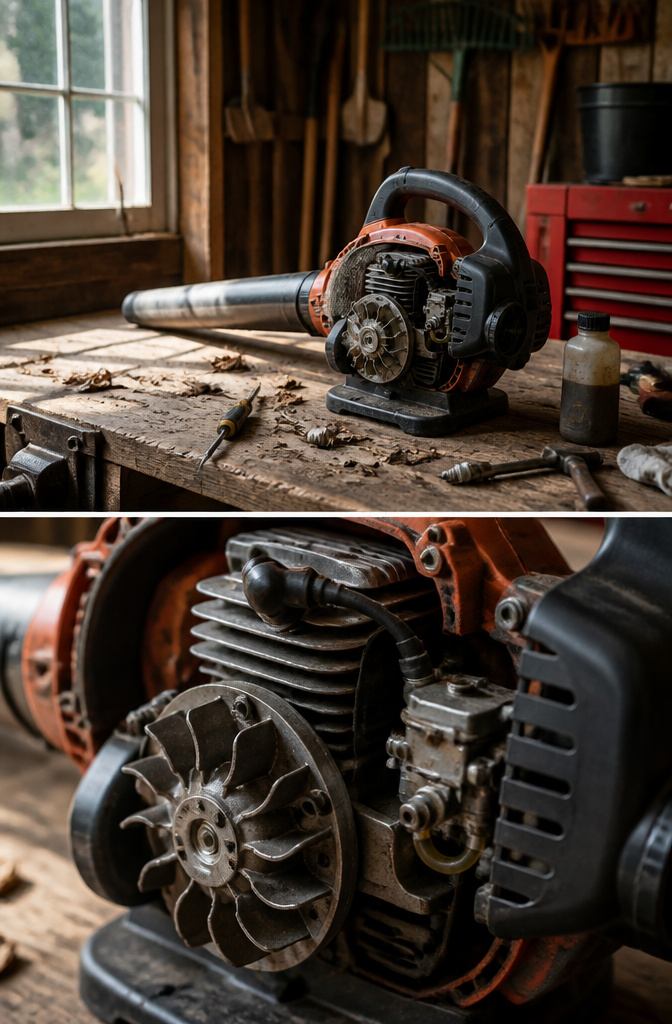
Gas blowers ask for a relationship. Two-stroke oil has to be mixed to the right ratio every time you fill the tank. The spark plug wears, the air filter clogs, the carburetor drifts out of adjustment. Come November, you are either running the tank dry or adding stabilizer and hoping you remembered every step in the right order. Over a season, that maintenance adds up to real hours and real dollars: engine oil, replacement plugs, maybe a shop visit if the fuel gels or the pull cord snaps.
Electric blowers, battery or corded, strip all of that away. The only routine care is keeping the battery on the charger and out of deep discharge. No fuel to store, no winterizing ritual, no small-engine shop on speed dial. The time you get back is the time you actually spend clearing leaves, which was the whole point.
4. Environmental Impact
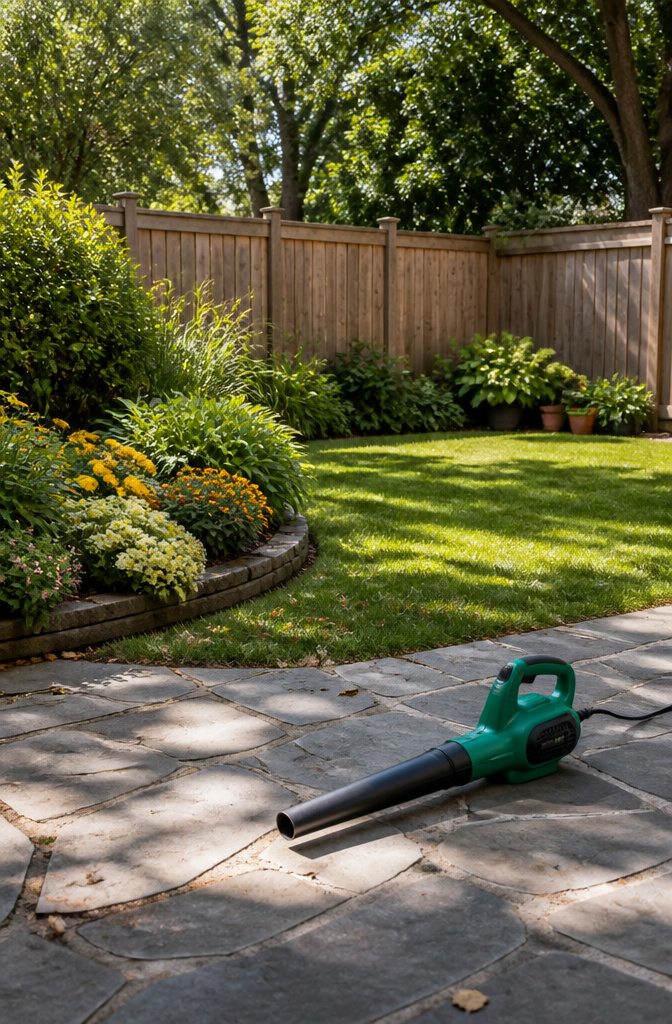
An electric leaf blower runs with zero direct emissions, which matters if you are working in a small yard where you breathe what the machine puts out. Gas burners, especially two-stroke models, release carbon dioxide, nitrogen oxides, hydrocarbons and particulate matter right where you stand. Some cities now restrict or ban them outright for that reason.
The battery in a cordless electric model carries its own footprint from mining and manufacturing, though no source I found quantifies that against the lifetime burn of gasoline. The real difference is local: the air on your patio stays cleaner with electric, and there is no exhaust smell clinging to your clothes after.
Noise plays into this too. Gas blowers run louder than 80 decibels, enough to damage hearing over time and to annoy neighbors in tight quarters. Electric units stay lower, which keeps the peace and removes one more reason for a municipality to ban yard work on Sunday mornings. If your area already has rules on emissions or hours, electric keeps you clear of them.
5. Cost Over Time
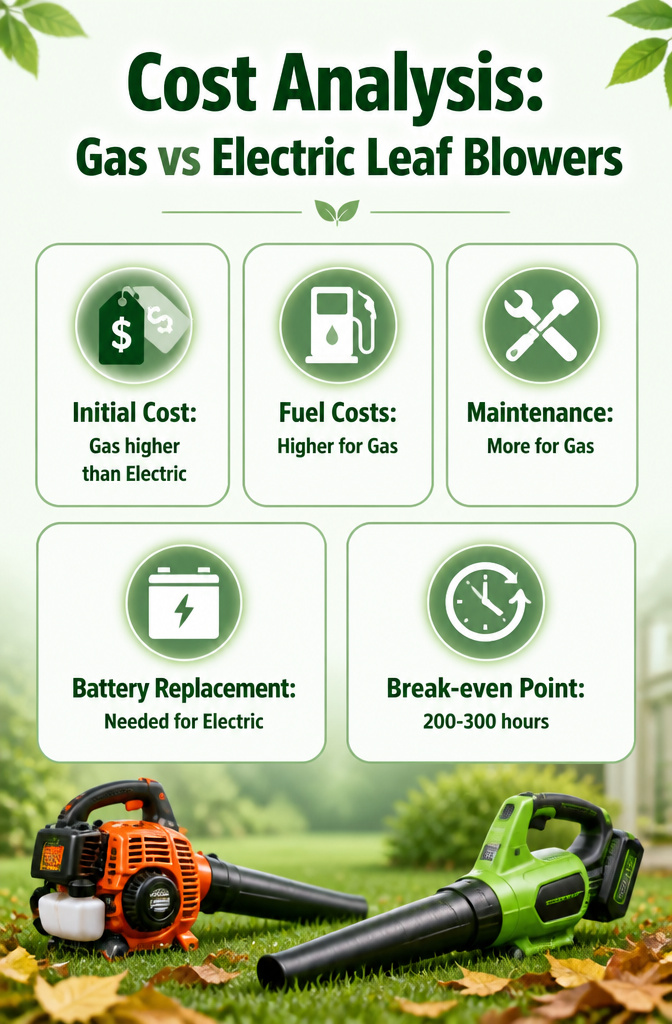
Gas models usually cost more at the register, and the spending does not stop there. Fuel, two-stroke oil, and replacement parts add up across every season, plus the time spent on maintenance that electric motors simply do not need. Cordless electric blowers run on electricity that costs far less per hour than gasoline, and the motors ask for little beyond clearing the air intake now and then. The break-even point lands around 200–300 working hours, after which gas ownership tends to pull ahead in total spending. The catch with electric is the battery. Lithium-ion packs degrade and eventually need replacement, and that single purchase can sting. For a homeowner clearing a small yard a few times each fall, the math favors electric handily. For someone working large properties weekly, the hours stack fast enough that the running costs deserve a hard look before either choice feels final.
6. Usability and Weight

Electric blowers start the instant you press the switch. No choke, no pull cord, no warm-up while you stand there yanking. That alone sold me after watching a neighbor fight a gas engine for ten minutes on a cold Saturday morning. Most cordless models weigh less than gas units, and the difference matters after twenty minutes of sweeping leaves off a patio. Your arm notices.
Cordless electric run time is typically 10–40 minutes. For a small yard or balcony, that window covers exactly what you need. I finish our driveway and front beds in about fifteen minutes; the battery still shows two bars. Gas blowers keep running as long as you have fuel, which matters when you’re clearing a half-acre or dealing with wet leaves that take multiple passes. The weight of the engine and fuel adds up, and extended use brings real fatigue.
Storage tilts electric too. A battery blower hangs on a wall hook or slides onto a closet shelf. Gas models need fuel drained, lines cleared, and a spot where the smell won’t reach your jackets. For properties under a quarter acre, the lighter tool you grab without thinking usually wins. For larger spaces, the heavier machine that doesn’t quit mid-job earns its keep.
Gas vs Electric at a Glance
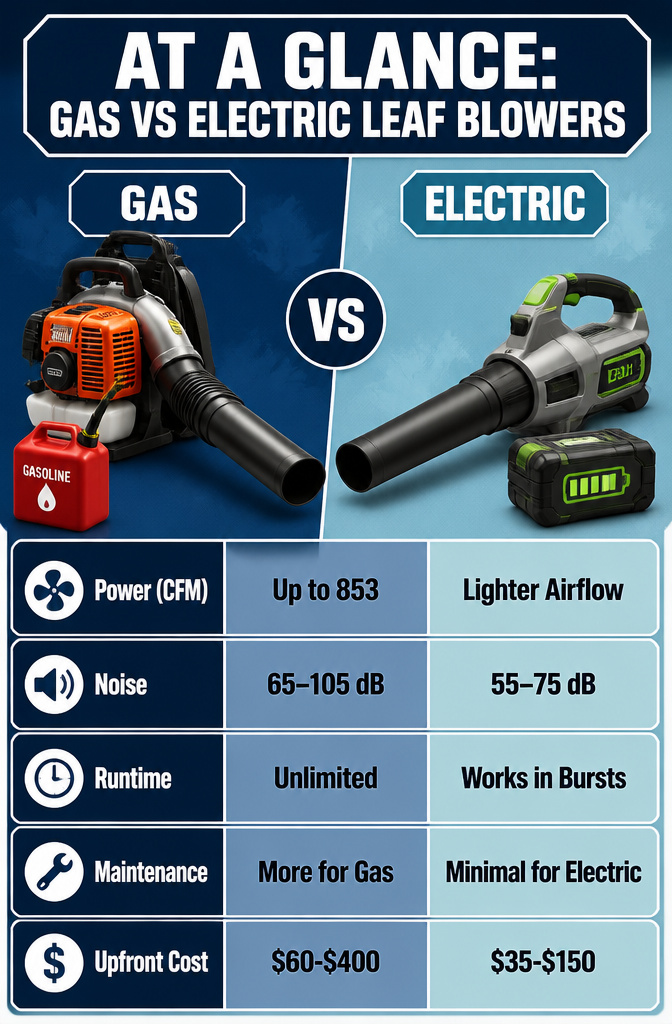
A gas blower clears wet, compacted leaves in one pass and keeps running as long as you have fuel; an electric model starts with a trigger pull and weighs little enough to hang on a garage hook. The gap in noise is the first thing that matters: gas runs 65–105 decibels, electric 55–75, which is the difference between needing ear protection and finishing before neighbors notice.
| Attribute | Gas | Electric |
|---|---|---|
| Power (CFM) | Up to 853 on large backpack models | Lighter airflow, suited to patios and quick cleanup |
| Noise | 65–105 dB | 55–75 dB |
| Runtime | Unlimited with refueling | Works in bursts; spare battery extends session |
| Maintenance | Fuel mixing, spark plug, air filter, seasonal care | Charge battery; very little else |
| Upfront cost | $60–$400 | $35–$150 |
| Weight | Heavier; backpack shifts load off wrist | Lighter, easy to grab for five-minute jobs |
| Best use | Large yards, wet leaves, long driveways | Patios, decks, sidewalks, garages, quick cleanup |
Gas wins on raw output and stamina. Electric wins on start-up, upkeep, and not announcing your Saturday morning to the block.
Battery Technology
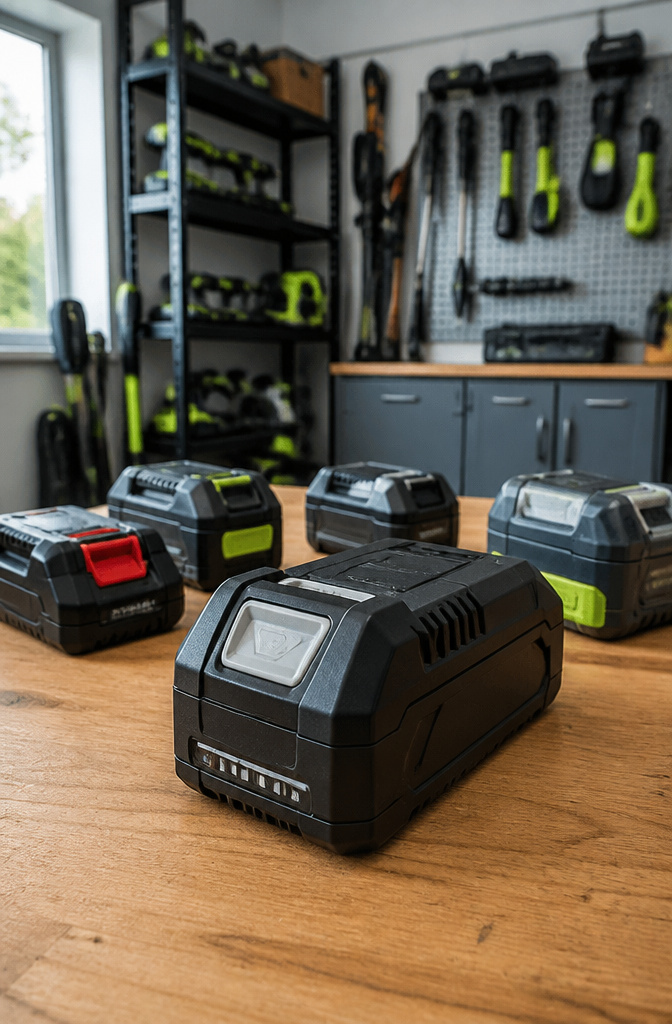
Lithium-ion batteries are what make cordless electric blowers worth considering at all. The cells inside the pack, usually arranged in a 20V, 56V, or 80V configuration, determine both how hard the motor spins and how long it keeps spinning. Voltage is the muscle; amp-hours are the stamina. A 56V battery with a high amp-hour rating can push air speeds that compete with mid-range gas models, but run time shrinks the moment you ask for that full output.
The gap between advertised minutes and real-world use is where most buyers get caught out. Factory testing numbers assume intermittent trigger pulls on dry leaves, not a steady throttle through damp oak litter. Battery energy in watt-hours, not the "up to" minute claim, is the honest measure of what you are buying. Two or three smaller batteries rotated on the charger will usually outlast a single oversized pack, because you are not waiting on the tool while it cools.
What you will not find in most product listings is the battery chemistry itself. Manufacturers rarely specify whether the cells are standard lithium-ion or the newer lithium iron phosphate formulations, even though that chemistry choice affects charge cycles and cold-weather performance. Without that detail, voltage and watt-hours are the only hard numbers you have to compare.
What Landscapers Actually Use

Most pros still reach for gas when the job is commercial-scale or the property sprawls, and that pattern is worth noticing even if your yard is a quarter-acre. Battery blowers have improved enough that many landscapers now own one for quick residential cleanups and for neighborhoods where noise restrictions apply, but the heavy lifting, wet leaves, and all-day runtime still go to gas. What convinced me, reading through hundreds of these accounts, is how closely the pros’ two-tool setup mirrors what a homeowner should consider: gas for the heavy seasonal clearing, electric for the five-minute jobs after mowing. If you have a small yard and no plans to clear a half-acre of oak leaves in November, the electric option probably covers most of what you actually do.
Local Rules to Check First
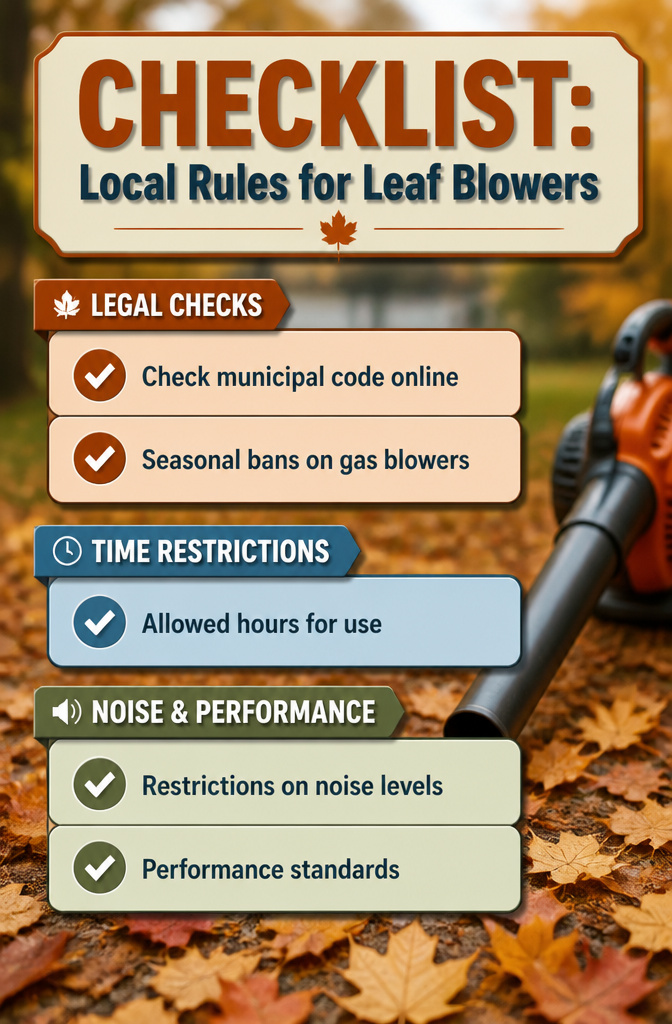
A few towns near me have started posting seasonal bans on gas blowers, sometimes by the month, sometimes by the hour, and a couple have outlawed them completely. Electric models face fewer restrictions, though they are not silent either. Checking your municipal code takes ten minutes online and can save you from owning a machine you are not allowed to run. Performance numbers mean nothing if the blower sits in your garage from October through November. I would look up the rules before I looked up horsepower.
Frequently Asked Questions
Can electric leaf blowers handle wet leaves?
Electric blowers can manage light moisture, but gas models still outperform them on soaking wet, packed leaves. A modern cordless unit running 56V or 80V will clear damp pine needles or light gravel without trouble, yet heavy, adhesive wet leaves need the 850 CFM and sustained output that gas provides. For most residential yards with dry to lightly damp debris, electric has closed enough of the gap to handle the job.
Which is noisier, electric or gas leaf blower?
Gas blowers run 65 to 105 decibels, while electric models stay between 55 and 75 decibels. Because decibels are logarithmic, that gap roughly doubles perceived loudness at the top end, which is why gas often triggers municipal restrictions and makes ear protection mandatory above 80 dB. Electric units keep the peace on tight lot lines and avoid the neighborhood complaints that gas blowers draw.
Do gas leaf blowers need a lot of maintenance?
Yes. Two-stroke oil must be mixed for every fill-up, and the spark plug, air filter, and carburetor all need regular attention, plus seasonal winterizing or stabilizer. Electric blowers strip all of that away; the only routine care is keeping the battery charged and out of deep discharge. Over a season, the time and money gas demands add up to real hours you could spend actually clearing leaves.
What is the cost difference between gas and electric leaf blowers?
Upfront, gas runs $60 to $400 against $35 to $150 for electric. The spending gap widens with fuel, oil, and parts each season, though gas can break even around 200 to 300 working hours if you run it constantly. For a homeowner clearing a small yard a few times each fall, electric wins handily; for large properties worked weekly, the hours stack fast enough that running costs deserve a hard look before either choice feels final.