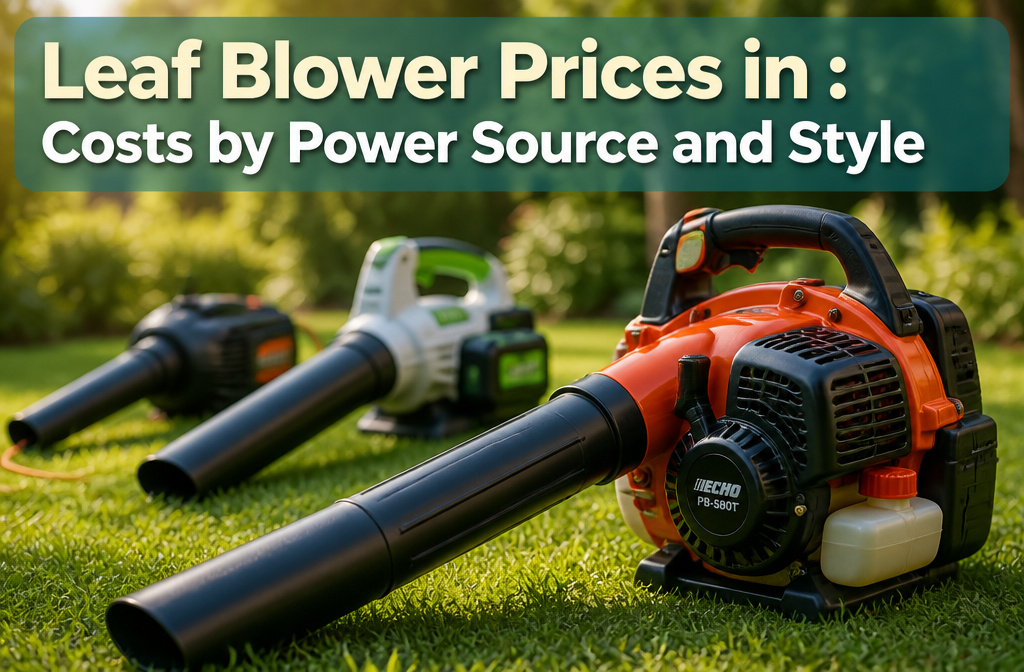
A leaf blower is a motorized tool that pushes air through a tube to move leaves and yard debris. What you actually pay depends on whether you plug it in, charge a battery, or fill a gas tank, with corded electrics starting around $20 and gas backpacks climbing past $2,400. The Toro PowerJet F700, at roughly $106, sits where corded models stop being toys and start moving real piles.
Corded Electric Leaf Blowers
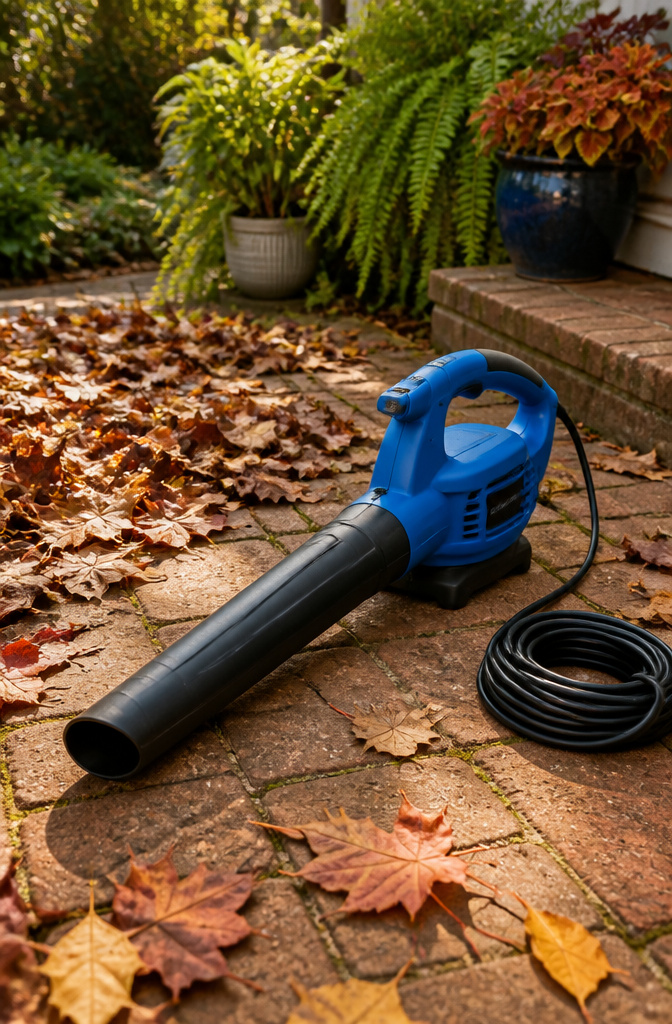
Corded electric leaf blowers sit at the cheapest entry point in the market. You can pick up a simple model for about $20, which gets you bare-bones airflow for a patio or a strip of driveway where the leaves never pile deep. Most buyers land in the $80–$180 range, where motors get stronger and the housings stop feeling like toys.
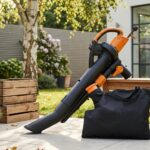
At around $106, the Toro PowerJet F700 is where I’d point someone who wants real push without crossing into gas or battery territory. It moves air with enough force that you will want that second pommel grip up front; the airstream comes on strong and a little unfocused, so both hands help keep it aimed. The curved handle lets you angle the tube without wrenching your wrist, and the whole thing runs lighter than anything battery-powered because there is no battery to haul.
The catch is the cord itself. You are tethered to an outlet, and that means managing slack while you work or watching your flower beds take a beating. Factor in an outdoor extension cord if you do not already own one; that $106 price tag assumes you do. These machines suit small yards with predictable layouts, not the winding half-acre where the nearest plug is three rooms away.
Battery-Powered Leaf Blowers
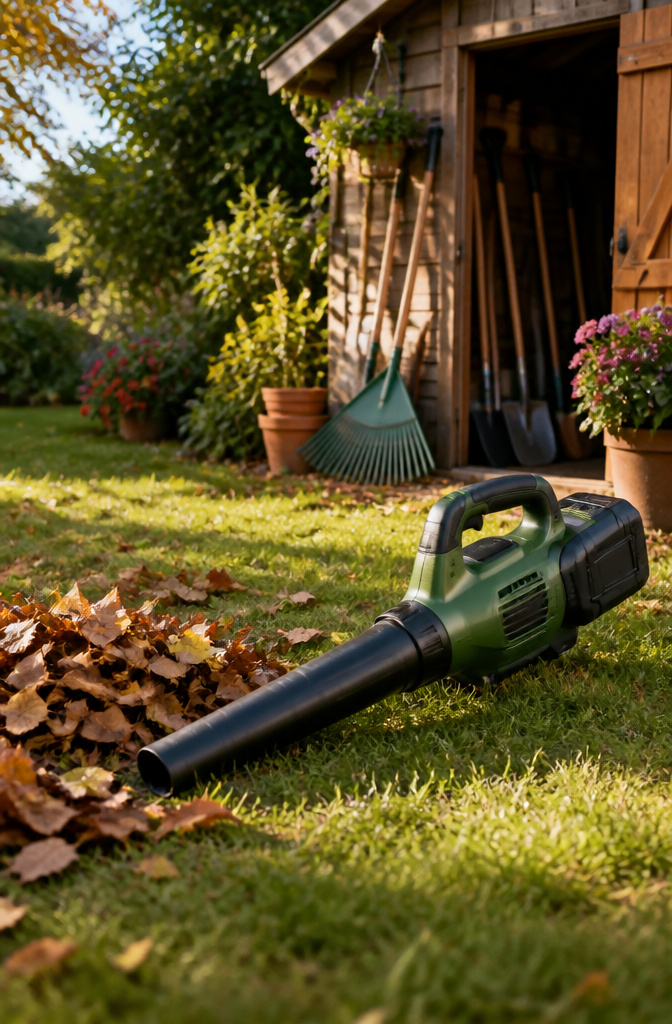
Battery-powered models usually land in the $130–$200 range, which makes sense for small yards and patios where you are not fighting through heavy leaf cover every weekend. The motor and battery together cost more than a corded electric setup, but you gain the ability to walk anywhere without snagging an extension cord on patio furniture.
That convenience has a ceiling. Run time on a single charge tends to top out around fifteen to thirty minutes for the standard models in that price bracket, so timing your clearing to the battery rather than your own energy becomes part of the routine. I have watched neighbors finish half a driveway, pause to swap packs, and lose the rhythm of the job entirely.
Two models sit well above the typical range and show where the money goes. The Ego Power+ 650 CFM Blower LB6504 runs about $280 and moves enough air that some testers treat it as a gas replacement. The Husqvarna Leaf Blaster 350iB costs $362 at Amazon and $379 at Walmart, pairing longer run time with a scraper tip for damp, matted leaves that cheaper blowers just skate over.
For a $500–$800 annual yard budget, either upgrade eats a large slice. The question is whether your space justifies it, or whether a mid-range unit plus a second battery solves the same problem for less.
Gas-Powered Leaf Blowers
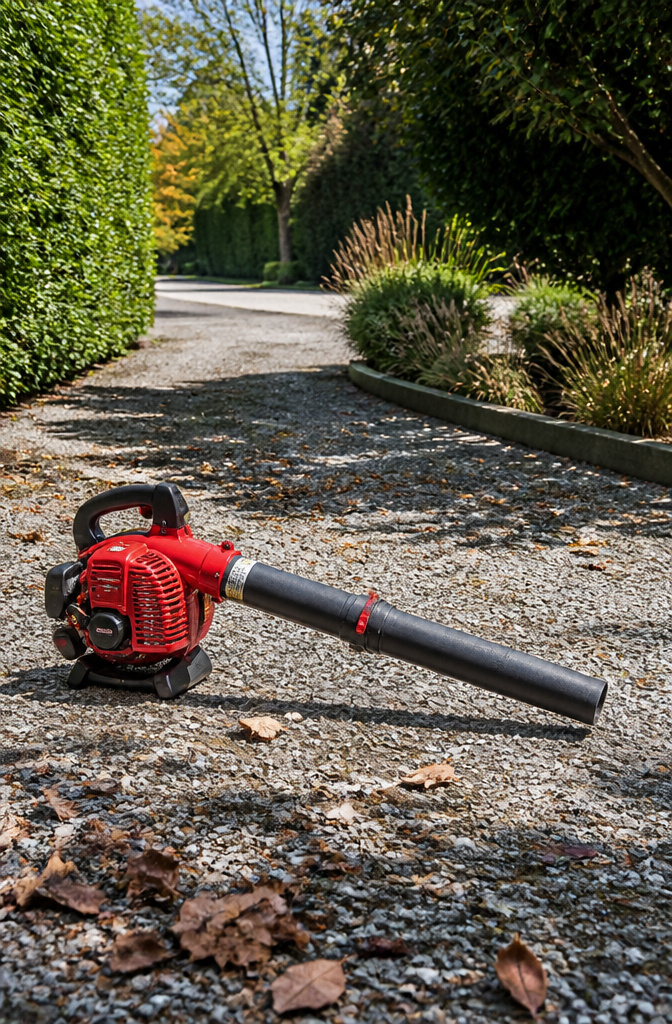
Gas-powered leaf blowers sit at the top of the price ladder, with most models running $250 to $425 and professional-grade units climbing as high as $2,400. That upper tier buys you backpack-mounted engines, tube-mounted throttles, and enough cubic feet per minute to clear wet, matted leaves off half an acre before lunch. For a homeowner with a small patio and a few container tomatoes, this is overkill in every direction: too much machine, too much noise, too much money tied up in something that gets used four Saturdays a year.
The real cost creeps in after purchase. Two-stroke engines need mixed fuel, usually a 50:1 ratio of gasoline to oil, plus seasonal carburetor cleaning, spark plug replacement, and the inevitable pull-cord repair. Over three or four years, the maintenance and fuel can add half the purchase price again. Some cities and towns have banned gas blowers outright or restricted them to midweek hours, so checking local ordinances before buying is not optional. If your yard is under a quarter acre and flat, a gas engine’s power mostly goes to wasting your money and your neighbors’ patience.
Handheld Blowers
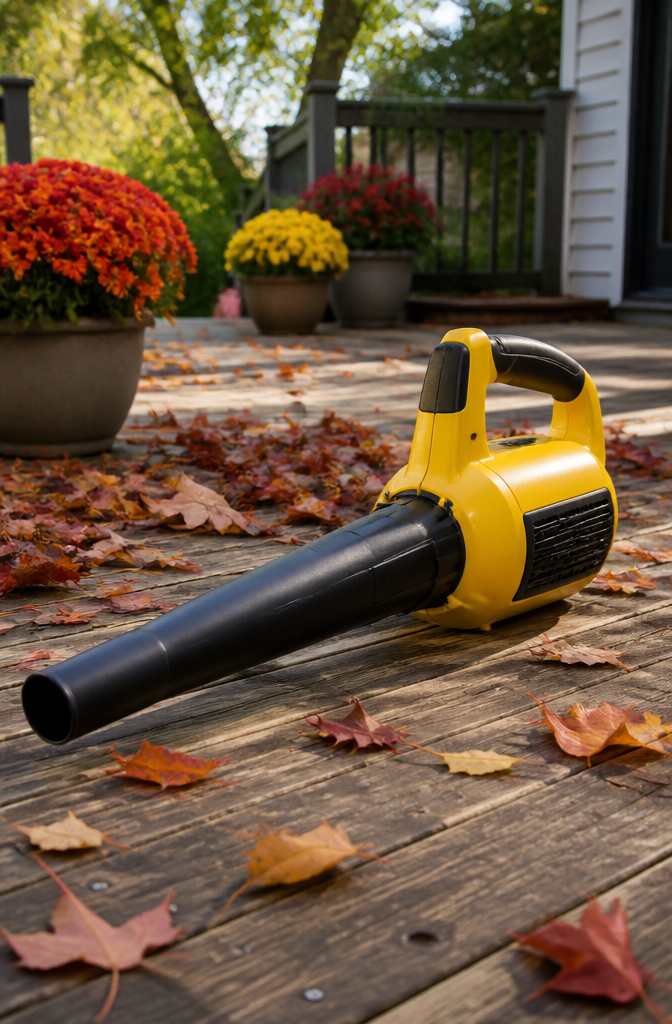
Handheld blowers are the least expensive design across every power type, which is why most people start here. I spent a season with a battery model that clocked in at just under six pounds, and the weight itself never bothered me. What did was the balance: the motor sat too high in the housing, so my wrist worked harder than my shoulder, and twenty minutes in I felt it.
The passages I read while researching this put real numbers to that feeling. Run times on cordless handhelds now hover around thirty minutes on high, though some still drain in fourteen. That gap matters more than the sticker price, because a blower you have to stop and charge is a blower you stop using.
Weight distribution is the detail that separates models you’ll keep from ones that gather dust. Bottom-mounted air intake keeps the unit from pulling at your clothes, and a second grip gives you actual control over where the nozzle points. Gas handhelds tend to skip the vacuum attachments that corded and battery models often include, so if you need mulching, that narrows your field.
These work best for small yards, patios, and the occasional driveway. If the blower tips past about seven pounds or the battery rides high in the frame, your body will tell you inside the first ten minutes. Rent before you buy if you can, or at least lift the display model and track where the weight settles.
Backpack Blowers
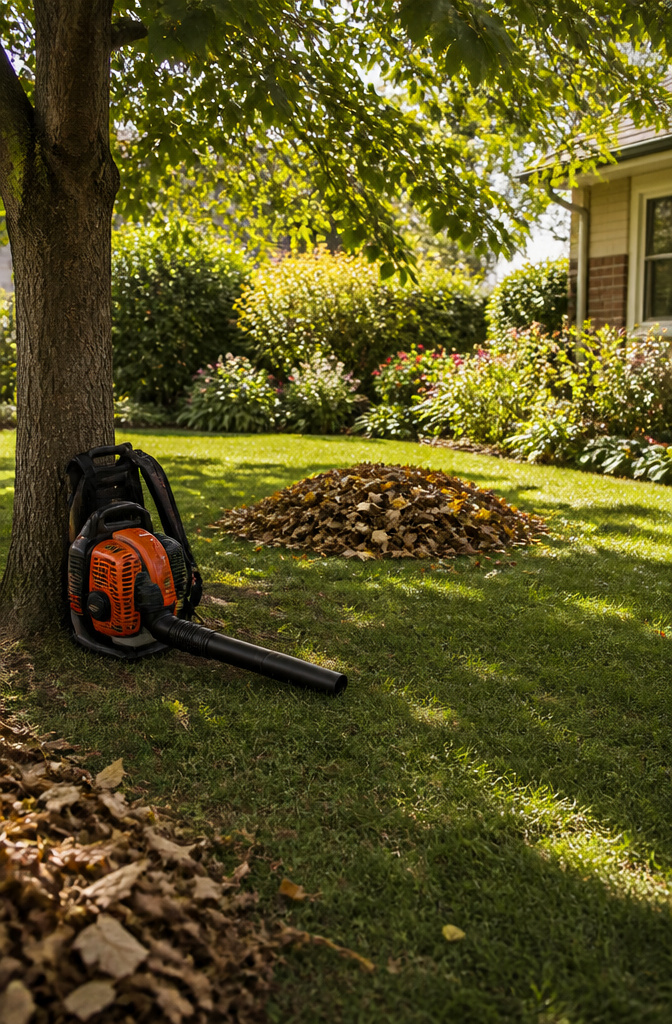
Backpack leaf blowers sit a tier above handhelds in both price and capability, and the jump is usually only worth it if you are clearing an acre or more, or if you do this for pay. The engine or battery pack rides on a frame against your shoulders and hips, and that transfer of weight off your arms matters more than the raw poundage suggests. A handheld unit around 10 pounds starts to drag after twenty minutes of sweeping; the same weight distributed onto a hip belt lets you work until the fuel runs out or the battery dies.
Most battery-powered backpacks run in the $250–$350 range, with the bulk of that cost tied up in the battery itself. One model I have seen priced near $275 carries a 5.0 Ah battery that costs over $325 on its own, which explains why the bare tool is not the deal. Gas backpacks cost more still and bring the noise levels that get neighborhood complaints, so check actual user ratings on decibels before committing. Either way, this category is built for duration: the weight only makes sense if the job is big enough to make arm fatigue the limiting factor.
Walk-Behind Blowers
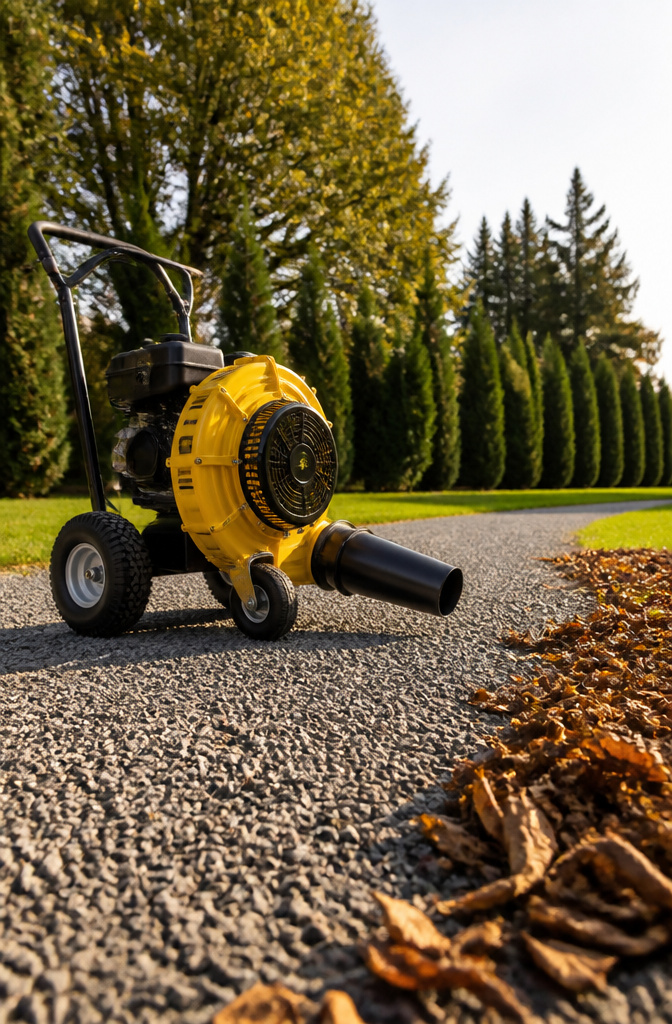
Walk-behind blowers sit at the top of the price range and the power curve, and that pairing is no accident. These are gas-powered machines built to clear acres, not corners. The weight that comes with that output makes them the hardest type to maneuver, especially pushing uphill or turning around obstacles. An adjustable air deflector helps direct the airflow where you actually want it, and decent wheels at least keep the thing rolling, but you are still wrestling a loud, heavy engine across the ground.
Most home gardeners can stop reading here. A walk-behind blower earns its keep on large commercial properties or estates where the goal is moving massive volumes fast, not negotiating around a patio table or garden bed. For a half-acre lot with a few maples, the size and cost are overkill, and the noise level alone will have neighbors closing windows. The money that would go toward one of these machines buys a lot of rake-and-blower seasons for spaces that size.
What CFM and MPH Actually Mean
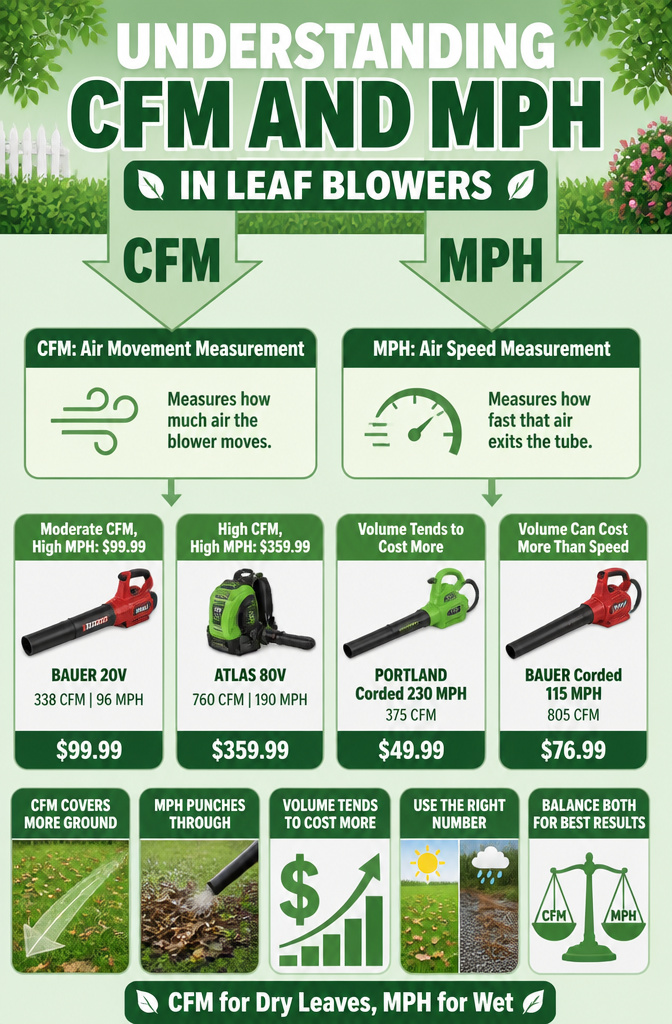
A leaf blower’s power comes down to two numbers on the box: CFM and MPH. CFM, or cubic feet per minute, measures how much air the blower moves. MPH, miles per hour, measures how fast that air exits the tube. Higher CFM covers more ground per pass, while higher MPH punches through wet, matted leaves that a gentle stream would leave behind.
The two numbers interact in ways that matter for your wallet. A machine with moderate CFM but very high MPH, like the BAUER 20V at 338 CFM and 96 MPH, runs about $99.99 for the kit. Meanwhile, the ATLAS 80V backpack model pushes 760 CFM at 190 MPH and costs $359.99 on member deal. Volume tends to cost more than speed: the corded PORTLAND 230 MPH blower, at 375 CFM, sells for just $49.99, while the BAUER corded 115 MPH unit with 805 CFM runs $76.99.
For dry leaves on open lawn, CFM is the number to watch. For gravel paths, pine needles, or the soggy pile by your downspout, MPH saves you from bending down with a rake. Most buyers will end up balancing both.
Hiring Out Versus Buying Your Own
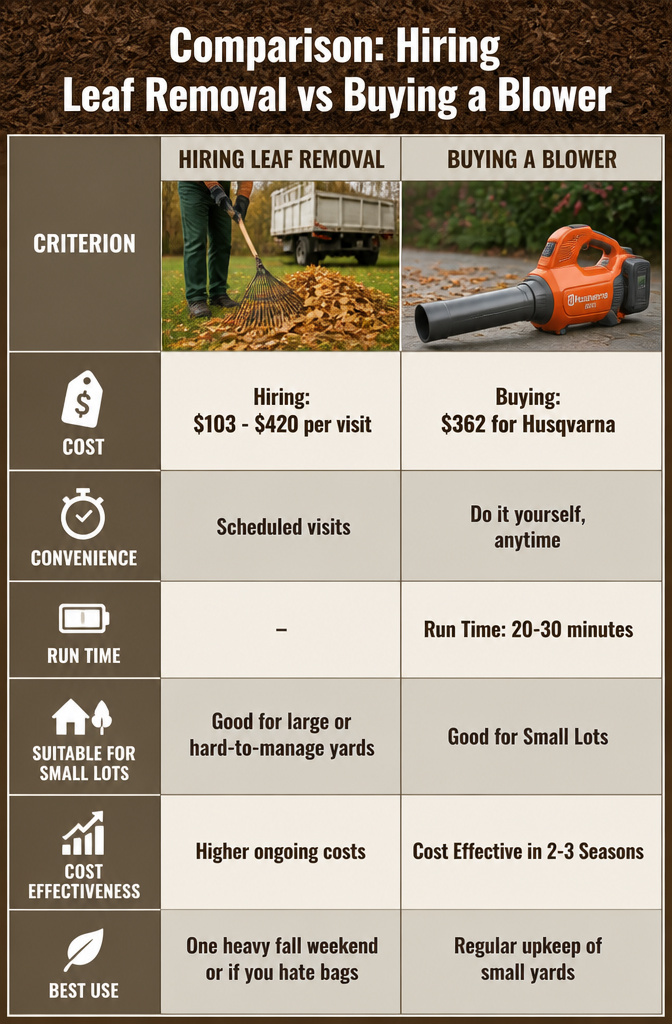
Professional leaf removal runs $103 to $420 per visit, which is steep if your yard drops leaves for months. For a small lot on a $500–$800 annual budget, one hired clearing can eat a quarter of the year’s money.
A decent cordless blower pays for itself in two to three seasons of skipped visits. The Husqvarna Leaf Blaster 350iB sits at $362 from Amazon, squarely inside that break-even window. Corded models cost even less if you have outdoor outlets and do not mind wrestling a cord through flower beds.
Cordless leaf blowers are the most convenient style. The main downsides are cost, weight, and run time; the best models top out at around 30 minutes, but most are in the 20- to 25-minute range or less. Extra batteries help, but they’re not cheap.
That runtime limit matters for a small yard. Twenty minutes covers most patios and lawns under a quarter acre; if your space is that size, the battery gets you through without the $103–$420 outlay. Hire out only for the one heavy fall weekend when trees unload all at once, or if hauling bags to the curb is the part you actually hate.
What Drives the Price Up
Brand reputation pushes prices up before any feature does. I noticed the same blower motor in two housings, one from a pro landscaping name and one from a hardware-store brand, separated by $40 or more. The cheaper one moved leaves just fine.
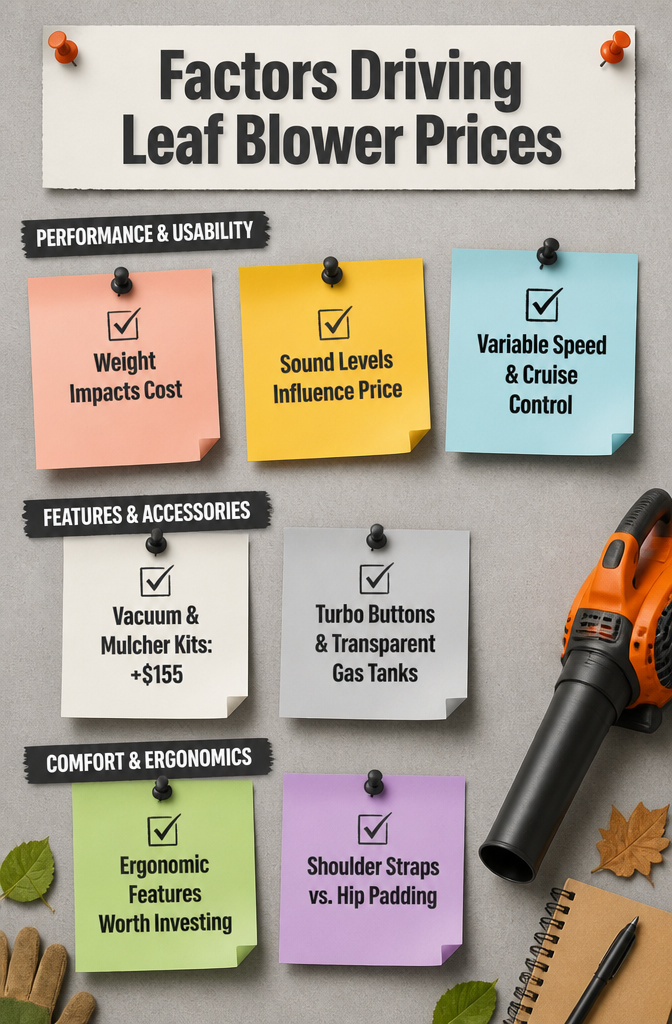
Weight matters more than I expected. A handheld under seven pounds costs extra in battery or motor design, but my arms notice the difference after twenty minutes. Sound level runs the same way: units under 65 dB carry a premium, and in a neighborhood with early closers, that premium pays for itself in goodwill.
Vacuum and mulcher kits add about $155 on average, mulching closer to $170. For a small patio, bagging leaves by hand takes five minutes; the kit never earned its keep for me. Variable speed triggers and cruise-control levers cost less to add than you’d think, and they matter more, letting you feather air around garden beds instead of blasting mulch bare. Turbo buttons and transparent gas tanks? Nice when present, not worth a separate upgrade.
Ergonomic handles and padded straps sit in the same category. A backpack blower without hip padding turns into a shoulder ache in half an hour, so that padding is money spent wisely. Shoulder straps on handheld units, though, just add strap-tangle for jobs short enough to finish before fatigue sets in.
Frequently Asked Questions
What is the average cost of a leaf blower?
Leaf blower prices range from about $20 for a basic corded electric model up to $2,400 for professional-grade gas backpack units. Most homeowners end up spending between $80 and $425 depending on power source and style. A mid-range battery model like the Ego Power+ 650 CFM runs around $280, while the Husqvarna Leaf Blaster 350iB costs $362 to $379.
What factors affect the cost of leaf blowers?
Power source matters most: corded electric starts cheapest, battery-powered sits in the middle, and gas costs the most. Design type also drives price, with handhelds under backpack and walk-behind models. Brand reputation, weight under seven pounds, sound levels below 65 dB, and extras like vacuum kits or variable speed triggers all add to the sticker price.
Are gas leaf blowers banned in some areas?
Yes, some cities and towns have banned gas blowers outright or restricted them to certain hours because of noise and emissions. Check local ordinances before buying, since a gas model you cannot legally run is wasted money. For small yards under a quarter acre, the power is usually overkill anyway.