These ideas run from a free bundle of dried hydrangea clippings to a cast-iron urn you plant in place and never lift again.
The one that fits your space depends on whether you’re working a balcony, a front porch in shade, or a yard wide enough to tilt a rusted wheelbarrow.
I check my wicker basket arrangement twice a week; it dries out faster than anything else here.
1. Bold Kale and Aster Planter
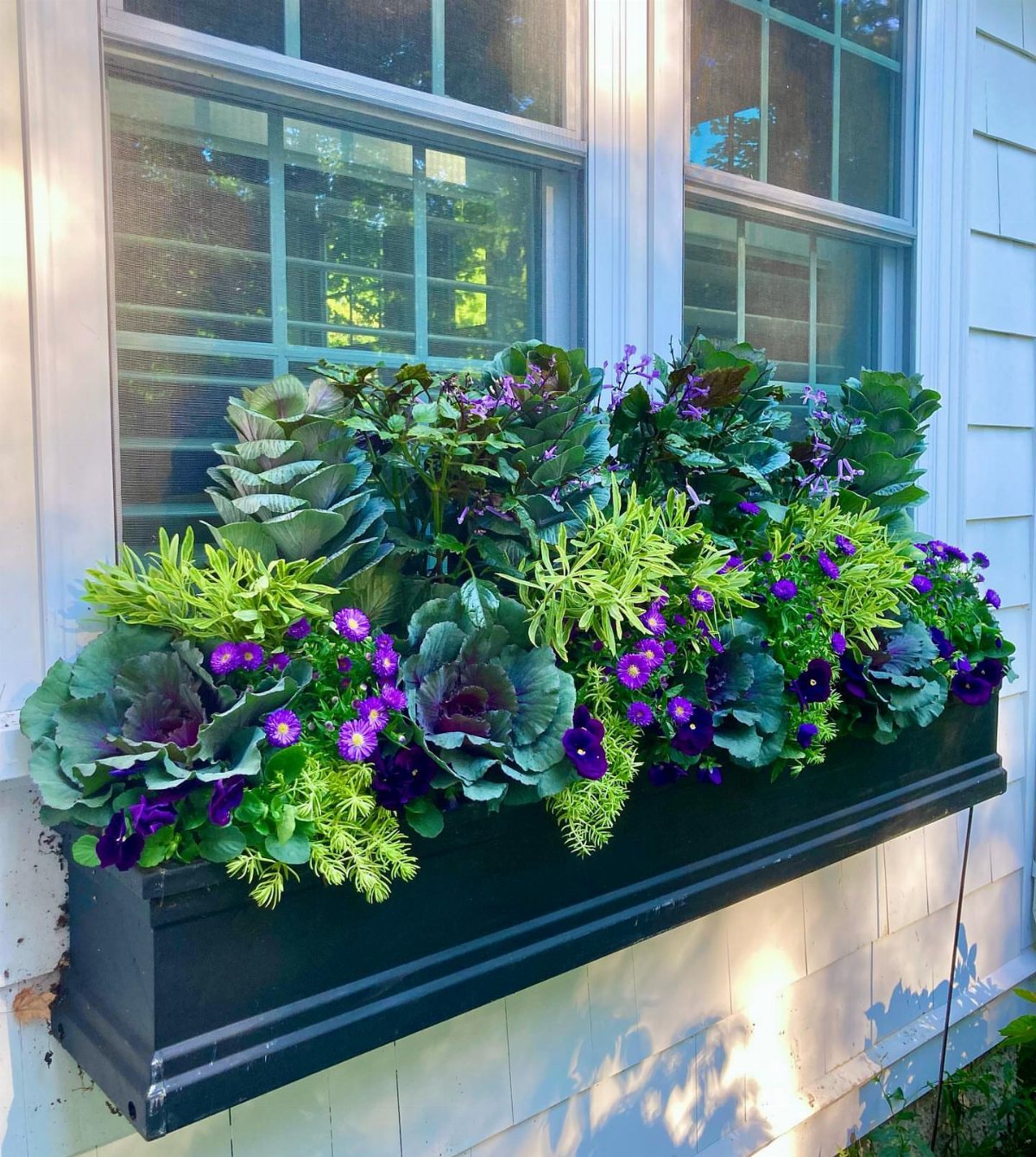
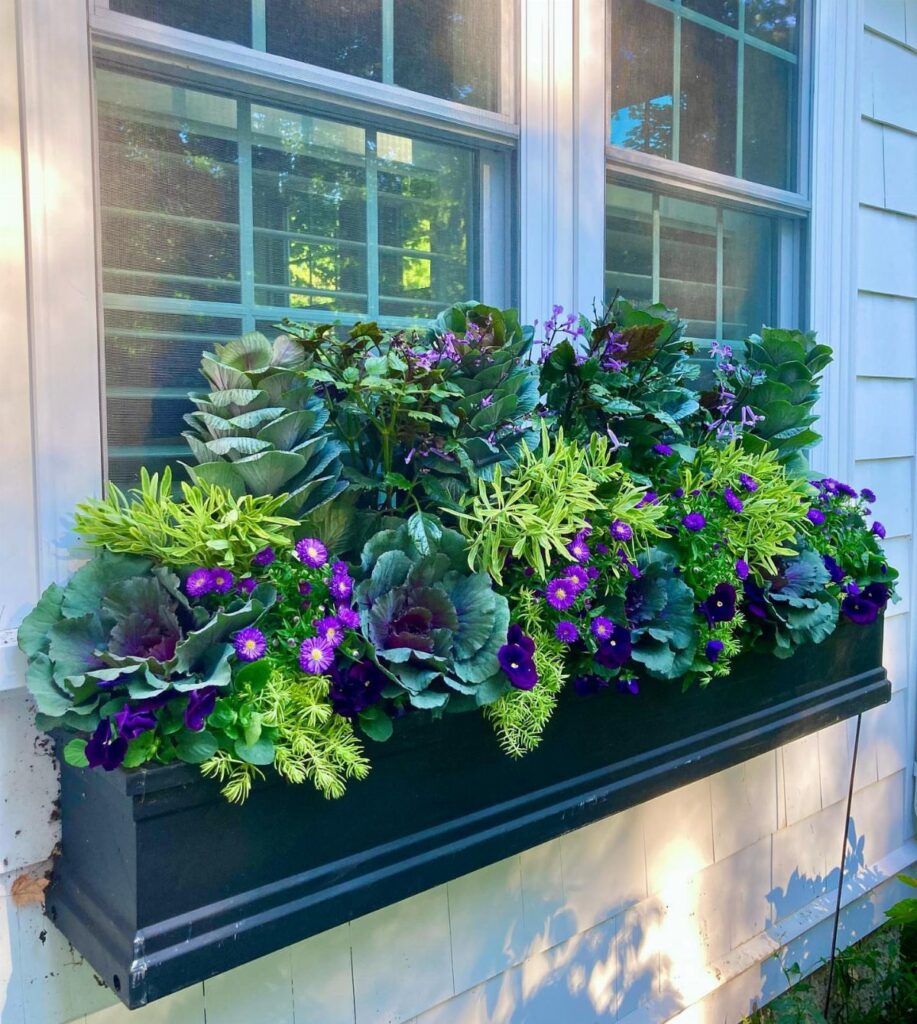
A window box of ornamental kale and asters works hardest for gardeners who want color without fuss. Purple asters at the back give height; kale fans out in front with ruffled leaves that hold their color through light frost.
I use pansies to fill gaps between them, since both asters and kale take a week or two to settle in.
This pairing suits narrow spaces where depth is limited. The kale does the heavy lifting for texture; the asters handle the bloom.
In a deeper planter, I’d add a grass like Mexican feather grass for movement, but the basic two-plant formula fills a standard box cleanly.
2. Dramatic Foliage with Grasses and Heuchera
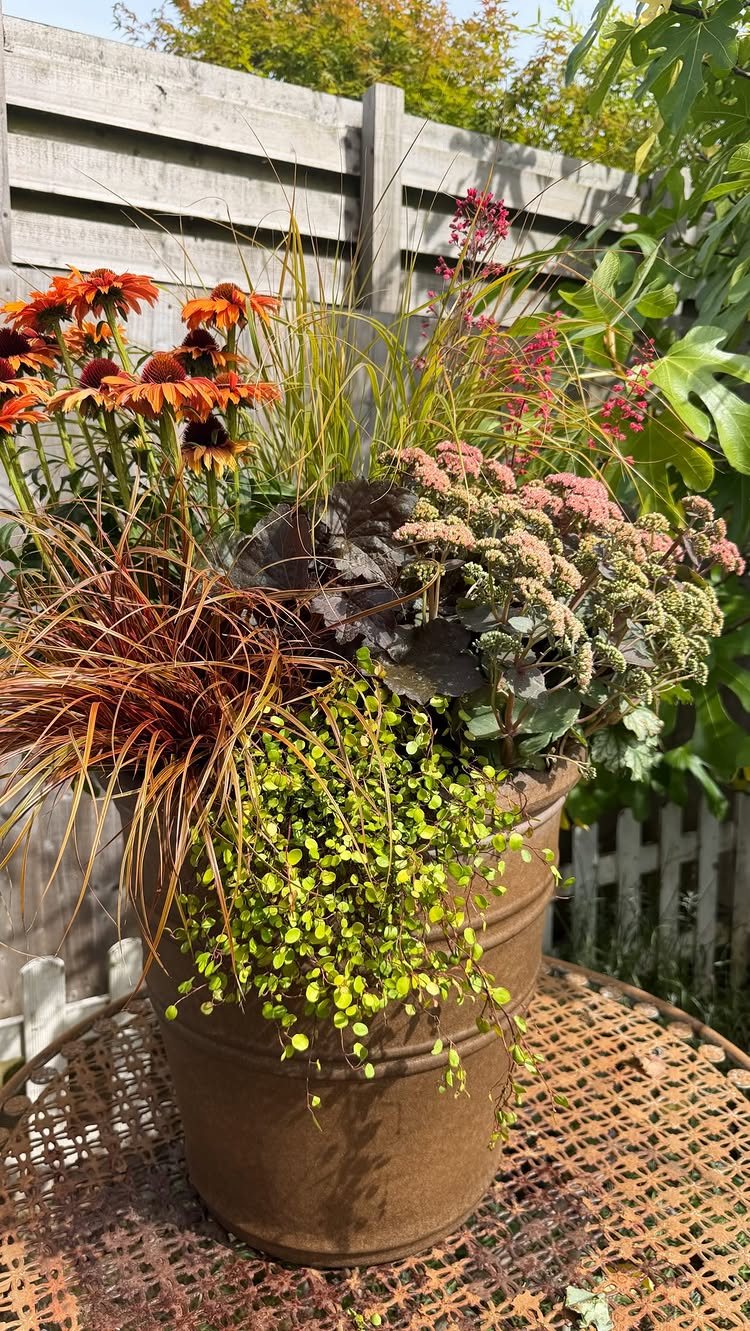
Ornamental grasses and heuchera together give you height and low color without relying on flowers that quit early.
Purple fountain grass or blue fescue rise above the pot’s rim; heuchera in amber or burgundy sits below, its leaves holding through Thanksgiving where I live. Trailing ivy softens the edge.
The grass will need replacing after hard frost in zone 5, but heuchera often survives in the pot if you tuck it against the house. The grass and two heuchera put this in the mid-range for a build.
Skip the grass entirely and use dried stems from the yard if you’re cutting costs.
3. Layer Seasonal Plants
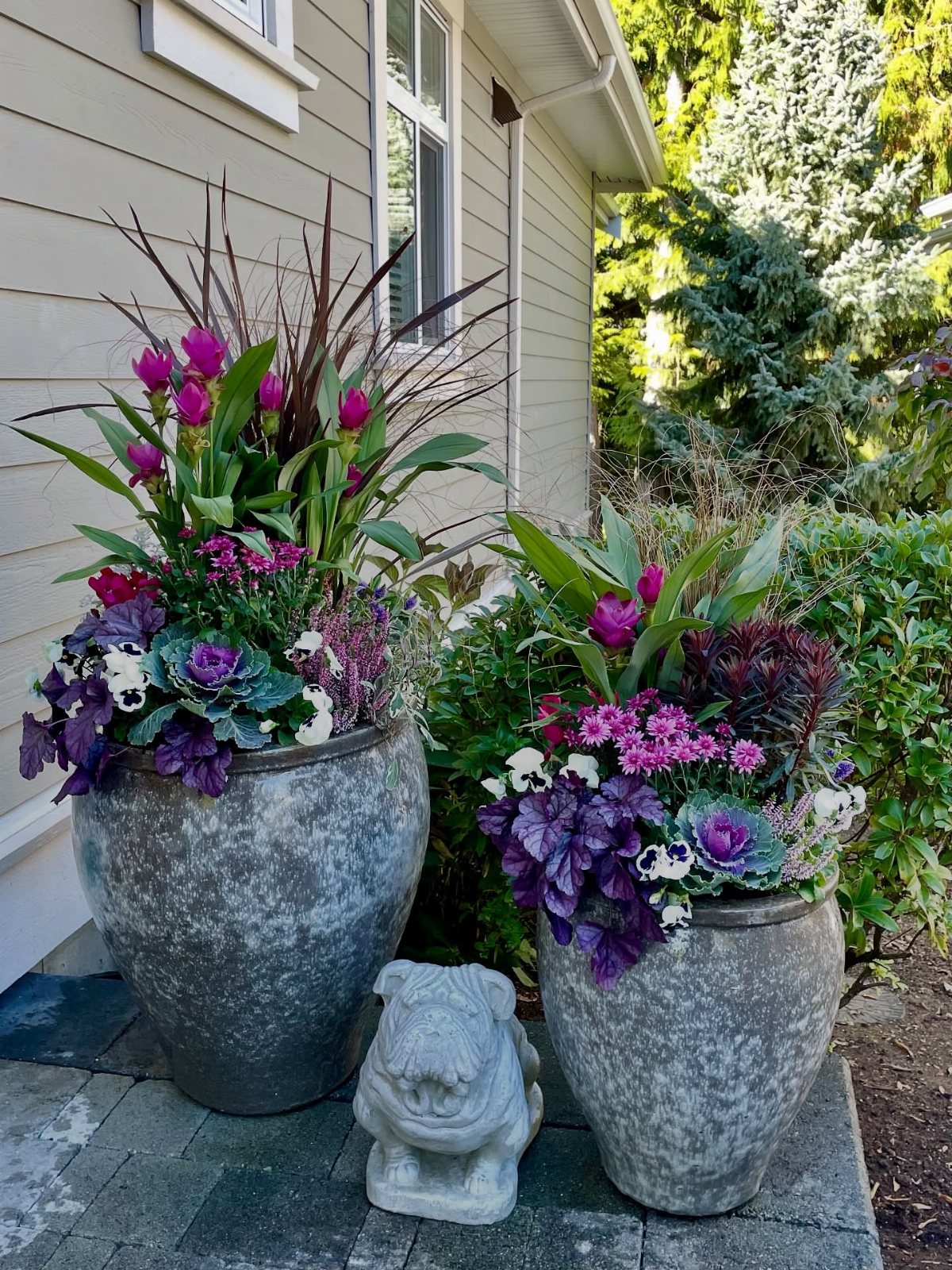
Layering plants at different heights makes a planter read as full even when the individual pieces are ordinary.
Start with ornamental cabbage or kale as the base layer, add pansies at the middle height, then tuck in a pumpkin or two where soil shows. The pumpkin isn’t growing there; it’s ballast and color both.
Two large urns flanking a door need echoing, not matching. I plant one with more purple, the other with more green, so they relate without cloning.
A small pumpkin lifts the whole arrangement until it softens. Pull it before it rots.
4. Best Fall Flowers for Pots
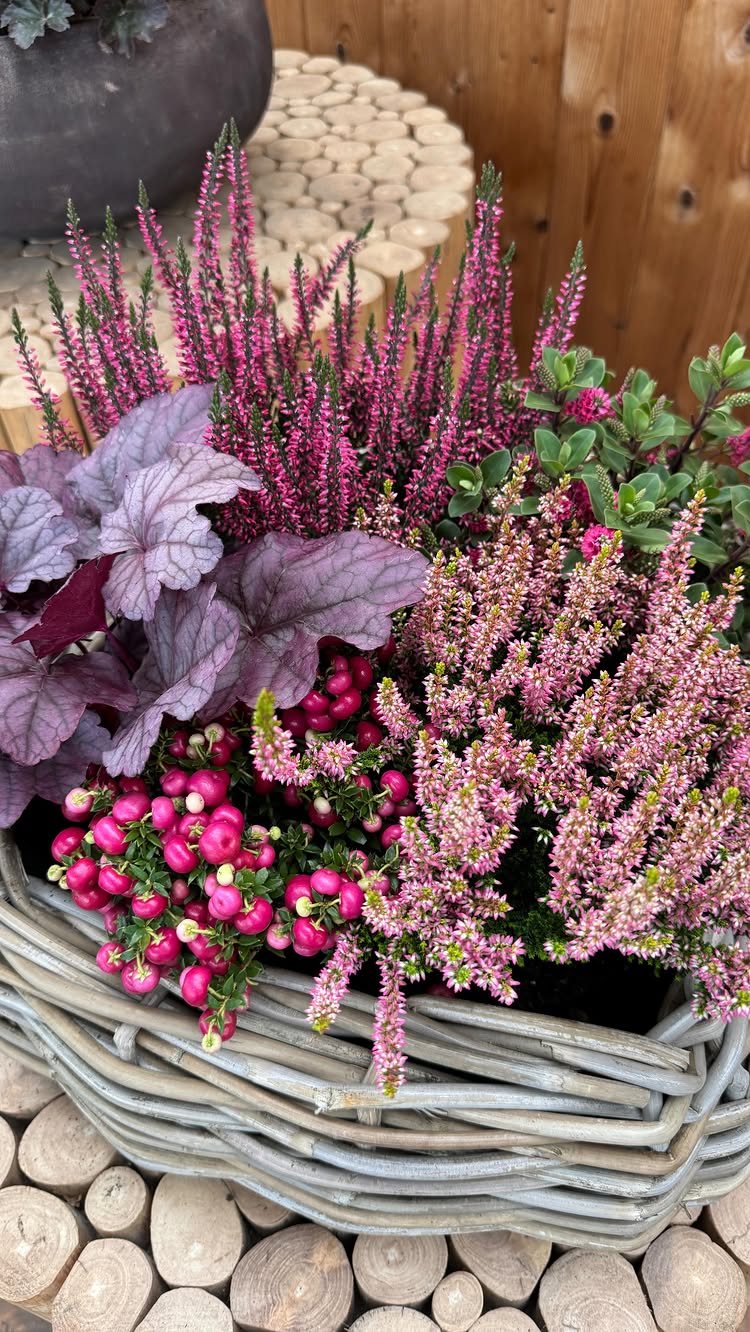
A wicker planter of heather, heuchera, and berries gives a finished look with just a handful of plants. Heather gives bloom in pink or white; heuchera contributes purple leaves that outlast any flower; berries bridge the two with something unexpected.
This is my pick for apartment balconies where weight matters. Wicker or lined baskets dry out faster than glazed pots, so I check these twice a week.
The heather costs the most in this arrangement, and it carries past first frost with no protection in zone 6.
5. Farmhouse Autumn Container Garden
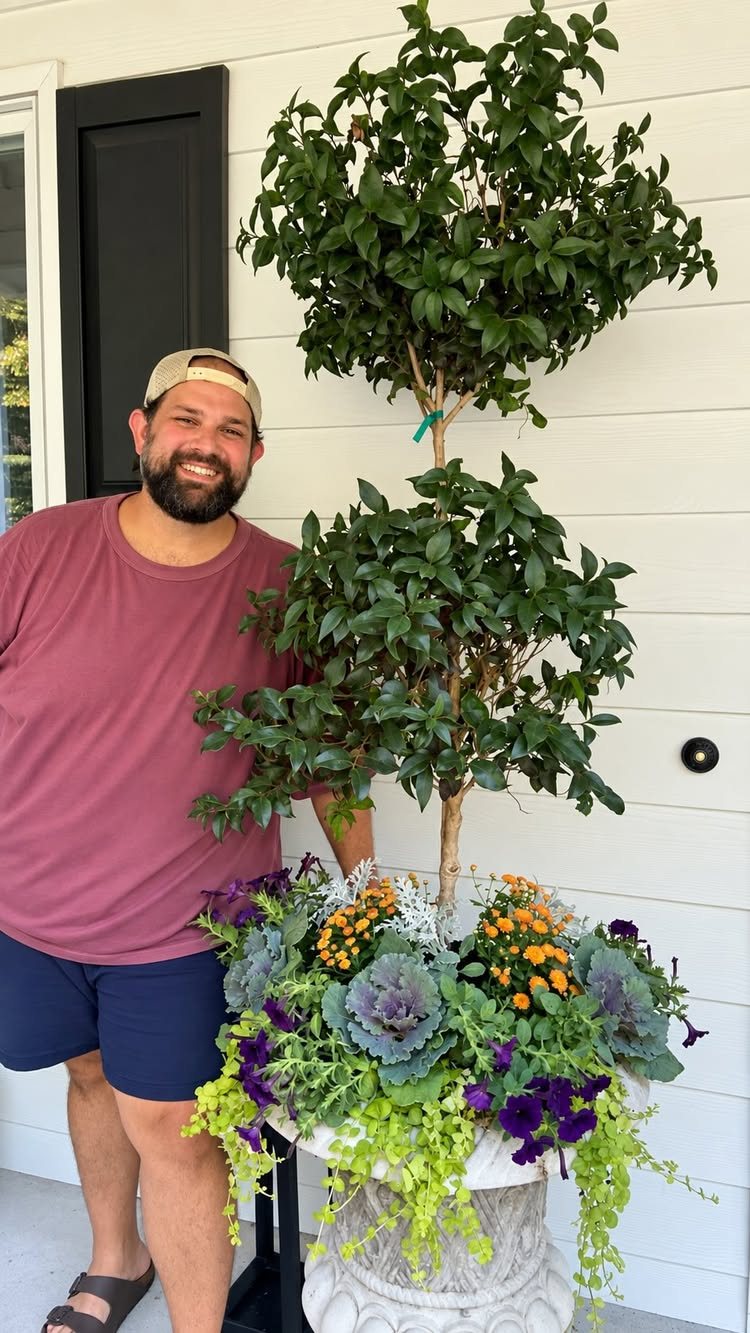
A farmhouse-style urn with a topiary center reads formal without feeling stiff. The topiary gives permanent structure; kale, mums, and trailing foliage rotate around it by season.
One grower I follow builds hers with ornamental cabbage at the base, orange mums at the middle, and lime green vine spilling over the rim.
The urn itself does half the work. A weathered stone or aged metal container carries the arrangement with ordinary plants.
The pot is the investment here, but it stays. I’d buy the urn used and spend on fresh plants each fall.
6. Colorful Urn Planter for Fall Garden
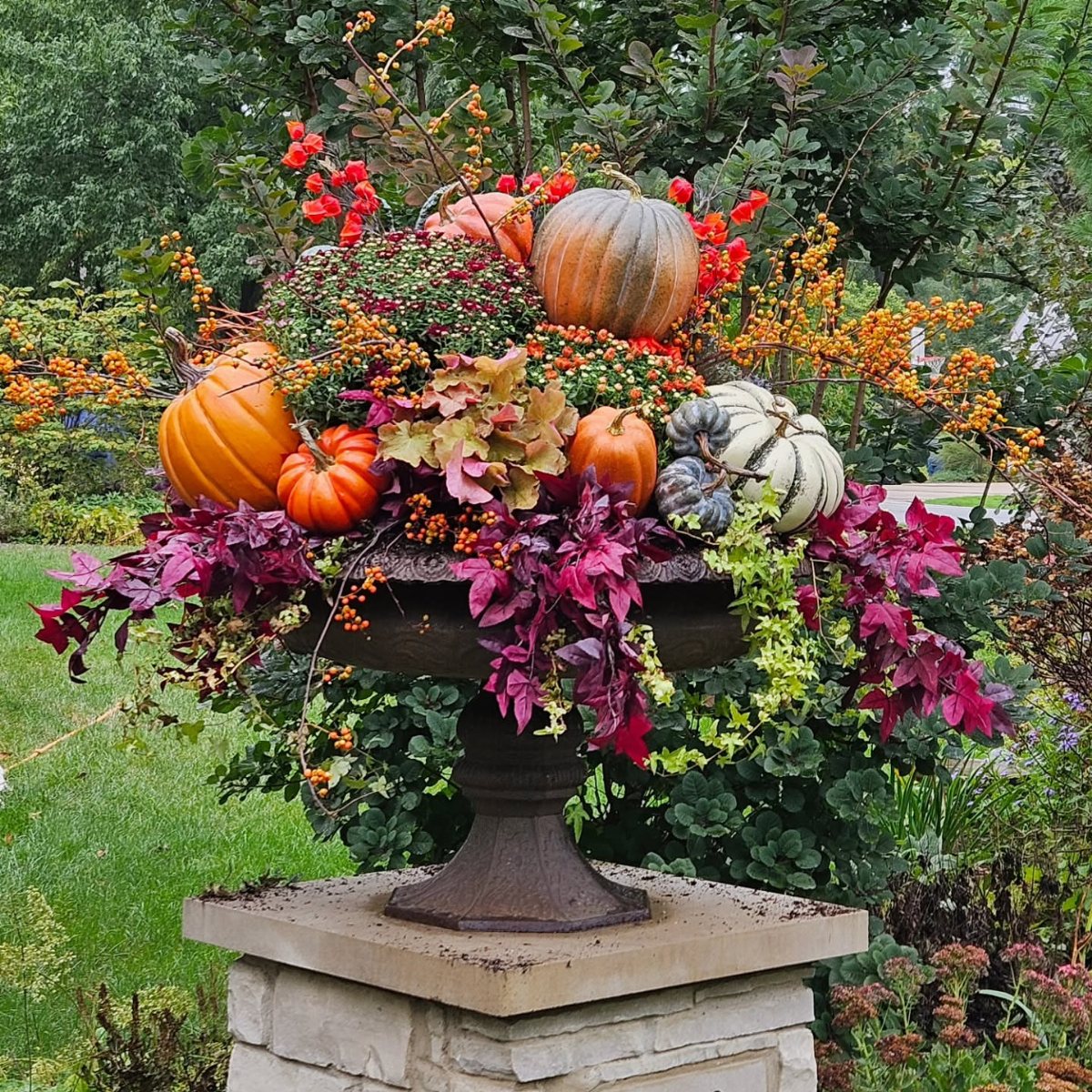
A cast-iron urn on a pedestal turns foliage into architecture. The height means you see it from a distance, so mass matters more than detail.
Pumpkins, gourds, and bittersweet berries pile in with purple-leaved plants; ivy trails down the pedestal to ground the whole thing.
Vintage urns are heavy and stay put in wind, but they’re murder to move empty. I plant mine in place with a soil mix lightened by coir, since I’ll never lift it to dump.
The bittersweet is invasive in some states; check before you forage. Faux pumpkins on skewers, the reusable kind from craft stores, let you build this look without the rot.
7. Classic Chrysanthemum and Ornamental Cabbage Combo
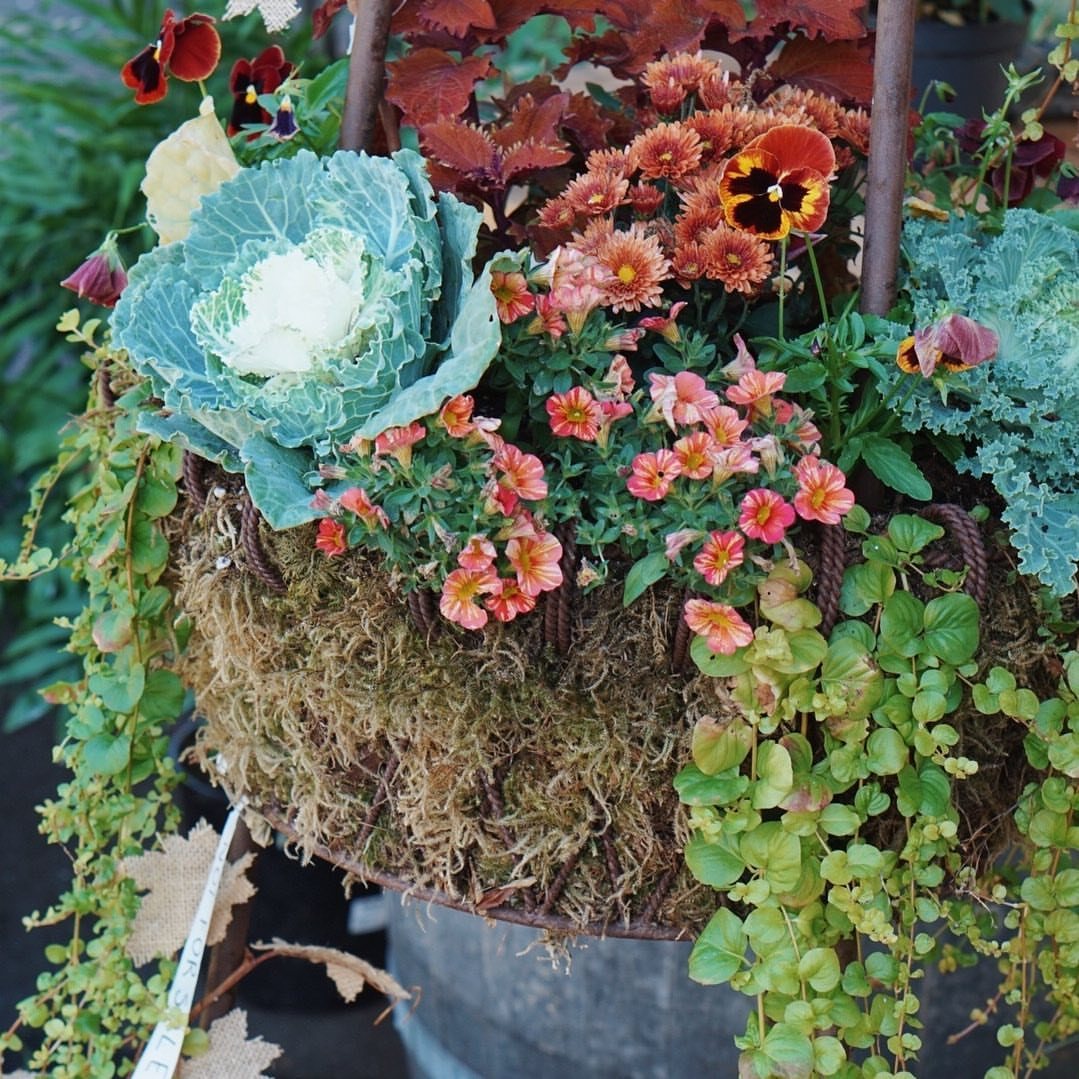
Ornamental cabbage and chrysanthemums share a trick: both look expensive and both cost pocket change at garden centers in October.
The cabbage gives you a rosette of texture at soil level while the mums rise above it in deep reds, burnt oranges, or golden yellows.
I set taller mums in the center and ring them with lower cabbage in green, purple, or white. The contrast reads as intentional rather than crowded.
This combo works in any container with decent drainage. An old urn, a weathered hanging basket, even a plastic pot you already own.
The cabbage will take light frost and keep its color well past Thanksgiving in most zones.
Best for someone who wants maximum visual impact from minimum plant count. The mums fade after a few hard frosts while the cabbage soldiers on.
8. Mixed Herb Planter
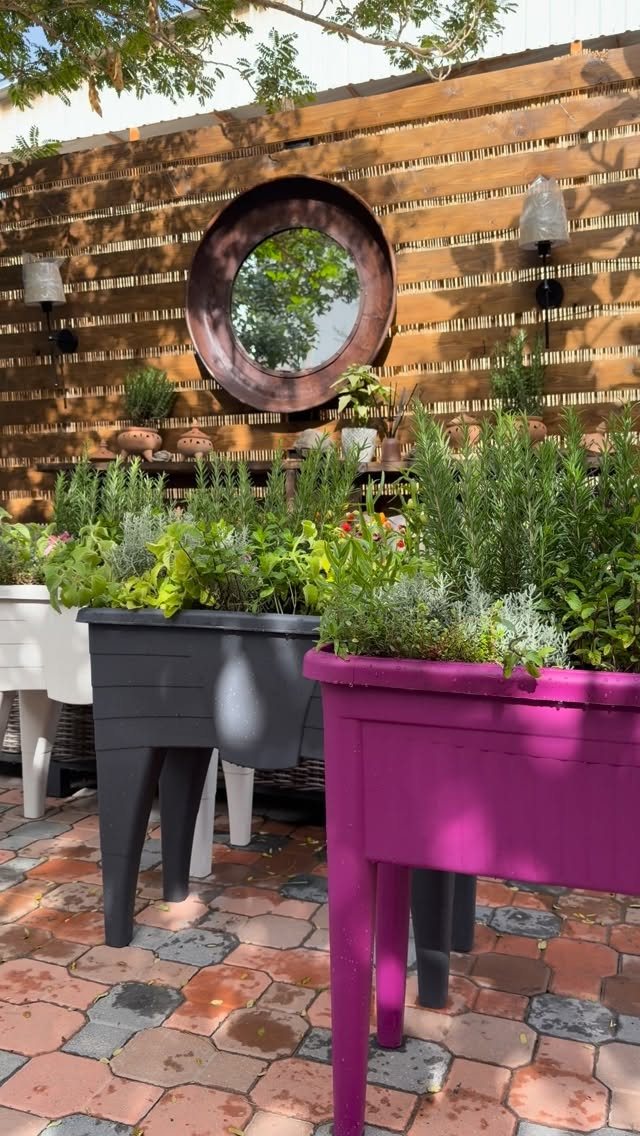
Cool-weather herbs solve two problems at once: they look presentable on a porch through October and they save you from buying dried sage in December.
Sage, rosemary, thyme, and parsley all handle light frost; purple sage and golden thyme add color you do not get from standard foliage.
I keep mine in elevated planters on legs, which brings the scent up to hand level and keeps rabbits from treating parsley as a buffet.
Pair with small gourds or mini pumpkins tucked between the pots for a seasonal nod that costs next to nothing at a farm stand.
Rosemary is the one to watch. The look is green and restrained, not blazing.
9. Rustic Wheelbarrow Planter
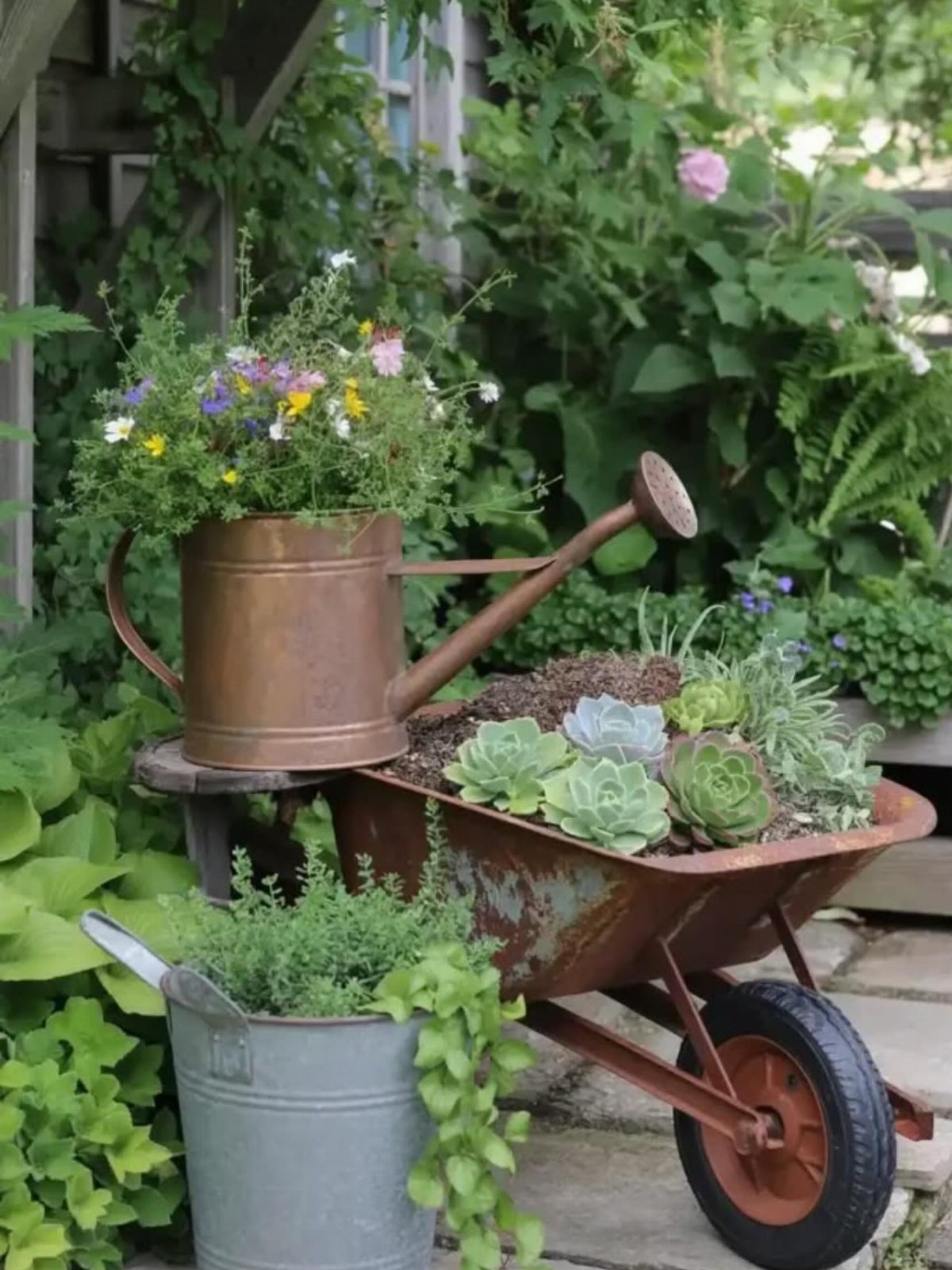
A wheelbarrow with a rusted-through bed has one remaining job: sitting at an angle in your yard filled with asters, black-eyed Susans, and something that trails.
The tilt creates movement the way a straight planter cannot, and the rust reads as earned age rather than neglect.
I prop mine on a half-buried brick to set the angle, then pack the bed with potting soil held in by chicken wire across the open bottom.
Cascade ivy or sweet potato vine down the low side for a spill that softens the metal edges. Plum, mustard, and burnt orange play against each other without looking like you tried too hard for a color scheme.
This idea demands the space and the wheelbarrow. If you are working a balcony, skip it.
For a front yard or a garden path, the scale feels generous and slightly unplanned in the way cottage gardens aim for.
10. Succulent and Pumpkin Fusion
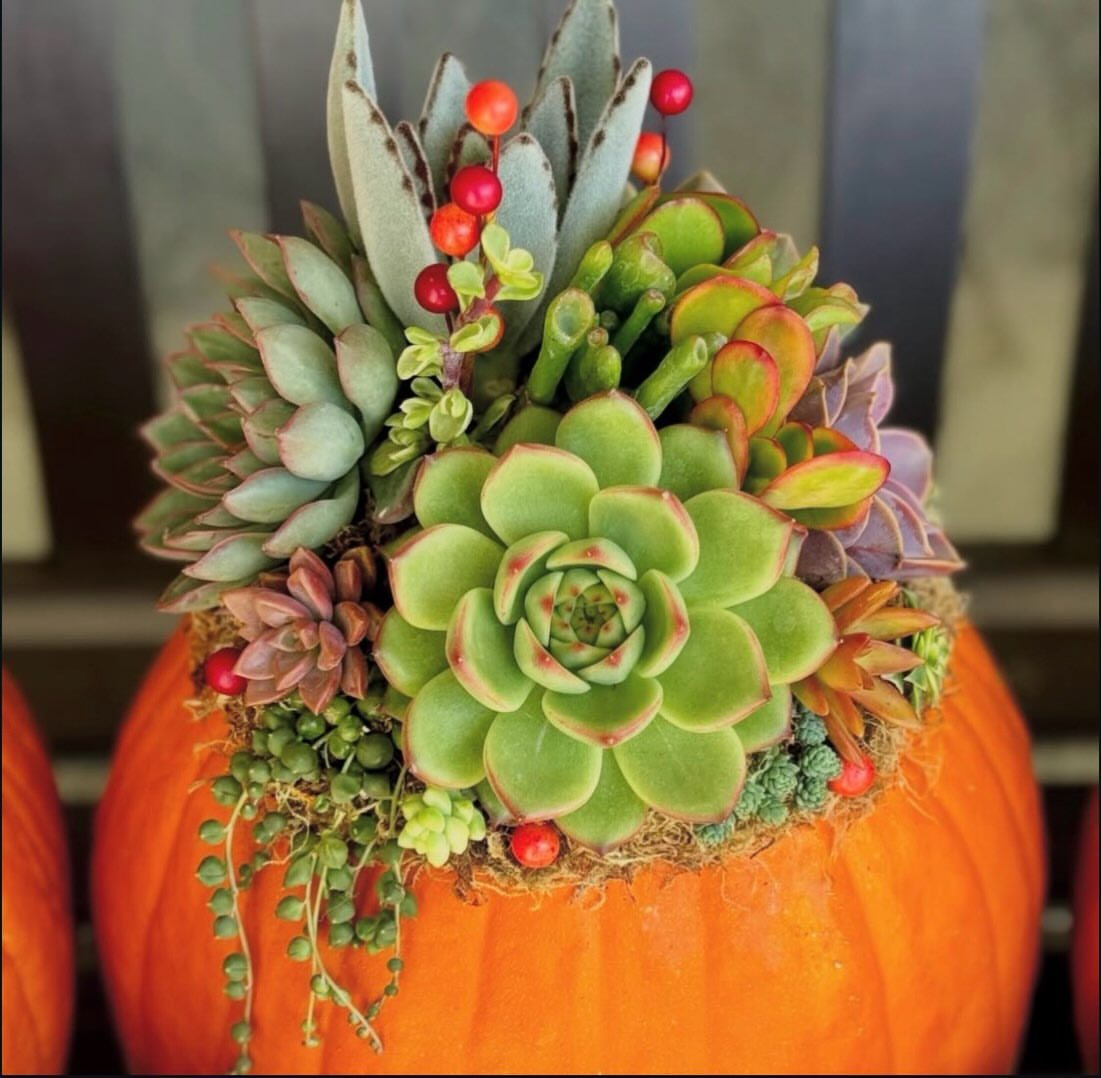
Small pumpkins make natural pots for succulents when you hollow the top and pack the cavity with gritty, fast-draining mix.
Echeveria, hens-and-chicks, and sedum in muted greens, grays, and purples sit against orange or white pumpkin flesh in a combination that reads modern rather than harvest-festival.
I arrange them tightly in a shallow dish so the pumpkins and plants read as one mass, not separate objects placed near each other.
Rain rots pumpkin flesh fast; under cover you get a month or more before the pumpkin softens. White or pastel pumpkins extend the palette beyond standard Halloween orange.
The look is compact and graphic, suited to a dining table or a mantel. For outdoor wind exposure, anchor the dish with a layer of gravel so the light pumpkins do not tip.
11. Red Flower Fall Porch Planter
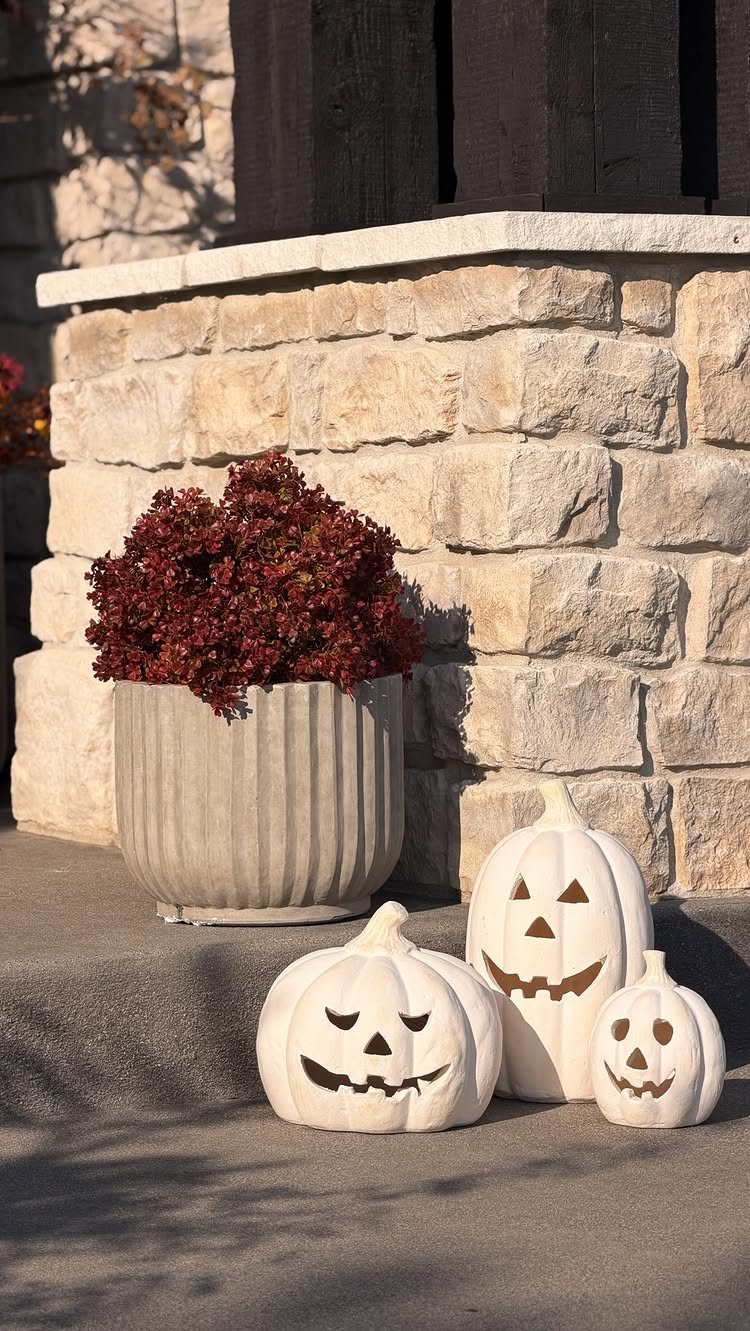
Deep red foliage in shade reads as mood rather than color, and that is exactly what a north-facing porch needs in October.
Burgundy leaves, wispy grass, and trailing ivy fill a fluted planter with tones that deepen as daylight shortens, leaning toward Halloween without a plastic skeleton in sight. Pale pumpkins at the base complete the old-house-in-October feeling.
The key substitution is thinking in foliage, not flowers. Shade limits bloom; it does not limit interest.
Ferns contribute texture, ivy contributes length, and the dark urn itself becomes part of the palette against a light stone wall.
This suits porches that get no direct sun and gardeners tired of fighting to keep mums blooming in dim corners. This planter whispers where others shout.
For a dark front door and stone surround, that restraint feels intentional.
12. Use Dried Hydrangeas as Filler
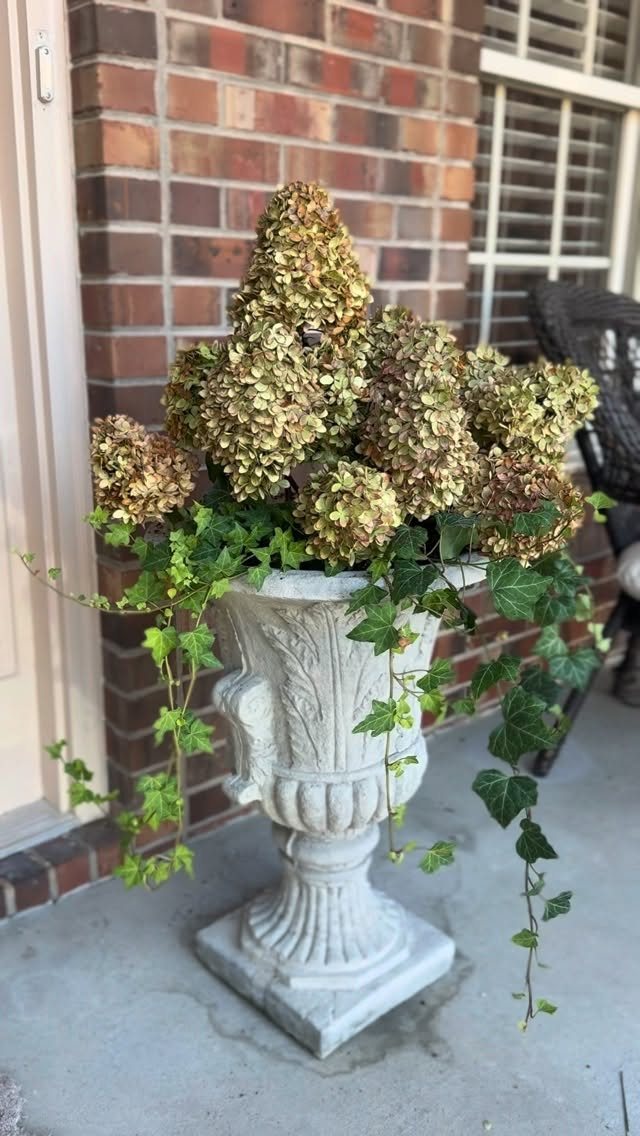
Dried hydrangea stems pushed into soil between living plants add bulk instantly and cost nothing if you cut them from your own yard.
Vanilla Strawberry and Limelight varieties dry with color intact; snip when the blooms feel papery but before they brown fully.
I push stems at angles so the heads sit at different heights, filling gaps between annuals that have not sized up yet.
Keep the container in a covered spot. Rain turns dried hydrangeas brown and brittle in a week; under a porch overhang they hold for a month or more.
The dried blooms read as faded opulence, the kind of texture that makes a cheap planting look like it came from a florist.
This suits anyone with an established hydrangea and a tight budget. Without your own shrub, the idea collapses; buying dried stems retail defeats the purpose.
Tips for Keeping Planters Fresh
Keep fall planters looking sharp by matching the plant to the light you actually have. A full-sun mum pushed onto a shaded porch will stretch and sulk; shade-tolerant coleus or ferns hold their color where bloomers fail.
Check soil moisture with your finger before you water; cool weather slows evaporation and wet feet rot roots faster than drought hurts them.
Deadhead spent blooms on mums and asters to keep the plant pushing out new ones. A weekly pass with snips removes spent blooms and buys the arrangement more time before the first hard frost.
Pumpkins and gourds set on bare soil soften from the bottom up. Rest them on an upside-down plastic nursery pot, or on a bed of straw, to keep the rind dry.
I check mine every few days and pull any that dent or weep before they infect the display.
Budget-friendly Planter Ideas
The cheapest fall planter starts with what you already own. I pull out the summer annuals that have gone leggy, fluff the top layer of old soil, and top off pots that have settled with fresh mix.
Any grasses or upright plants that still look decent stay right where they are; they give the new planting structure without another trip to the nursery.
Small mum pots run less than gallon-sized plants and fit tight budgets. Two off-center in a reused container read fuller than one large plant dead center.
The dried heads add volume retail stems cannot match in price.
Choosing the Right Plants
Pansies, ornamental kale, and mums form the cold-hardy core most fall planters need. Mums give the burst of color people expect, though they fade after hard frost and need deadheading to prolong the show.
Heuchera, ivy, and creeping jenny handle the chill and keep the pot looking full when blooms retreat. Sage works across seasons; the purple variety adds soft color that reads as fall without shouting, and deer tend to pass it by.
Alyssum and violas fill edges and gaps cheaply. For structure that persists past Thanksgiving, small evergreens or rosemary in a sheltered spot carry the pot into winter when annuals quit.
Grasses of all sizes are a natural fit with mums, their fine foliage adding height to the mix. ‘Frosted Curls’ sedge and a few seasonal pumpkins complete this fall combo, making it a great look from any angle.
Creative Container Options
Almost anything that holds soil and drains can become a fall planter. Galvanized washtubs and olive buckets give farmhouse weight without the price of new pottery.