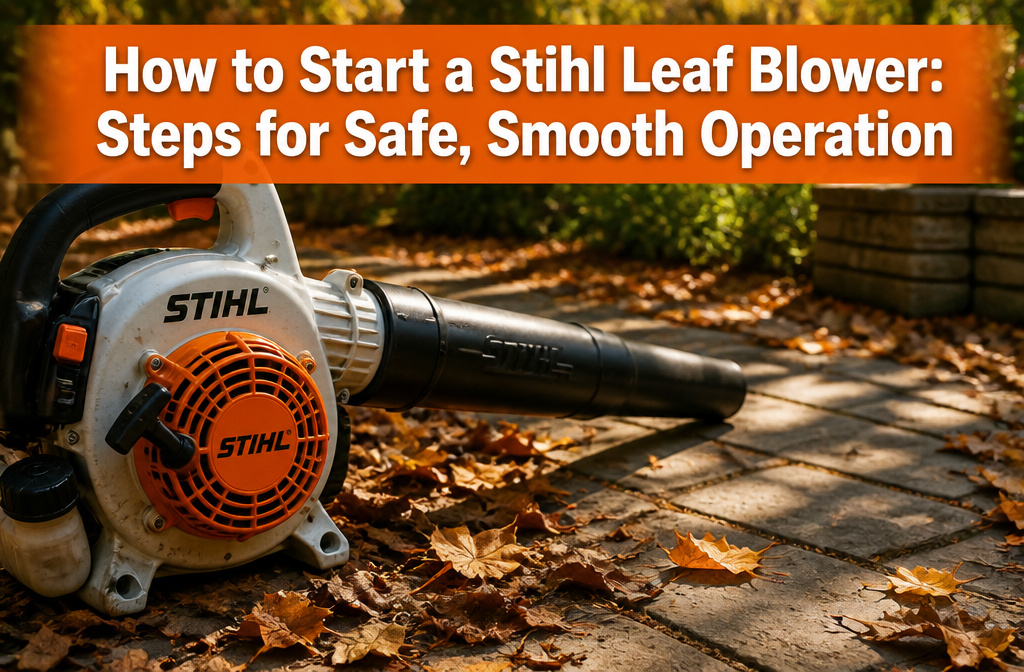
Starting a Stihl leaf blower takes about two minutes once you know the sequence, but one wrong move with the priming bulb or the master control switch turns that into twenty minutes of flooded frustration. The five presses on the fuel pump matter more than most people assume: too few and the carburetor runs dry, too many and you drown the chamber in raw fuel.
1. Preparing the Blower

The instruction manual that came with your Stihl blower is worth the ten minutes it takes to read. I keep mine in a ziplock bag in the garage; the diagrams of the controls still save me from guessing which lever does what. Fuel and oil caps need to be tight, and the housing should be wiped clean before you start. A quick inspection for anything missing, loose, or broken takes another minute and catches problems before the engine turns over. Protective gear means boots, gloves, eye protection, and hearing protection, all rated for the work. I skipped the hearing protection once for a small job and paid for it with ringing ears the rest of the afternoon.
2. Setting Up Surroundings
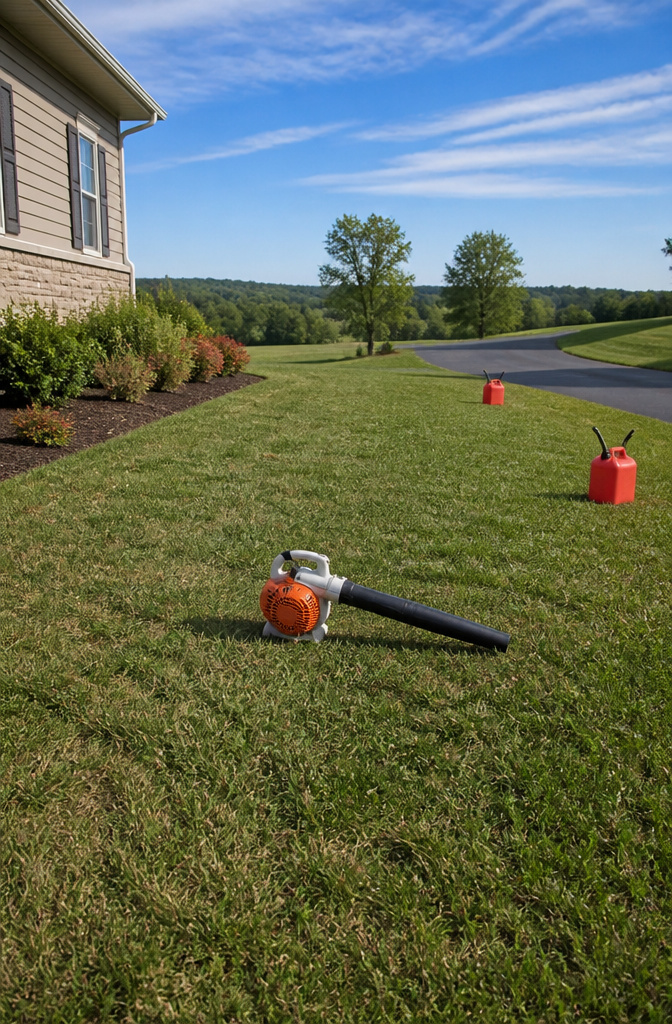
Gasoline leaf blowers and enclosed spaces do not mix. Stihl’s manuals are clear on this: never start the machine indoors, not even in a garage with the door cracked. The exhaust and the fuel vapors need room to disperse.
Once outside, the spacing matters more than most people assume. Stay at least ten feet from fuel cans, oil, or anything else combustible when you start the engine. A hot muffler or a stray spark is rare, but ten feet is the buffer that makes it a non-issue. From there, keep fifty feet between the nozzle and any person or pet. That distance shrinks fast if a dog bolts after a squirrel or a child cuts across the yard, so the habit to build is scanning the full radius before you pull the starter. I pick a spot upwind from where I plan to work, set the blower down, and take a slow look around while the engine warms. The thirty seconds feel slow, but they beat explaining to a neighbor why their afternoon got coated in dust.
3. Starting the Blower
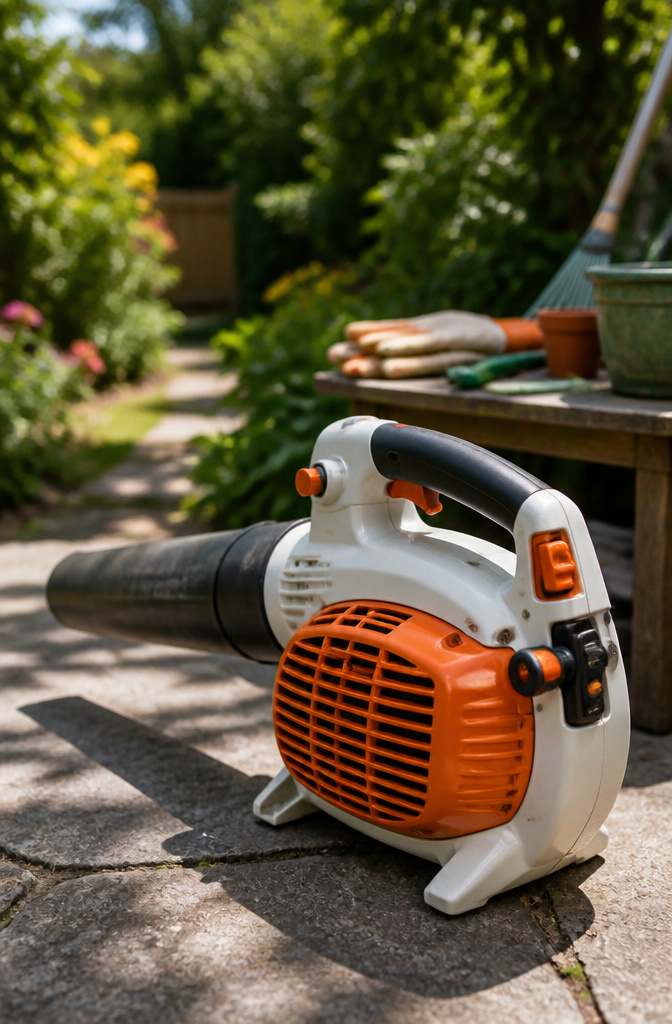
Set the blower on a level surface before you do anything else. A tilted machine can shift while you work the controls, and on a slope the tube can swing toward your legs before the engine even catches. With the blower steady, flip the power switch on and set the master control to the cold-start position. Some Stihl models also have a throttle interlock that needs engaging; if yours has one, press it now.
Place the blower on a level, dust-free surface. Make sure the power switch is on, the master control is in the cold-start position, and the throttle interlock is engaged, if so equipped.
The level surface matters more than it sounds. I have seen a blower walk itself off a patio stone because the ground underneath was uneven, and the operator had both hands on the starter rope when it tipped. The throttle interlock, where fitted, keeps the engine from revving unexpectedly on that first pull; without it engaged, the blower can lurch hard enough to strain your wrist or dump fuel. These two checks, the level ground and the interlock, take five seconds and save the kind of morning you do not want to narrate later.
4. Priming the Fuel
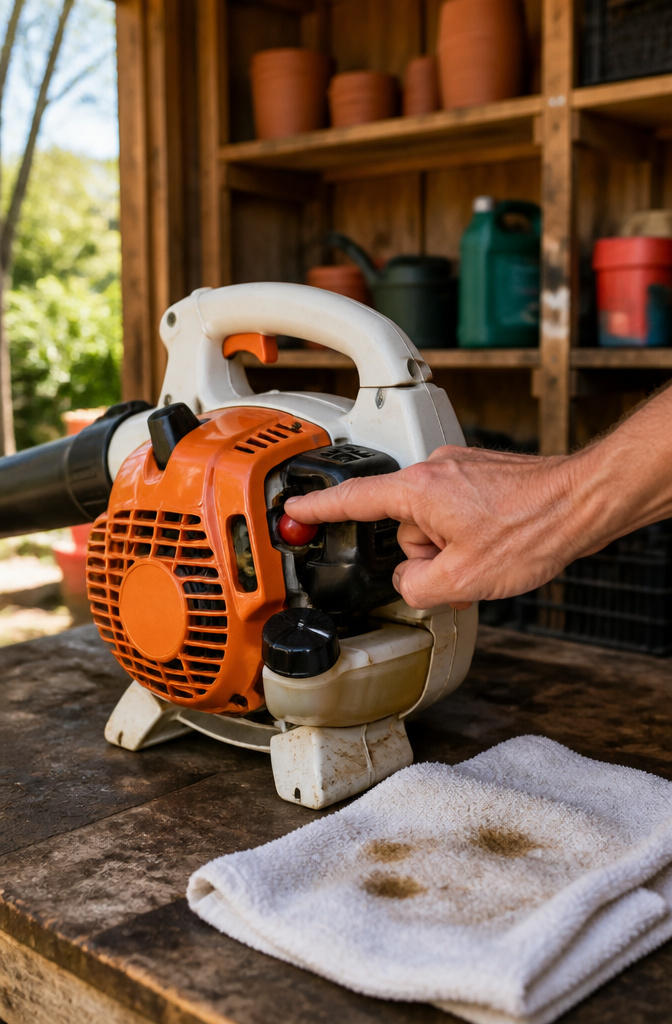
The manual fuel pump sits right on the engine housing, a small rubber bulb you press with your thumb. Press it five times, no more and no less. Stihl specifies a minimum of five presses, and in my reading that number matters: too few and the carburetor runs dry, too many and you flood the chamber with raw fuel that makes starting harder, not easier.
Each press should feel firm, with a slight resistance as the bulb refills. If the pump feels mushy or returns slowly, check that the blower sits level; tilting it can trap air in the line and give you a false prime. I have seen people pump eight or ten times thinking more fuel helps, then wonder why the engine sputters and dies. Five brisk, full presses, then move straight to the starter handle.
5. Pulling the Starter Handle
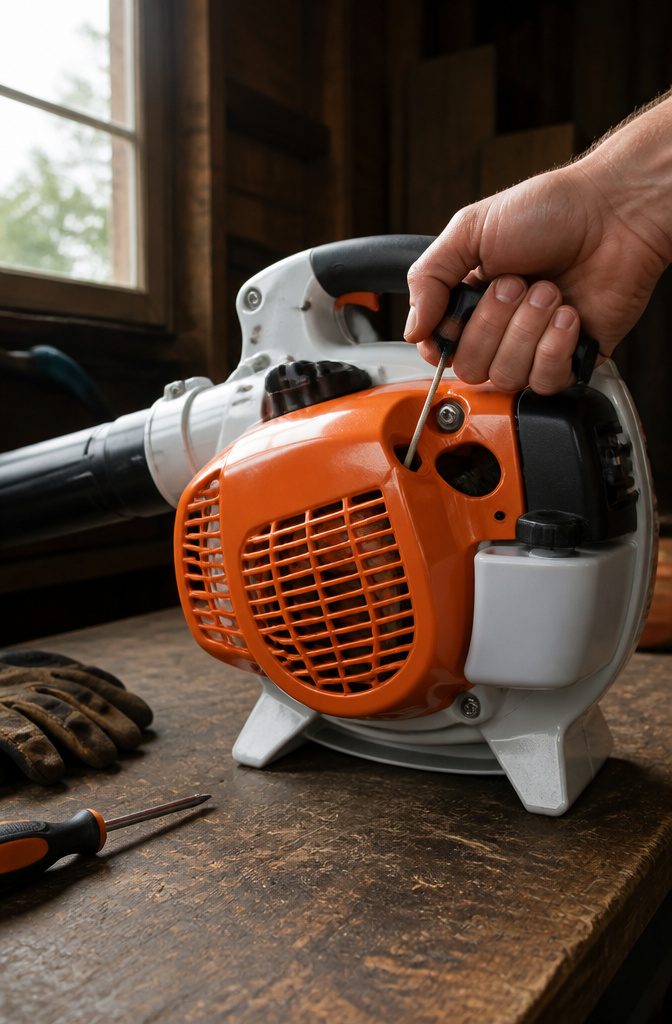
A handheld Stihl blower needs your right hand on the body, pressed down against the ground, with your left hand free for the starter rope. Backpack models reverse this: left hand grips the handle, right foot braces against the base plate, right hand pulls. Either way, the machine stays put because you are pinning it, not because it is heavy.
Pull the starter handle slowly until you feel resistance. That resistance is the piston reaching compression; yanking before it only wears the rope and your patience. Once you hit that point, give it one brisk pull. Do not baby it. The rope should snap back into the housing on its own, but guide it anyway so it does not tangle.
You will probably need several pulls. Repeat until the engine burps or tries to catch. That half-start is your signal that fuel and spark have met, and you are close. Keep the same stance and the same rhythm; changing your grip mid-sequence just costs you leverage.
6. Switching to Run Position
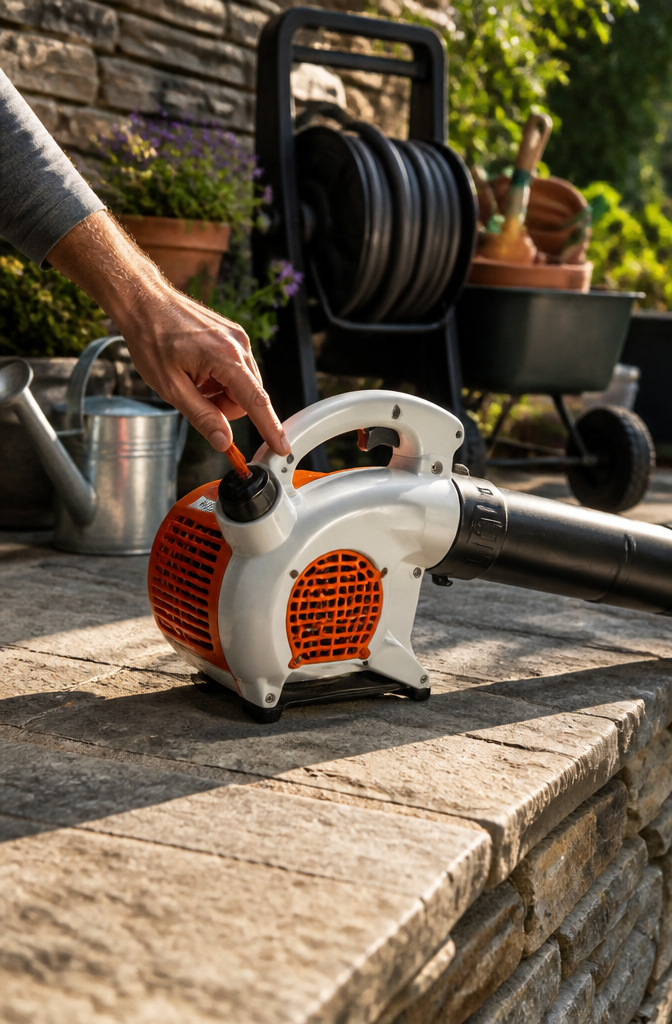
The first time I heard that little cough from the engine, I almost kept pulling. A friend had to wave me off: once the blower tries to start, you have to move the master control to the run position before going again. That half-second switch is what keeps the thing from flooding out.
Switch the master control to the run position the instant you hear the engine attempt to start. Then grab the starter handle and pull with the same brisk motion as before, guiding the rope back into the housing each time. The blower should catch within a pull or two. If it doesn’t, check that the switch stayed in run; vibration can knock it back if your thumb barely moved it.
7. Adjusting Throttle
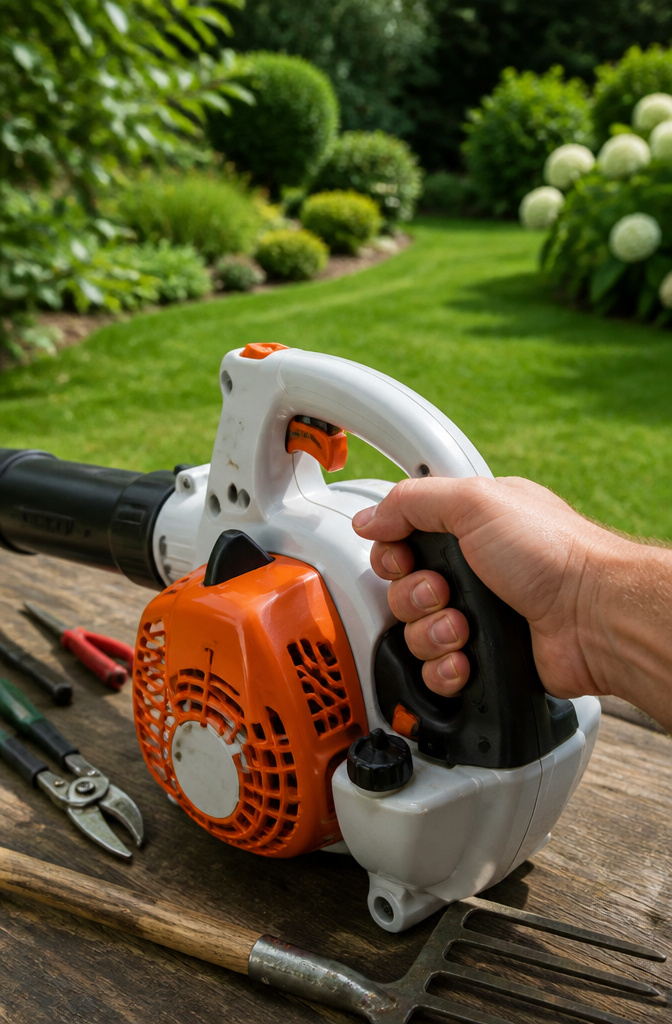
The throttle lock on a Stihl blower keeps the trigger fixed in a running position, which is useful for sustained work but not what you want at startup. Squeeze the throttle trigger firmly to release that lock, then let your finger off completely so the spring returns the lever to idle. The engine should settle into a low, steady rpm before you ever think about moving leaves. I made the mistake once of pulling the starter while the lock was still engaged, and the blower jumped hard in my hands the instant it caught. Now I check by feel: the trigger should move freely and snap back when I release it. If the idle sounds high or uneven, the lock may not have fully disengaged, so squeeze and release again before you begin work.
Fuel Type
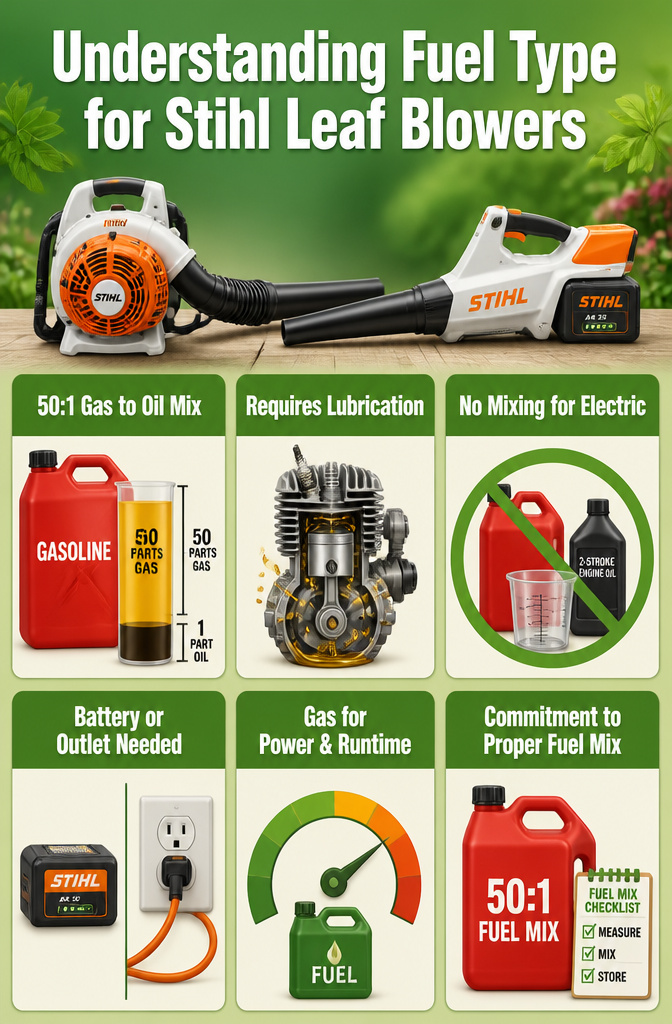
Gas-powered Stihl blowers run on a 50:1 mixture of gasoline and 2-stroke engine oil, and getting this wrong is the fastest way to kill a cold morning. One part oil to fifty parts gas sounds simple enough, but the mistake I see most often is pouring straight pump gas into the tank and hoping the engine sorts it out. It will not. Two-stroke engines need that oil mixed in to lubricate the internals, and running unmixed fuel scores the piston and cylinder within minutes.
Electric models skip the chemistry entirely. Battery-powered units need a charged pack snapped in place; corded ones need an outlet and an extension rated for outdoor use. No mixing, no measuring, no fuel can sitting in the garage. For the $500-a-year gardener working a small patio or city lot, that simplicity is worth weighing against the raw output of a gas engine. The gas blower wins on power and runtime, but only if you commit to keeping a proper fuel mix on hand.
Safety Precautions
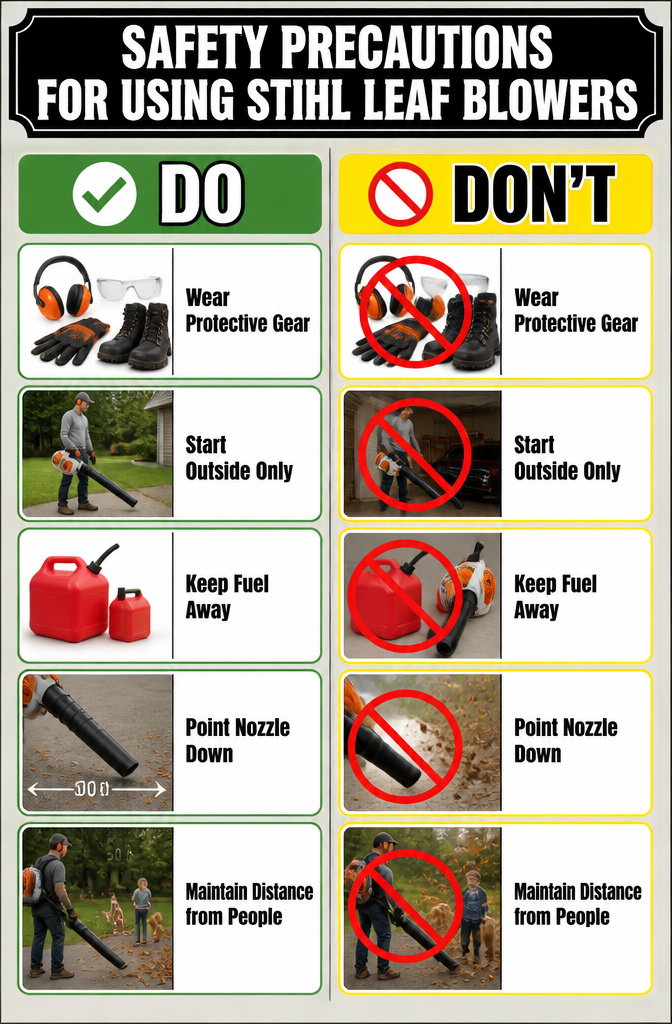
The manual that ships with a Stihl blower lists the gear in plain language: boots, gloves, eye protection, hearing protection. I used to skip the hearing part for quick jobs until a half-hour session left my ears ringing through dinner. Now the muffs go on before the fuel cap comes off.
Gas-powered blowers belong outside, period. Start yours at least ten feet from fuel cans, oil, or any combustible you have nearby. The fifty-foot rule for people and pets sounds excessive until you watch a wet leaf hit pavement at speed and imagine that hitting skin. Point the nozzle down when you pull the starter, keeping stones and dust from scattering toward anyone in range. That downward angle also saves your own legs from the debris cloud that rises on the first crank.
Proper Handling

A Stihl handheld blower puts out enough force to send gravel through a window or strip bark off a young tree, so the nozzle stays pointed at the ground until the engine is running steady. I grip the handle with one hand and hold the nozzle down with the other before I even touch the starter. That downward angle keeps any debris that kicks up from the first cough of the engine aimed at dirt, not at siding, cars, or the neighbor’s kid.
For backpack models, the strap system needs to be snug before you pull the cord; a loose pack twists when the engine catches and the tube swings where you did not plan. Handheld or backpack, carry by the handle, keep the tube below waist level, and do not let the blower idle pointed anywhere but down. Professional gardener Adam Whale puts it simply: point it down and away from you, carry it by its handle, and respect that it is a powerful tool.
Frequently Asked Questions
How do I start a Stihl leaf blower?
Place the blower on a level surface, switch the power on, set the master control to cold-start, and engage the throttle interlock if your model has one. Press the manual fuel pump five times, pull the starter handle slowly until you feel resistance, then give it one brisk pull. Once the engine tries to start, switch the master control to run and pull again until it catches.
What fuel do I need for my Stihl leaf blower?
Gas-powered models need a 50:1 mix of gasoline and 2-stroke engine oil. Running straight pump gas without oil will score the piston and cylinder within minutes. Electric models need a charged battery pack or an outdoor-rated extension cord, with no mixing required.